

So how did it all begin? Pokémon was conceived by Japanese game designer Satoshi Tajiri, inspired by his childhood memories of collecting insects. Children used to trade bugs and compete over who had the most interesting specimen. Tajiri decided to translate that experience into a video game—only instead of insects, players would collect and trade Pokémon. Nintendo released the first titles, Pokémon Red and Pokémon Green, in 1996. Each version featured different Pokémon to encourage players to trade with one another.
The success of the games sparked rapid expansion. In 1997, an anime series following the adventures of Ash Ketchum and his partner Pikachu was launched, meaning it will celebrate its 29th anniversary on 7 April. What began in 1996 as a Game Boy video game gradually expanded into television, film, trading card games, merchandising, and advertising campaigns. Today, Pokémon is one of the most successful media franchises in the history of the entertainment industry.
Video: A compilation of Pokémon ads from 1999–2000
Nostalgia drives sales
One of the main driving forces of contemporary marketing is nostalgia. Companies are well aware that a return to childhood experiences can evoke strong emotions as well as a willingness to spend. This is why new versions of older games, stylish clothing collections, and large construction sets inspired by the world of Pokémon keep appearing on the market. For some fans, this is a pleasant reminder of childhood; for others, however, it feels as though the brand is becoming overly commercialised.
It is worth remembering, however, that merchandising has been part of Pokémon from the very beginning. During the first wave of popularity at the turn of the millennium, stores were already flooded with toys, cards, clothing, and other products featuring Pikachu, Charizard, and other characters. Pokémon Center stores now operate all over the world and continue to attract thousands of visitors. And yet, for many fans, the products themselves were never the most important thing. The true magic of Pokémon lay above all in the games—in adventure, in discovering new places, and in building a bond with one’s own team of Pokémon. For a whole generation of players, this sense of discovery was far more powerful than any collectable item.
McDonald’s has a firm grip on Pokémon
Alongside toys and collectables, Pokémon naturally soon became a sought-after partner for major marketing campaigns. Thanks to their popularity among both children and adults, they represented an ideal link between the world of entertainment and commercial brands. One company that has long capitalised on this potential is McDonald’s. Since the late 1990s, it has regularly included Pokémon in its Happy Meals and created special advertising campaigns around them. A notable chapter in this collaboration was the 2011 campaign that accompanied the launch of the new generation of games, Pokémon Black and White. At the time, McDonald’s introduced a limited edition of Pokémon-themed toys and collectables as part of its Happy Meal, naturally supported by television advertising and communication aimed primarily at a child audience.
Video: Pokémon Black and White – McDonald’s
Google invited users to catch Pokémon on maps
Google also did not miss the opportunity to cash in on Pokémon’s popularity and, on 31 March 2014, launched the Google Maps: Pokémon Challenge as part of its traditional April Fools’ projects. The campaign was a marketing experiment created in collaboration with The Pokémon Company, Nintendo, and Game Freak. Through the mobile Google Maps app, users could search for and “catch” Pokémon hidden around the world. About 150 Pokémon were placed in locations across the globe, from mountains and forests to major cities.
Video: Google Maps – Pokémon Challenge
Google also created a fictional storyline in which the company was searching for a new employee for the position of “Pokémon Master.” Anyone who managed to catch all the Pokémon was supposedly eligible to apply for the job. The campaign was accompanied by a viral video.
Toyota created its own Pokémon
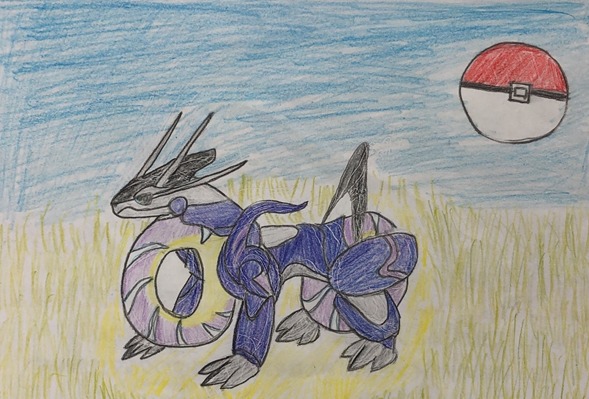
In 2024, Toyota Motor Corporation joined forces with The Pokémon Company to show children that imagination can inspire real technological development. The aim of the joint Toyota Miraidon project was to create a futuristic means of transport inspired by the legendary Pokémon Miraidon from the game Pokémon Violet. The project originated as an initiative of the Toyota Engineering Society, which organises an annual community event called Wakuwaku World, where children are introduced to the technologies of the future. In 2023, elementary school pupils in Aichi Prefecture were invited to draw their vision of a “vehicle of the future.” The children submitted around 8,000 designs. One of them—a drawing of the Pokémon Miraidon—captivated the engineers so much that they decided to try to turn this fantasy into a real machine, and despite numerous construction challenges, they succeeded brilliantly:
Video: Toyota Miraidon by Pokémon and Toyota
Pokémon’s 20th anniversary celebrated at the Super Bowl
The 2016 campaign aimed to underscore Pokémon’s long history while appealing to a new generation of fans. The commercial “Train On” is based on a simple idea: training and perseverance in real life are much like the training undertaken by Pokémon Trainers in the games. The ad portrays a range of characters—a chess player, an athlete, and a young table football player—working relentlessly to achieve their goals. In the closing moments, these stories are connected to the world of Pokémon through the slogan “Train On.” Airing during the Super Bowl, the commercial draws a parallel between athletic or personal discipline and the core philosophy of the Pokémon games, in which Trainers help their Pokémon grow stronger and overcome challenges.
Video: Pokémon – Train on
Niantic’s Pokémon Go conquers the world
The launch of the mobile game Pokémon GO in 2016 was accompanied by marketing communication emphasising an entirely new way of playing. Niantic, the game’s lead developer, built the campaign around a simple but powerful message: players should get up, go outside, and explore the world around them. The slogan “Get Up and Go!” therefore captured the game’s basic principle, which connects the digital world with real-life surroundings through augmented reality and geolocation technologies. The commercials showed people heading into streets, parks, and historic sites to search for Pokémon together. In this way, the game was presented not only as mobile entertainment, but also as a way to explore the city and meet other players. This concept proved extraordinarily successful—shortly after its release, Pokémon GO became one of the most downloaded mobile games in the world and generated more than one billion dollars in revenue during its first year.
Video: Pokémon Go – Get Up and Go!
Mister Donut turned to Pokémon-themed desserts
The Japanese confectionery chain Mister Donut began collaborating with the Pokémon brand in 2018, when it introduced a limited collection of themed desserts inspired by popular characters from the games and anime. The campaign was launched in November 2018 in connection with the release of the games Pokémon: Let’s Go, Pikachu! and Pokémon: Let’s Go, Eevee! for the Nintendo Switch.
The main product was a doughnut styled as Pikachu, accompanied by other desserts resembling a Poké Ball or additional Pokémon characters. The campaign was supported by television and online advertising that emphasised the playful visual design of the desserts and the connection between beloved characters and an everyday visit to the confectionery shop. The limited-edition products sold out quickly and significantly increased store traffic.
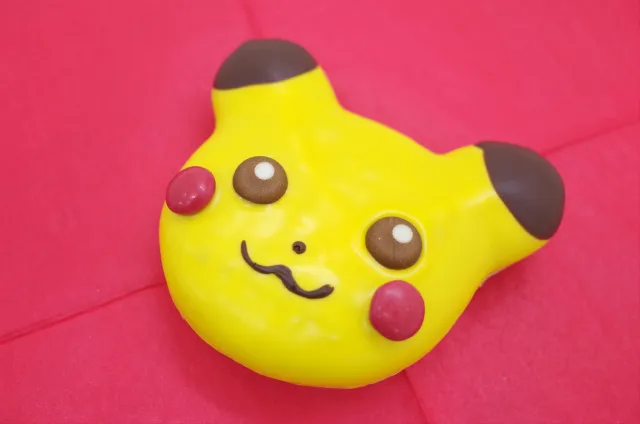 Source: Soranews24.com
The success of the first collection of Pokémon desserts led Mister Donut to continue its collaboration with the Pokémon brand in subsequent years. Since then, other Pokémon have also made their way into the seasonal menu. In addition to pastries, they have also spread into beverages and merchandising. Chansey appeared in 2020, Eevee in 2021, Jigglypuff and Snow Pikachu in 2022, Psyduck in 2023, and Diglett together with a web-exclusive Dugtrio in 2024.
In 2025, the company introduced a new limited-edition range of desserts inspired by popular characters from the franchise. Alongside the traditional Pikachu-shaped doughnut, the collection also featured desserts inspired by Diglett and Psyduck. The range was complemented by sweets styled as a Poké Ball. The colourful and playful design of the desserts followed the marketing strategy established in 2018 and once again targeted both children and adult fans who had grown up with Pokémon.
ANA’s planes feature Pokémon
The collaboration between All Nippon Airways and the Pokémon brand goes back to 1998, when ANA unveiled its first themed aircraft, known as the Pokémon Jet. Decorated with images of Pikachu and other Pokémon, the plane quickly became a highly popular element of the airline’s marketing.
In 2023, this long-standing partnership was expanded with the Pokémon Air Adventures project. The campaign aimed to promote tourism in Japan while offering Pokémon fans a new themed travel experience. It included several marketing elements: aircraft decorated with Pokémon designs, special in-flight safety videos, and commercials promoting travel across different regions of Japan. Animated Pokémon characters—especially Pikachu—appeared as guides to adventure-filled journeys. A video showing the preparation of the campaign is available here.
This year, All Nippon Airways introduced three new Pokémon Jets:
Video: ANA Announces Three New Pokémon Jets
The Pokémon Air Adventures project is a compelling demonstration that a popular media brand can also be effectively leveraged in tourism and air travel. Thanks to Pokémon’s global popularity, ANA has succeeded in appealing not only to domestic audiences but also to international fans visiting Japan.
Uniqlo is also crazy about Pokémon
Uniqlo is among the partners of the Pokémon brand. In 2025, it launched its first UT graphic T-shirt collection in collaboration with the Pokémon Trading Card Game and the mobile app Pokémon Trading Card Game Pocket. The collection drew on iconic Pokémon cards with original illustrations.
To celebrate Pokémon’s 30th anniversary, UNIQLO also prepared a special T-shirt collection within its UT line. The 2026 collection takes inspiration from the original artwork by designer Ken Sugimori from the first Pokémon games, Pokémon Red and Pokémon Green, released in 1996. The designs evoke the nostalgic aesthetic of the first generation of Pokémon and feature iconic characters such as Pikachu, Charizard, and Snorlax. The collection includes styles for both adults and children and was launched in spring 2026.
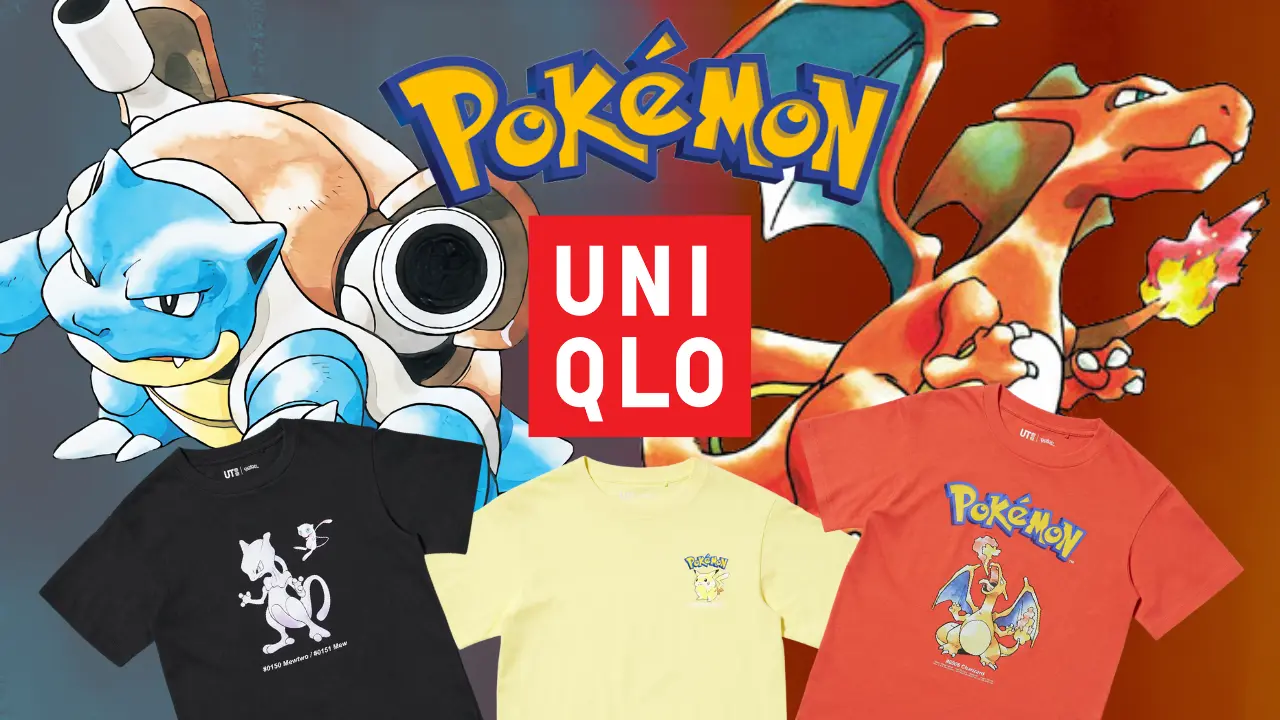 Source: Essential-japan.com
More Pokémon on the horizon
Pokémon are still very much in vogue. It is therefore no surprise that the announcement of a new game titled Pokémon Winds and Waves, which is set to take place in a region inspired by Indonesia, attracted considerable attention. The first previews suggest a more open world full of nature and new creatures, which has once again rekindled many fans’ excitement about exploration.
The new title, however, will not be released until 2027. Such a long gap between main instalments of the series is unusual for Pokémon and may indicate that the developers want to devote more time to the game’s quality this time. The current wave of products and marketing collaborations clearly has a practical purpose as well—it helps keep the brand visible while also giving the developers room to create the next major chapter in the game series. Pokémon is now a global brand capable of reaching audiences far beyond the boundaries of video games. And it is precisely through marketing partnerships that fans continue to have the world of Pokémon constantly at their fingertips—even between the releases of major new games.