


Context
This campaign promotes a film by changing the look of a well-known TV studio during the ad break, so the show setting becomes part of the idea.
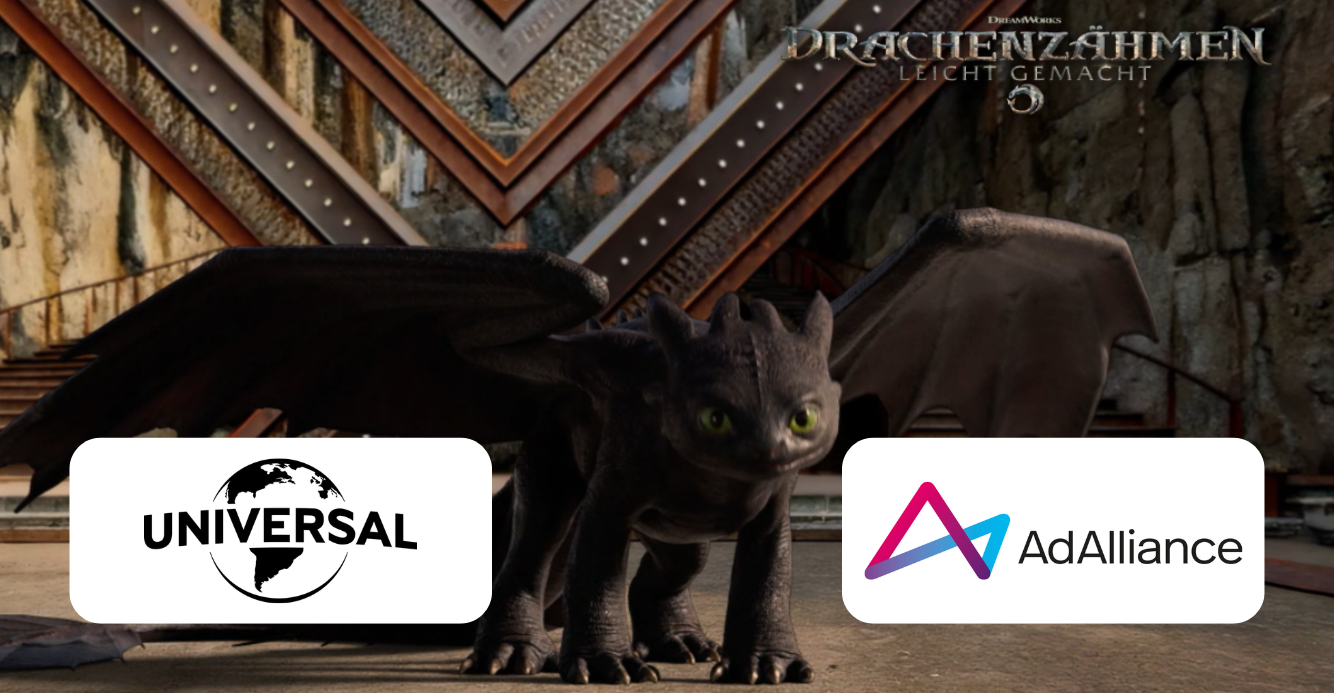
Universal Pictures International Germany supported the live-action version (made with real actors) of How to Train Your Dragon, based on a well-known animated franchise. The ad special ran in Let’s Dance, the German version of the shiny floor prime-time dance competition “ Dance with the Stars”, well known for its specific stage, lighting style, and studio layout.
The viewer stays in that same studio space when the break starts. Then the stage “morphs” into a themed fantasy scene described as a dragon arena. Thanks to the use of AI and because the stage shape remains visible, the change feels like something happening to the show’s world, not a cut to an unrelated scene.
Campaign objectives
The objective was to build the brand image by turning a normal commercial break into a moment made for the show and for the film release.
The campaign also set out to combine entertainment with generative AI, using the technology as the main tool for the on-screen set change. Under the AI-Stagemorph label, the partners positioned this execution as the first AI-created TV Ad Special.
In practical terms, the aim was clear: place the film’s world onto a stage that is already familiar to viewers, and keep the show’s look readable while doing it.
Creative minds
This campaign combined a broadcaster sales house, a film distributor, and a media agency in one production. Ad Alliance developed the format and handled implementation. Universal Pictures International Germany worked with EssenceMediacom, named as the media agency on the campaign.
Campaign video
The video below shows the Let’s Dance stage moving into the break and shifting into a dragon-arena look linked to How to Train Your Dragon. The stage stays easy to recognise, while the background world changes and the dragon character Toothless appears in the scene.

Results
The result is a TV Ad Special that uses a fixed studio setting to deliver a film world in a way that feels tied to the programme.
What stands out in this campaign is the production method and the choices made to protect the franchise. The studio change is AI-generated: the system animates the stage background, including movement, lighting, and the themed “room” design behind the stage. This avoids building a new physical set or running heavy effects work just for a short break moment.
At the same time, the campaign kept tight control of the most recognisable element. Toothless was produced and integrated in a classic way, with the stated goal of keeping the character faithful to the original design and consistent with brand rules. The work therefore splits the image in a simple way: AI creates the world around the stage, and traditional production protects the character that viewers use to identify the film.
All in all, RTL provides the industry with a repeatable and cost-efficient format for studio-based TV shows, with the main priorities stated as context, easy recognition, and brand fit. In that logic, “the stage remains the stage”, but it becomes a meeting point where a brand world can appear for a few seconds during a live entertainment break.
Source: egta.com
OTHER CASE STUDIES

HOW DPG MEDIA TURNS THE BACKSTAGE OF A PRIME-TIME MUSIC SHOW INTO A RETAIL ENGINE
17. 8. 2026In a category where retailers typically compete on price and visibility, Albert Heijn, the supermarket retailer,…
AN IMMERSIVE CANAL+ BRAND SOLUTIONS COLLABORATION FOR SKIN-CARE BRANDS WITH SENSITIVE STORIES TO TELL
26. 6. 2026CANAL+ BRAND SOLUTIONS and its in-house studio LA FACTORY created “Marquer l’Invisible” for Avène, linking Cicalfate+…

M6 UNLIMITED TESTS AI SPOT CREATION FOR SMALLER TV AND STREAMING ADVERTISERS
22. 5. 2026M6 Unlimited is testing a simpler route into TV and streaming for SMEs and new advertisers…
THE TV ADVERTISING PARADOX, A THINKTV NEW ZEALAND CASE STUDY (2/2)
22. 5. 2026ThinkTV New Zealand built its campaign around the contradiction that linear TV was being called obsolete…

A BIG-SCREEN STUDY FINDS STRONGER ATTENTION ON TV4 PLAY THAN ON YOUTUBE
24. 4. 2026TV4 just launched its third attention study, comparing the viewing experience on its streaming service (TV4…
THE TV ADVERTISING PARADOX, A THINKTV NEW ZEALAND CASE STUDY (1/2)
24. 4. 2026In late 2024, ThinkTV New Zealand, under the leadership of Jacqueline Freeman, GM Communications, undertook a…
AD EMISSIONS MEASUREMENT: LESSONS FROM THE FINNISH MARKET
31. 3. 2026Finland’s commercial TV broadcasters spent the past year developing a carbon emissions measurement framework for linear…
A NEW WAY FOR FRANCETV PUBLICITÉ TO SELL CONTEXTUAL VIDEO ADVERTISING
27. 3. 2026FranceTV Publicité (FTP), the advertising sales house for French public television, has introduced Context.IA into its…
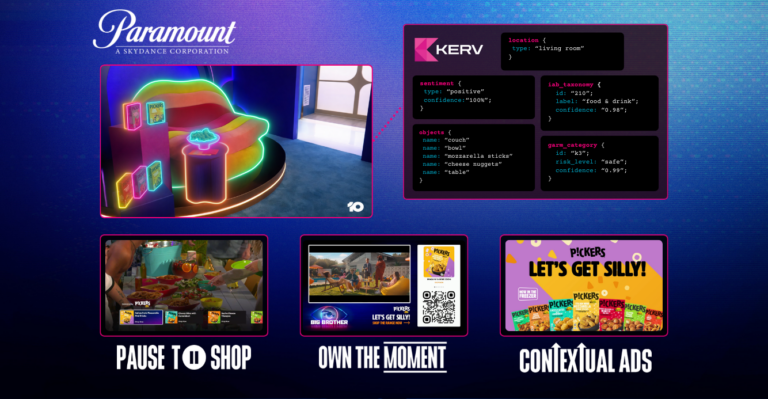
BUILDING A SHOPPABLE, ATTENTION-READY CTV OFFER: THE BIG BROTHER CONTEXTUAL CASE
26. 3. 2026In 2025, Paramount Australia, in partnership with FreeWheel and egta, hosted a webinar outlining a forward-looking…
GLOBO CREATES HOME SCREEN PROMINENCE FOR FREE-TO-AIR TV ON SMART TVS
26. 2. 2026Globo, Brazil’s largest commercial TV group, is rolling out DTV+, a next-generation free-to-air TV standard designed…
THE VISUAL TRANSFER EFFECT: HOW SOUND BUILDS BRANDS
24. 2. 2026In collaboration with neuro-marketing agency Unravel, Talpa Media has produced the scientific proof that audio does…

RMB TURNS QR CODE VOTING INTO A SHARED VIEWING MOMENT THAT STRENGTHS BRAND IMAGE FOR SPRITE AND DELI CHOC
24. 2. 2026Campaign objectives The chocolate snack Deli Choc and soft drink Sprite brands worked with RMB to…