



In collaboration with neuro-marketing agency Unravel, Talpa Media has produced the scientific proof that audio does not just complement TV. It actively reactivates it, reconstructing visual brand memories in the consumer’s mind through sound. The findings carry significant implications for how audio is planned, sold, and valued within the wider media mix.
Context
Talpa Media is one of the Netherlands’ largest media companies, operating a broad portfolio of TV, radio, and digital platforms. That multiplatform reach puts them at the centre of a question: what actually happens in the brain when consumers encounter TV and audio advertising together? Specifically, Talpa aimed to explore whether prior exposure to a TV commercial changes how the brain processes a matching audio ad, and whether that effect can be measured without relying on conscious recall.
Research
Forty participants were fitted with EEG caps to capture real-time brain activity and exposed to commercial breaks from 14 brands. The study used a two-group design:
The test group watched video commercials from all 14 brands, then heard the matching audio commercials.
The control group heard the same audio commercials, but had previously seen video commercials from entirely unrelated brands.
EEG measurements tracked activity in the visual cortex throughout, isolating the neurological response to audio under each condition.
Video here.
Key Findings
The results offer a new way to understand, evidence, and make the case for what audio delivers.
The visual transfer effect is real and measurable. Brain activity in the visual cortex was more than five times higher in the test group than in the control group. Audio alone produced some visual activation, but prior TV exposure significantly amplified the effect.
FMCG brands benefit most. Campaigns built around strong visual storytelling are the most effectively reactivated by audio, with the effect 55% stronger for FMCG brands than for non-FMCG brands.
Sonic branding is key. Brand names, sound logos, music, and payoffs that feature in both TV and audio creative are the elements that trigger visual cortex activation. When sonic assets are aligned across channels, the memory effect is doubled.
It is clearly observable that with cross-media deployment, the visual area is activated more strongly than with single-media deployment. The effect is especially strong with brand names and sound logos, which strengthen the imagination. Tom van Bommel, Founder and Research Director, Unravel
The Value of Cross-media
The commercial implications of these findings are equally significant. For brands already investing in TV, audio keeps the brand visually alive in consumer memory when screens are absent, but purchasing decisions are still forming. A consumer who has seen a TV campaign does not need to build a new mental image when they hear the matching audio ad. The sound triggers the one they already have, reinforcing it at precisely the point where it influences behaviour.
The scale of audio makes this opportunity substantial:
Audio accounts for 45% of daily media consumption in the Netherlands.
It reaches 80% of the population every day, with radio alone generating a daily reach of 60%.
Audio advertising grew 6.5% in 2024, with FMCG brands accounting for half of that growth.
The visual transfer effect has now also been demonstrated through neuromarketing research. The fact that this effect is strongest for FMCG brands fits the trend of more and more FMCG brands opting for audio advertising. Brands that combine radio with TV significantly strengthen their visual recognition and brand impact. Strong sonic branding is essential in this regard. Sales Director, Talpa Media
Conclusion
The visual transfer effect provides a clear scientific case for audio’s role as a brand-building channel. It reframes the return on every audio investment made alongside TV and confirms what the best cross-media campaigns demonstrate in practice: audio and TV together are not simply more efficient. They are neurologically more powerful. The combination of TV and audio has been known to deliver results for brands, and this research showcases the scientific evidence to explain why.
Source: Neuro visual transfer onderzoek by TALPA Media; egta.com
OTHER CASE STUDIES

HOW DPG MEDIA TURNS THE BACKSTAGE OF A PRIME-TIME MUSIC SHOW INTO A RETAIL ENGINE
17. 8. 2026In a category where retailers typically compete on price and visibility, Albert Heijn, the supermarket retailer,…
AN IMMERSIVE CANAL+ BRAND SOLUTIONS COLLABORATION FOR SKIN-CARE BRANDS WITH SENSITIVE STORIES TO TELL
26. 6. 2026CANAL+ BRAND SOLUTIONS and its in-house studio LA FACTORY created “Marquer l’Invisible” for Avène, linking Cicalfate+…

M6 UNLIMITED TESTS AI SPOT CREATION FOR SMALLER TV AND STREAMING ADVERTISERS
22. 5. 2026M6 Unlimited is testing a simpler route into TV and streaming for SMEs and new advertisers…
THE TV ADVERTISING PARADOX, A THINKTV NEW ZEALAND CASE STUDY (2/2)
22. 5. 2026ThinkTV New Zealand built its campaign around the contradiction that linear TV was being called obsolete…

A BIG-SCREEN STUDY FINDS STRONGER ATTENTION ON TV4 PLAY THAN ON YOUTUBE
24. 4. 2026TV4 just launched its third attention study, comparing the viewing experience on its streaming service (TV4…

THE TV ADVERTISING PARADOX, A THINKTV NEW ZEALAND CASE STUDY (1/2)
24. 4. 2026In late 2024, ThinkTV New Zealand, under the leadership of Jacqueline Freeman, GM Communications, undertook a…

AD EMISSIONS MEASUREMENT: LESSONS FROM THE FINNISH MARKET
31. 3. 2026Finland’s commercial TV broadcasters spent the past year developing a carbon emissions measurement framework for linear…
A NEW WAY FOR FRANCETV PUBLICITÉ TO SELL CONTEXTUAL VIDEO ADVERTISING
27. 3. 2026FranceTV Publicité (FTP), the advertising sales house for French public television, has introduced Context.IA into its…
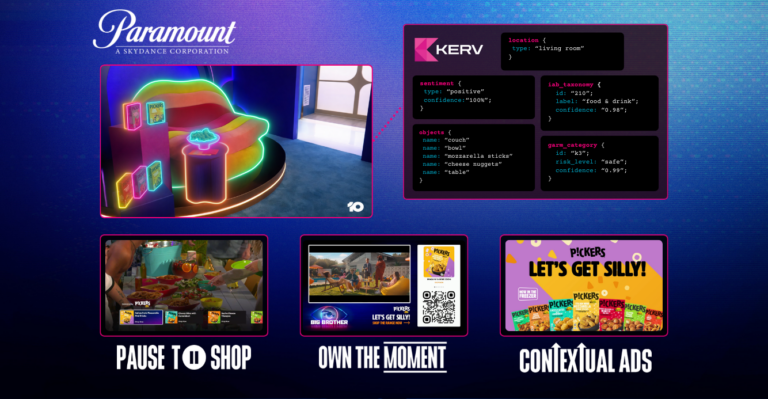
BUILDING A SHOPPABLE, ATTENTION-READY CTV OFFER: THE BIG BROTHER CONTEXTUAL CASE
26. 3. 2026In 2025, Paramount Australia, in partnership with FreeWheel and egta, hosted a webinar outlining a forward-looking…

GLOBO CREATES HOME SCREEN PROMINENCE FOR FREE-TO-AIR TV ON SMART TVS
26. 2. 2026Globo, Brazil’s largest commercial TV group, is rolling out DTV+, a next-generation free-to-air TV standard designed…
THE VISUAL TRANSFER EFFECT: HOW SOUND BUILDS BRANDS
24. 2. 2026In collaboration with neuro-marketing agency Unravel, Talpa Media has produced the scientific proof that audio does…

RMB TURNS QR CODE VOTING INTO A SHARED VIEWING MOMENT THAT STRENGTHS BRAND IMAGE FOR SPRITE AND DELI CHOC
24. 2. 2026Campaign objectives The chocolate snack Deli Choc and soft drink Sprite brands worked with RMB to…