

What you will find in the article
- Halloween spending is forecast to reach a record $13.5 billion in the US.
- Brands are launching campaigns earlier as Halloween shopping starts sooner.
- Twix, Fanta, and Nerds use horror, humor, and playful seasonal storytelling.
- Rivian brings Ghostbusters nostalgia to life with an interactive Halloween vehicle mode.
Halloween is no longer just an Anglo-American tradition of children dressing up in costumes and going door to door collecting candy. The holiday has evolved into a global marketing phenomenon, inspiring creative professionals across a wide range of industries every year. Alongside traditional confectionery manufacturers, automakers, beauty brands, and technology companies are increasingly embracing Halloween-themed marketing.
The figures confirm that Halloween is becoming an increasingly important commercial opportunity. According to this year's survey by the US National Retail Federation (NRF), American consumers are expected to spend a record $13.5 billion on Halloween, $400 million more than last year. Some 74% of Americans plan to celebrate, with average spending projected to reach approximately $115 per person.
At the same time, the way people approach Halloween is changing. Consumers are starting their shopping earlier, increasingly seeking experiences, and even using artificial intelligence to plan their celebrations. For brands, this means one thing: simply adding a pumpkin or a ghost to an advertisement at the end of October is no longer enough. They need a compelling idea that captures the audience's attention and, ideally, remains memorable long after the holiday is over.
Halloween Starts in Summer: Brands Extend the Season
What was once a single-day celebration is gradually becoming a months-long season. According to the NRF, 49% of American consumers begin their Halloween shopping in September or earlier, compared with just 34% a decade ago.
This shift is driven not only by enthusiasm for the autumn atmosphere but also by consumers' desire to spread expenses over a longer period or take advantage of special offers. For marketers, it creates an opportunity to start building awareness much earlier and develop longer-term narratives instead of relying on one-off advertisements.
Twix: Zombie Santa Claus Celebrates Hallowmas
This year, Twix has decided to bring together two holidays that could hardly seem more different: Halloween and Christmas. The result is Hallowmas, a celebration featuring an undead Santa Claus as its central character.
Zombie Claus returns in a new commercial in which he attempts to convince a teenage girl of the magic of this rather bizarre holiday. Twix uses a simple metaphor: just as it brings two chocolate bars together in one package, it also combines two distinctly different festive atmospheres.
In doing so, the brand is creating its own branded storytelling universe that extends beyond October 31. Zombie Claus has the potential to keep consumers engaged well into the Christmas season.
Video: Twix - Hallowmas Zombie Claus Lore
Fanta: Horror Icons Return
Fanta is also turning to familiar horror characters as it continues to expand its own Haunted Universe. This year's campaign features legendary horror movie villains, including Ghostface from the Scream franchise.
The commercials are complemented by limited-edition drinks and collectible packaging, bringing the horror atmosphere directly into stores. Fanta thus connects pop culture, products, and the shopping experience.
The campaign also demonstrates how a seasonal theme can evolve into a broader marketing platform that works across television, online video, retail activations, and social media.
Video: Fanta Halloween 2026
Nerds: Candy with a Monster of Its Own
Candy brand Nerds is also embracing the Halloween spirit. In its commercial Unleash Your Senses: Trick or Treat, costumed children encounter a friendly monster made of colorful candy while trick-or-treating.
Rather than relying on genuine scares, the advertisement emphasizes playfulness and the brand's distinctive visual identity. It serves as a reminder that Halloween does not always have to be dark and frightening. For family-oriented brands, the holiday can also provide the perfect setting for humor, imagination, and fun.
Video: Nerds - Trick or Treat
Consumers Want More Than Shopping. They Want to Experience Halloween
Beyond traditional purchases of candy, decorations, and costumes, Halloween experiences are becoming increasingly important. Some 34% of families with young children plan to visit Halloween-themed stores and retail displays.
Halloween is therefore becoming an opportunity to create not only advertisements but also immersive environments that consumers can experience firsthand. Brands are increasingly combining audiovisual campaigns with competitions, special products, events, and interactive features that customers can try for themselves.
Rivian: Bill Murray Busts Ghosts Again
American automaker Rivian has unveiled one of this year's most notable Halloween advertising campaigns. In collaboration with Sony Pictures, the company has revived the world of the legendary Ghostbusters, bringing Bill Murray himself into the commercial.
The green ghost Slimer also makes a return. This time, however, the spotlight is not solely on the movie characters. The star of the show is a Rivian electric vehicle transformed into a modern interpretation of the iconic Ecto-1.
And the campaign goes beyond the video. Rivian has introduced a special software feature called Halloween Mode, allowing vehicle owners to activate themed lighting and sound effects, along with interactive features inspired by the film.
In this way, the automaker transforms movie nostalgia into a real product experience. The advertising campaign becomes something customers can activate, enjoy, and share themselves.
Video: Rivian - Ghosbusters: Halloween Mode (2026)
Reese's: Searching for America's Ultimate Trick-or-Treating Street
This year, confectionery brand Reese's has set out to find the place where Halloween is celebrated best.
As part of its Trick-or-Treatiest Street in America initiative, the brand has assembled a special Halloween Council, whose members include actresses Christina Ricci and Kathy Najimy.
Using data on shopping behavior, Halloween decorations, and local community engagement, the brand is selecting the American street most deserving of the title of the country's best trick-or-treating destination.
Through this initiative, Reese's is moving beyond traditional product advertising toward community-based marketing. Candy becomes part of a broader story about neighborhood traditions, shared experiences, and the joy of celebrating together.
Reese's – Trick-or-Treatiest Street in America (2026), video a kampaň
Govee: Sarah Michelle Gellar Lights Up a Haunted House
Technology brand Govee is also embracing the Halloween atmosphere. Its campaign, Turn Up the Spooky. Slay Halloween., stars Sarah Michelle Gellar, best known for her role in the television series Buffy the Vampire Slayer.
In the commercial, the actress transforms an ordinary house into a haunted spectacle using Govee smart lighting.
The brand uses Halloween as an ideal opportunity for a product demonstration. The lighting effects are not merely a backdrop to the advertising story; they are the central proof of what the technology can achieve.
Govee also shows that Halloween advertising can reach consumers who might not otherwise consider purchasing smart lighting.
Video: Govee - Turn Up the Spooky (2026)
AI Inspires Halloween Shopping. Brands Respond with Humor and Cinematic Storytelling
The way consumers discover products and plan Halloween celebrations is also evolving. According to the NRF, 47% of consumers are using artificial intelligence tools for Halloween shopping this year. AI most commonly helps them find creative ideas, plan celebrations, and choose products.
AI is becoming part of the consumer journey, reshaping the environment in which brands compete for attention. An attractive visual or a themed product alone may no longer be enough.
This year's campaigns therefore highlight the power of compelling storytelling, unexpected twists, and entertaining content that can capture audiences' attention beyond traditional advertising channels.
e.l.f. Cosmetics: Beauty Has Witchy Powers
Beauty brand e.l.f. Cosmetics has unveiled a short advertising film titled The e.l.f.ing Magical Sisters, in which three witches attempt to master their magical powers.
Starring Priah Ferguson, Keyla Monterroso Mejia, and Bebe Wood, the campaign combines horror-inspired aesthetics, humor, and the brand's popular Soft Glam makeup products.
The brand embraces cinematic storytelling, creating something closer to a short comedy film than a conventional commercial. The product remains part of the narrative, but entertainment takes center stage.
Video: e. l. f. Cosmtics – The e.l.f.ing Magical Sisters (2026)
Pringles: A Love for Chips That Lasts Beyond the Grave
Pringles has created one of this year's most bizarre Halloween campaigns. Under the title Once You Drop, the brand is offering fans the chance to win a special cremation urn shaped like its iconic chip can, along with a symbolic supply of Pringles for the next two centuries.
The unusual concept draws on the true story of the designer behind the Pringles packaging, whose ashes were partially buried in one of the brand's signature cans after his death.
By connecting its own history with dark humor, the brand has created a campaign activation whose absurdity has the potential to spark conversations far beyond traditional advertising.
Video: Pringles - Once You Drop (2026)
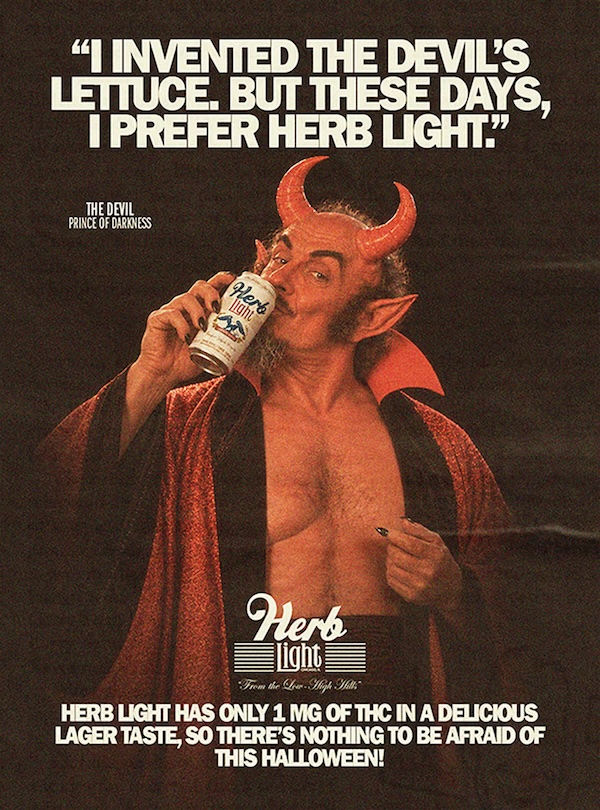
Herb Light: Horror Stories Become a Ticket to a Haunted House
American cannabis beverage brand Herb Light is taking a similarly unconventional approach.
Its ScareBnB campaign invites consumers to share their scariest cannabis-related experiences. Selected participants have the chance to win a stay in a haunted house.
The commercial draws inspiration from the aesthetics of B-movie horror films, featuring exaggerated, comical versions of familiar monsters, including Frankenstein's monster and a werewolf.
The campaign combines horror parody with an interactive competition, demonstrating how brands can use Halloween to create content that goes beyond direct sales.
Halloween as a Creative Laboratory for Brands
This year's campaigns confirm that Halloween is becoming an increasingly attractive opportunity for marketers to experiment. Brands are embracing more humor, bolder ideas, and unexpected combinations that might not work in their everyday communications.
While Twix is building its own festive universe and Rivian is connecting movie characters with hands-on user experiences, Reese's is engaging local communities, and Pringles is proving that even a bizarre idea can have a strong connection to a brand's identity.
Creativity, authenticity, and memorability are becoming increasingly important at a time when consumers have more options than ever for finding inspiration and spending their time.
And that may be the most important lesson of Halloween 2026. A successful advertisement does not necessarily have to be the scariest. Above all, it needs to give people a reason to remember it.
Because the ultimate advertising nightmare? Having everyone forget your brand.
Source: ScreenVoice: ADWEEK: The 2026 Halloween Ads Worth Screaming About