



In a category where retailers typically compete on price and visibility, Albert Heijn, the supermarket retailer, chose a different path. Together with DPG Media, the brand moved beyond traditional sponsorship to become an essential part of the story of the prime-time music show Lift You Up on VTM.
DPG Media worked through Integreate, its creative hub, to shape that role before the media plan became a list of spots, pre-roll and placements. The case was built around the “backstage rider”: the list of items artists or coaches ask to have available backstage before a performance.
In a festival and concert country like Belgium, artist riders often capture people’s imagination, from blue M&Ms to a special bottle of champagne. Albert Heijn used that familiar idea, but made sure the rider options consisted only of healthy and energy-rich products. This also linked the concept to the company’s mission: “making better food accessible to everyone.”
The creative idea, from “rider” to grocery list
The campaign idea was built around a simple cultural parallel:
Just as a music artist needs a “Backstage Rider” to perform, a family needs a grocery list to live.
The team built an Albert Heijn-style pop-up supermarket on set. It appeared in the backstage environment and supported the storyline around what artists and coaches might want before going on stage.
For viewers, the store belonged to the preparation world around the performances: food, drinks, small preferences and last-minute needs. Albert Heijn could appear through the set and the storyline, instead of only through a logo or a break bumper.
For the advertiser, the link was practical. A rider is a list of personal preferences. A grocery list works in a similar way. The programme idea could therefore connect the show with product choices, store material and social content.
The execution, from screen to shelf
The campaign ran across eight episodes over eight weeks.
On VTM, the media plan included 2 x 7-second billboards around eight episodes, with 16 billboards in total. Each week, Albert Heijn used a different billboard to feature that week’s rider product. The VTM plan also included product placement, storyline integrations and end-credit presence in four episodes.
The storyline integrations gave contestants a short moment to imagine what would happen if they won: their look, their dream stage and their rider on tour. Their answers ranged from healthy food to keep up with touring to guilty-pleasure snacks for a break.
On VTM GO, DPG Media’s free online video-on-demand platform, the plan included pre-roll around Lift You Up, product placement and storyline integrations.
The campaign then moved from screen to shelf. Every week, the products requested by artists and contestants were curated into a “Rider of the Week.” Viewers who saw the products featured during the broadcast could find the same selection available the next morning through the Albert Heijn app and promotional leaflet. The weekly brochure also carried Lift You Up branding with the rider concept.
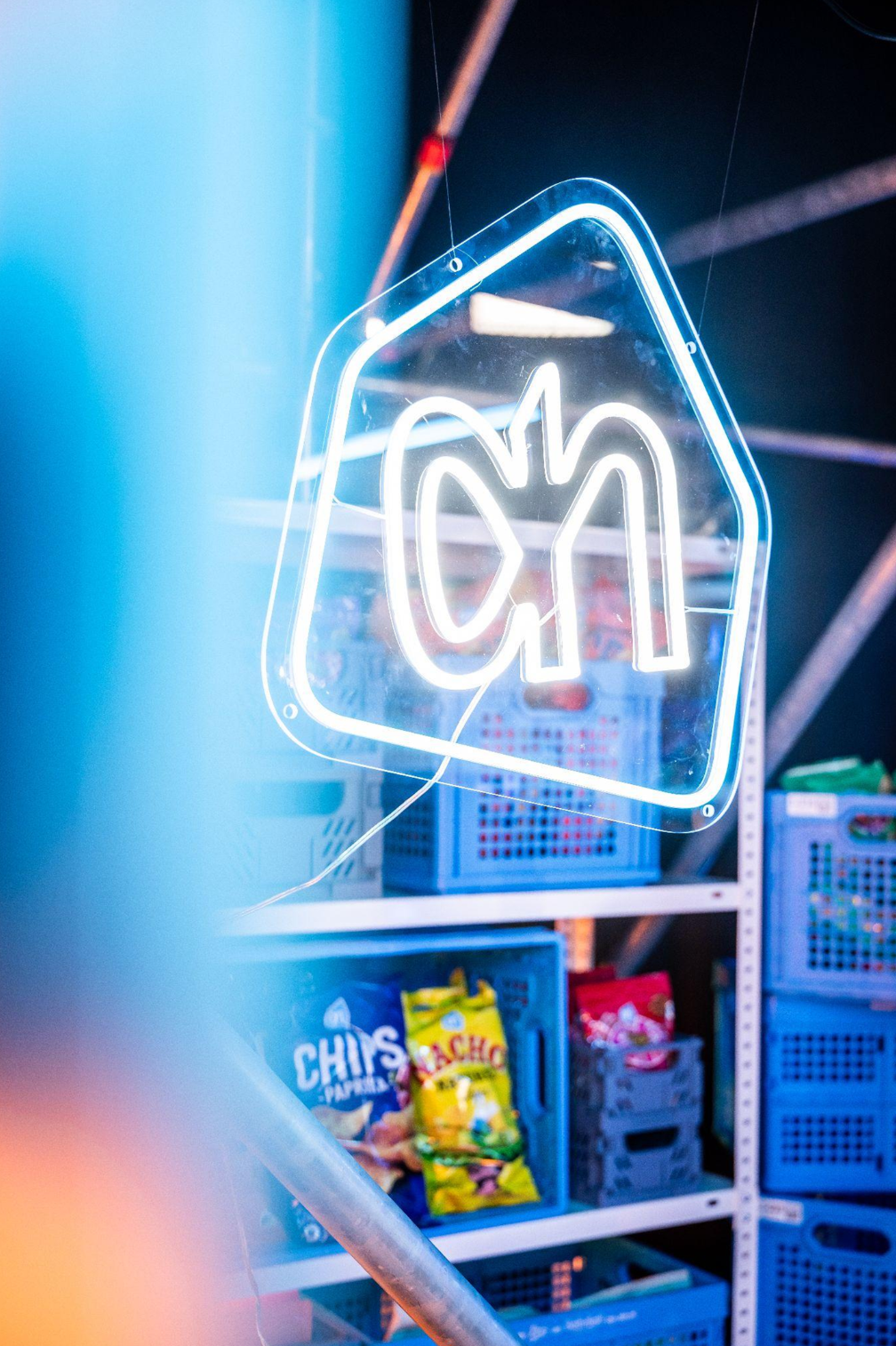
Social media gave viewers a way to use the same idea themselves. Albert Heijn used contestants in social posts built around product and rider dilemmas, while VTM platforms also used the rider question in their own social content. The campaign invited audiences to “Create Your Own Rider”, turning the rider into a simple participation mechanic.
Albert Heijn also used its own channels for in-store branding, social content and product activation. The TV show introduced the rider. VTM and VTM GO kept the brand close to the programme. Store material brought the idea closer to featured products.
The buyer could see what each part of the plan was doing: reach around the show, brand presence inside the show, audience interaction on social, and product visibility in store.
For DPG Media, the commercial work started before the final inventory plan. The sales house first defined where the brand could credibly appear in the format, then added spots, pre-roll, placements, social content and store extensions around that role.

Results connected viewing, brand health and sales signals
Lift You Up reached more than 800,000 viewers per episode and achieved a 39% market share.
The campaign strengthened Albert Heijn’s brand indicators among viewers. Top-of-mind awareness tripled among viewers of Lift You Up, with a x3.4 uplift. Among occasional or non-shoppers, consideration for Albert Heijn increased by 14 percentage points.
It also delivered a measurable short-term sales uplift on featured rider products, as well as high acceptance scores for the integration; but also signs of cultural impact, with audiences using “rider” terminology in social conversations.
Together, these results give buyers a broader view of the campaign’s performance: reach, brand health, retail signals and delivery of placements.
Source: egta.com
OTHER CASE STUDIES

CHANNEL 4 SALES TURNS EXISTING TV ADS INTO ENHANCED STREAMING FORMATS
2. 10. 2026Channel 4 Sales launched Enhance in June 2026, the broadcaster’s new suite of CTV streaming ad…
MFE ADVERTISING: SCALING AI-POWERED CONTEXTUAL ADVERTISING ACROSS EUROPE
28. 9. 2026From Spain to Italy, MFE Advertising is using AI and HbbTV to make programme context an…

HOW DPG MEDIA TURNS THE BACKSTAGE OF A PRIME-TIME MUSIC SHOW INTO A RETAIL ENGINE
17. 8. 2026In a category where retailers typically compete on price and visibility, Albert Heijn, the supermarket retailer,…

AN IMMERSIVE CANAL+ BRAND SOLUTIONS COLLABORATION FOR SKIN-CARE BRANDS WITH SENSITIVE STORIES TO TELL
26. 6. 2026CANAL+ BRAND SOLUTIONS and its in-house studio LA FACTORY created “Marquer l’Invisible” for Avène, linking Cicalfate+…

M6 UNLIMITED TESTS AI SPOT CREATION FOR SMALLER TV AND STREAMING ADVERTISERS
22. 5. 2026M6 Unlimited is testing a simpler route into TV and streaming for SMEs and new advertisers…
THE TV ADVERTISING PARADOX, A THINKTV NEW ZEALAND CASE STUDY (2/2)
22. 5. 2026ThinkTV New Zealand built its campaign around the contradiction that linear TV was being called obsolete…

A BIG-SCREEN STUDY FINDS STRONGER ATTENTION ON TV4 PLAY THAN ON YOUTUBE
24. 4. 2026TV4 just launched its third attention study, comparing the viewing experience on its streaming service (TV4…
THE TV ADVERTISING PARADOX, A THINKTV NEW ZEALAND CASE STUDY (1/2)
24. 4. 2026In late 2024, ThinkTV New Zealand, under the leadership of Jacqueline Freeman, GM Communications, undertook a…

AD EMISSIONS MEASUREMENT: LESSONS FROM THE FINNISH MARKET
31. 3. 2026Finland’s commercial TV broadcasters spent the past year developing a carbon emissions measurement framework for linear…

A NEW WAY FOR FRANCETV PUBLICITÉ TO SELL CONTEXTUAL VIDEO ADVERTISING
27. 3. 2026FranceTV Publicité (FTP), the advertising sales house for French public television, has introduced Context.IA into its…
BUILDING A SHOPPABLE, ATTENTION-READY CTV OFFER: THE BIG BROTHER CONTEXTUAL CASE
26. 3. 2026In 2025, Paramount Australia, in partnership with FreeWheel and egta, hosted a webinar outlining a forward-looking…
GLOBO CREATES HOME SCREEN PROMINENCE FOR FREE-TO-AIR TV ON SMART TVS
26. 2. 2026Globo, Brazil’s largest commercial TV group, is rolling out DTV+, a next-generation free-to-air TV standard designed…