



Teletest 2.0 is Austria’s new TV measurement system, developed by AGTT, which significantly enhances the way TV viewership and ad reach are measured. It introduces a new audience panel with 100,000 synthetic people meter participants, significantly increasing accuracy and depth of audience measurement, enabling real-time data collection and improving data quality across the Austrian television landscape.
The need for Teletest 2.0 arose due to the evolving media consumption landscape, characterized by digitalization, streaming services, mobile devices, and an increasing number of content and distribution channels. This new system is designed to provide more accurate and granular data on TV audience behaviour, leading to better programming decisions and advertising strategies.
One of the key innovations introduced by Teletest 2.0 is the ability to integrate a programmatic CPM (Cost Per Mille) model for traditional linear TV ads, called TV-LOAD. This allows Austrian TV stations to compete more effectively for digital advertising budgets, reclaiming revenue that was previously lost to online platforms.
How Teletest 2.0 Works
Teletest 2.0 operates through a combination of advanced methodologies and technologies. Data collection is achieved through 100,000 synthetic panel participants, 1,000,000 connected TVs and set-top boxes, and 3,200 traditional Austrian people meter participants for calibration and verification. This multi-layered approach reduces fluctuations and zero-reach valleys while providing a stable and representative data set.
The measurement system is centralized and integrated by the signal owner, ensuring consistency and fairness across all TV channels. Real-time data collection allows for instant adjustments and recovery mechanisms maintain data integrity. To enhance accuracy, Teletest 2.0 employs a model-training approach. The Twin Search methodology identifies 30 RPD (Return Path Data) twins for each panel device and member, creating a robust foundation for audience measurement. The Synthetic Panel (SPIN) generates a fully representative panel by distributing weights from the original panel members to synthetic twins. The re-calibration process further refines the accuracy by using existing people meter data to fine-tune the synthetic panel.
The integration of this system with TV advertising enhances the efficiency of ad placements. By leveraging real-time data, Teletest 2.0 supports TV-LOAD and Media Manager, allowing advertisers to dynamically optimize commercial breaks based on live audience insights. This ensures that ad content reaches the most relevant viewers at the optimal time.
Key Findings and Application
The introduction of Teletest 2.0 has already demonstrated substantial improvements in TV audience measurement and advertising effectiveness. The system provides real-time, representative usage data, eliminating the issue of zero ratings for nearly all TV content. The standard deviation in ad reach has been reduced in 86% of cases, creating a more stable and predictable advertising environment.
With more accurate TV ratings, smaller and younger audiences are now more visible, enabling broadcasters to make data-driven programming decisions. The enhanced advertising model introduced by TV-LOAD ensures that advertisers can place ads more efficiently, maximizing revenue potential. The integration with Media Manager allows for live optimization of commercial breaks, significantly improving audience engagement and advertiser ROI.
Teletest 2.0 is seamlessly integrated into existing TV research and ad booking platforms, ensuring that TV stations and advertisers can continue their workflows without disruption. This allows broadcasters to benefit from improved data accuracy while maintaining operational continuity.
From a market perspective, Teletest 2.0 has stabilized video reach across Austria, provided deeper insights for program evaluation, and enabled the real-time filling of empty ad slots, preventing revenue loss. These improvements position Austrian television networks as competitive players in the evolving digital advertising landscape, ensuring sustainable growth and increased profitability.
Conclusion
Teletest 2.0 represents a major leap forward in Austrian TV audience measurement, providing unprecedented accuracy and real-time data insights. By integrating digital advertising models into traditional TV, it bridges the gap between television and digital advertising, ensuring that TV networks can reclaim lost advertising budgets. The improvements in data quality, stability, and advertising optimization make it a game-changer for broadcasters and advertisers alike, setting a new standard in TV measurement for the future.
egta members can view the presentation of the study at the 2025 Market Intelligence Meeting (MIM) here.
Source: egta.com
OTHER CASE STUDIES

HOW DPG MEDIA TURNS THE BACKSTAGE OF A PRIME-TIME MUSIC SHOW INTO A RETAIL ENGINE
17. 8. 2026In a category where retailers typically compete on price and visibility, Albert Heijn, the supermarket retailer,…

AN IMMERSIVE CANAL+ BRAND SOLUTIONS COLLABORATION FOR SKIN-CARE BRANDS WITH SENSITIVE STORIES TO TELL
26. 6. 2026CANAL+ BRAND SOLUTIONS and its in-house studio LA FACTORY created “Marquer l’Invisible” for Avène, linking Cicalfate+…

M6 UNLIMITED TESTS AI SPOT CREATION FOR SMALLER TV AND STREAMING ADVERTISERS
22. 5. 2026M6 Unlimited is testing a simpler route into TV and streaming for SMEs and new advertisers…
THE TV ADVERTISING PARADOX, A THINKTV NEW ZEALAND CASE STUDY (2/2)
22. 5. 2026ThinkTV New Zealand built its campaign around the contradiction that linear TV was being called obsolete…

A BIG-SCREEN STUDY FINDS STRONGER ATTENTION ON TV4 PLAY THAN ON YOUTUBE
24. 4. 2026TV4 just launched its third attention study, comparing the viewing experience on its streaming service (TV4…

THE TV ADVERTISING PARADOX, A THINKTV NEW ZEALAND CASE STUDY (1/2)
24. 4. 2026In late 2024, ThinkTV New Zealand, under the leadership of Jacqueline Freeman, GM Communications, undertook a…

AD EMISSIONS MEASUREMENT: LESSONS FROM THE FINNISH MARKET
31. 3. 2026Finland’s commercial TV broadcasters spent the past year developing a carbon emissions measurement framework for linear…

A NEW WAY FOR FRANCETV PUBLICITÉ TO SELL CONTEXTUAL VIDEO ADVERTISING
27. 3. 2026FranceTV Publicité (FTP), the advertising sales house for French public television, has introduced Context.IA into its…
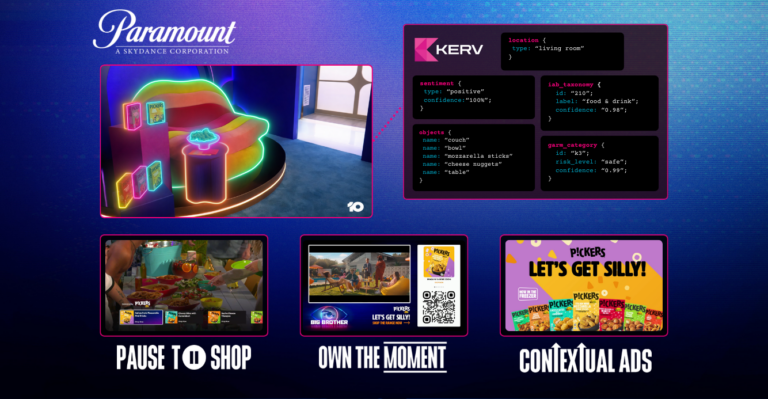
BUILDING A SHOPPABLE, ATTENTION-READY CTV OFFER: THE BIG BROTHER CONTEXTUAL CASE
26. 3. 2026In 2025, Paramount Australia, in partnership with FreeWheel and egta, hosted a webinar outlining a forward-looking…

GLOBO CREATES HOME SCREEN PROMINENCE FOR FREE-TO-AIR TV ON SMART TVS
26. 2. 2026Globo, Brazil’s largest commercial TV group, is rolling out DTV+, a next-generation free-to-air TV standard designed…

THE VISUAL TRANSFER EFFECT: HOW SOUND BUILDS BRANDS
24. 2. 2026In collaboration with neuro-marketing agency Unravel, Talpa Media has produced the scientific proof that audio does…

RMB TURNS QR CODE VOTING INTO A SHARED VIEWING MOMENT THAT STRENGTHS BRAND IMAGE FOR SPRITE AND DELI CHOC
24. 2. 2026Campaign objectives The chocolate snack Deli Choc and soft drink Sprite brands worked with RMB to…