



In a world where distractions are everywhere, grabbing consumers’ attention feels like trying to catch lightning in a bottle. From scrolling through social media while watching TV to listening to the radio while driving, consumers are often distracted. This presents a unique challenge for advertisers: how can we connect with an audience immersed in multitasking? The answer, it turns out, lies in repetition.
The Power of Repetition
Ster’s research reveals that even in a distracted world, repetition can have a significant impact. While consumers may not always be focused on an advertisement, repeated exposure to the same commercial ensures that the brand’s message gradually “wears in” to their subconscious. This means that, over time, a consumer will recognise the brand, internalise its message, and form positive associations. The research shows that multiple exposures can even make distracted consumers more receptive to the commercial, leading to better brand recognition, enhanced brand image, and ultimately, increased purchase behaviour.
But how often should a brand repeat its advertisement for maximum effect? How many exposures are needed to turn casual listeners into loyal customers? And is there such a thing as too much repetition?
Ster’s neuro-research, conducted in partnership with Unravel Research, explored the impact of repeated TV and radio commercials on consumer behaviour. By tracking distracted participants over four weeks, the study provides a clear picture of how repetition influences brand recognition, message transfer, and purchase intentions.
he study shows that even the first exposure to an advertisement can have an impact. For example, both brands with low and moderate brand awareness saw increases in brand recognition after just one exposure. But this initial impact is only the beginning. For “wear-in” to occur—where the brand’s message truly resonates with consumers—multiple exposures are necessary.
The findings suggest that for brand recognition and message delivery, the minimum number of exposures needed to engage a distracted audience is around three to four. This is particularly true for radio, which, due to its simplicity and reliance on sound, attracts more mental attention than television. This means that radio can deliver brand recognition and message transfer more efficiently, even with a relatively low number of exposures.
The Impact on Brand Recognition
The effectiveness of repetition heavily relies on the type of media chosen. For campaigns focused on increasing brand recognition or conveying a clear message, radio is often the most effective medium. Radio’s ability to capture attention, even in a distracted environment, makes it uniquely powerful. Its reliance on sound allows brands to infiltrate the routines of consumers, ensuring the message sticks despite background noise or multitasking.
An ideal strategy may begin with TV to spark initial interest and create desire, followed by radio to sustain the momentum and reinforce the brand message. This approach ensures that the campaign resonates through multiple touchpoints, maximising the impact of repetition and increasing the likelihood of desired outcomes.
Repetition is a powerful tool in advertising, especially in a world where distracted consumers are the norm. While repetition is critical, it is crucial to strike the right balance. Research indicates that while there is no evidence of wear-out (a decrease in effectiveness), even after twelve exposures, the impact of repeated exposures can eventually stabilise. By ensuring that a commercial is seen or heard multiple times, advertisers can achieve greater brand recognition, stronger associations, and ultimately – higher sales. The key is to find the right balance: too few exposures can result in a lack of impact, while too many can lead to diminishing returns. With the right strategy, repetition can make all the difference in achieving advertising success. Download the Magic of Repetition whitepaper here.
egta members can view the presentation of the study at the 2025 Market Intelligence Meeting (MIM) here.
Source: egta.com
OTHER CASE STUDIES

HOW DPG MEDIA TURNS THE BACKSTAGE OF A PRIME-TIME MUSIC SHOW INTO A RETAIL ENGINE
17. 8. 2026In a category where retailers typically compete on price and visibility, Albert Heijn, the supermarket retailer,…
AN IMMERSIVE CANAL+ BRAND SOLUTIONS COLLABORATION FOR SKIN-CARE BRANDS WITH SENSITIVE STORIES TO TELL
26. 6. 2026CANAL+ BRAND SOLUTIONS and its in-house studio LA FACTORY created “Marquer l’Invisible” for Avène, linking Cicalfate+…

M6 UNLIMITED TESTS AI SPOT CREATION FOR SMALLER TV AND STREAMING ADVERTISERS
22. 5. 2026M6 Unlimited is testing a simpler route into TV and streaming for SMEs and new advertisers…
THE TV ADVERTISING PARADOX, A THINKTV NEW ZEALAND CASE STUDY (2/2)
22. 5. 2026ThinkTV New Zealand built its campaign around the contradiction that linear TV was being called obsolete…

A BIG-SCREEN STUDY FINDS STRONGER ATTENTION ON TV4 PLAY THAN ON YOUTUBE
24. 4. 2026TV4 just launched its third attention study, comparing the viewing experience on its streaming service (TV4…

THE TV ADVERTISING PARADOX, A THINKTV NEW ZEALAND CASE STUDY (1/2)
24. 4. 2026In late 2024, ThinkTV New Zealand, under the leadership of Jacqueline Freeman, GM Communications, undertook a…

AD EMISSIONS MEASUREMENT: LESSONS FROM THE FINNISH MARKET
31. 3. 2026Finland’s commercial TV broadcasters spent the past year developing a carbon emissions measurement framework for linear…
A NEW WAY FOR FRANCETV PUBLICITÉ TO SELL CONTEXTUAL VIDEO ADVERTISING
27. 3. 2026FranceTV Publicité (FTP), the advertising sales house for French public television, has introduced Context.IA into its…
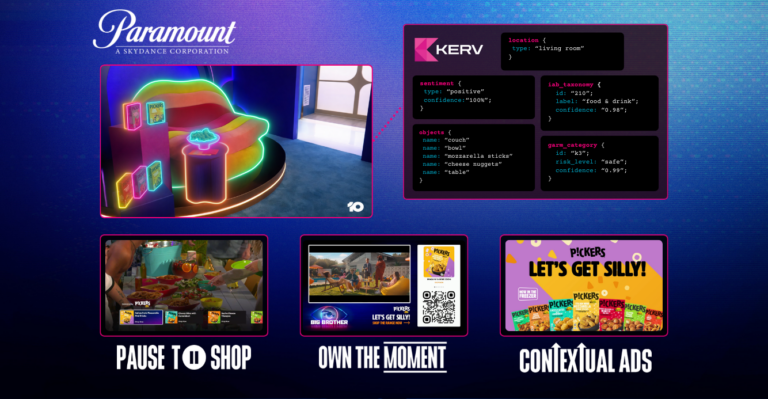
BUILDING A SHOPPABLE, ATTENTION-READY CTV OFFER: THE BIG BROTHER CONTEXTUAL CASE
26. 3. 2026In 2025, Paramount Australia, in partnership with FreeWheel and egta, hosted a webinar outlining a forward-looking…

GLOBO CREATES HOME SCREEN PROMINENCE FOR FREE-TO-AIR TV ON SMART TVS
26. 2. 2026Globo, Brazil’s largest commercial TV group, is rolling out DTV+, a next-generation free-to-air TV standard designed…

THE VISUAL TRANSFER EFFECT: HOW SOUND BUILDS BRANDS
24. 2. 2026In collaboration with neuro-marketing agency Unravel, Talpa Media has produced the scientific proof that audio does…

RMB TURNS QR CODE VOTING INTO A SHARED VIEWING MOMENT THAT STRENGTHS BRAND IMAGE FOR SPRITE AND DELI CHOC
24. 2. 2026Campaign objectives The chocolate snack Deli Choc and soft drink Sprite brands worked with RMB to…