
What you will find in the article:
- Televize doplňuje kino-exkluzivitu a zesiluje pozornost diváků.
- Kampaň k Odyssei využívá sílu živého televizního vysílání.
- Universal využívá synergii mezi filmem a sportovním vysíláním.
The campaign for Nolan’s new film is most often described as a rebellion against traditional film marketing. The first teaser and selected premium previews initially appeared only in cinemas, advance sales for selected IMAX 70mm screenings began a year ahead of the release, and the director’s preferred format will, as usual, be available in only a handful of the world’s most technologically advanced cinemas. It might therefore appear that Universal has turned its back on television. In reality, however, the studio has not abandoned it. It has simply used it differently. Universal’s approach provides an excellent illustration of how responsibilities can be divided effectively in the age of total video. Premium content and the crucial first impression remained the preserve of cinema, while television was used to its full potential for what it still does best. Live broadcasts with mass reach play a key role in this strategy.
Video: The Odyssey | Official Trailer
It is highly likely that audiences first encountered selected footage from The Odyssey in the cinema rather than in their mobile feeds. From a promotional perspective, this is crucial. This controlled first encounter creates a sense of exclusivity and elevates the film’s release into a global pop-cultural event. The constant balancing act between exclusivity and mass reach is therefore not a weakness of the campaign, but its central principle. A pop-cultural event loses its power if it remains an experience solely for those already in the know. To become a genuine mass-market hit, it must reach beyond the cinephile bubble. Nolan’s campaign is almost textbook in its precision: cinema creates desire and a premium first impression, while live television broadcasts deliver reach, reminders and audiences who might not otherwise encounter the campaign.
Television as an amplifier of attention
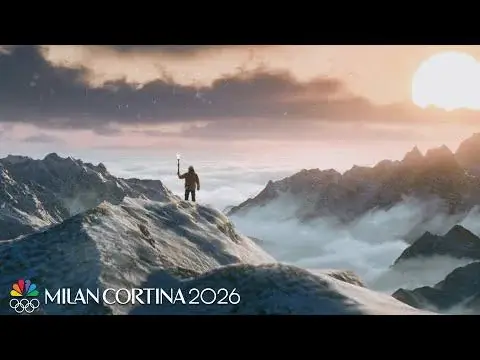
The television component of the campaign for The Odyssey does not undermine its cinema exclusivity but complements it. Universal used television selectively, placing adverts at moments when the medium can command the greatest attention: during live broadcasts watched simultaneously by millions of viewers. The first stage took place as early as January 2026 during the NFL play-offs. NBCUniversal announced that it would broadcast a 45-second promotional spot featuring Matt Damon during the NFL Wild Card game between the Los Angeles Chargers and the New England Patriots. The commercial primarily promoted the Winter Olympics in Milan and Cortina, but Damon appeared as both the face and voice of the Olympic journey. This was a deliberate connection, as he plays the title character, Odysseus, in Nolan’s film. Universal and its parent group, NBCUniversal, thus used a single motif on several levels, promoting both the Olympic coverage and the eagerly anticipated film release.
Video: Milan Cortina: Winter Olympics on NBC - Matt Damon Teaser
This foundation provided a natural platform for the next stage. On 25 January 2026, a commercial featuring new footage from Nolan’s film was broadcast during the AFC Championship game between the New England Patriots and the Denver Broncos. The one-minute television spot included previously unseen footage and immediately attracted attention, not least because of musician Travis Scott’s unexpected appearance in a scene with Tom Holland and Jon Bernthal. This was an important moment for the campaign. Although television was not the primary setting for the major reveal, it was given a carefully measured element of surprise that rapidly spilled over into online discussion. The NFL broadcast did not serve as a substitute for the digital campaign, but as its trigger. An event on live television immediately generated material for social media, fan speculation and media commentary.
Video: TRAVIS SCOTT SPOTTED IN ‘THE ODYSSEY’ TRAILER
This detail demonstrates just how closely live television can now be connected to social media. The commercial is broadcast in a shared, linear moment, but its second life begins online immediately afterwards. Fans analyse the cameo, speculate about the extent of the role and share clips, while the media turn the story into another wave of attention. The effect was particularly powerful for The Odyssey because Nolan’s marketing has long been characterised by restraint and the controlled release of information. Every new shot therefore becomes an event. In this context, a television commercial is not merely advertising space, but a carefully managed trigger for FOMO and fan discussion.
The effectiveness of this synergy was confirmed in February, when the Winter Olympics began in Milan and Cortina. For the occasion, NBCUniversal created a special programming block that included not only the Olympics in prime time but also Super Bowl LX and the NBA All-Star Game. Another Matt Damon commercial, entitled “Our Games”, premiered during the first evening of prime-time Olympic coverage. A shorter version subsequently appeared during the Super Bowl pre-game show. For Universal, this represented an ideal connection between two worlds. The star of an eagerly anticipated blockbuster promoted the Olympic Games while also providing a subtle reminder of his own cinematic universe.
From a marketing perspective, the ownership structure behind the campaign is particularly important. Universal Pictures, NBC, NBC Sports and Peacock are all part of the same NBCUniversal ecosystem. For some of the campaign’s key moments, the studio therefore did not have to view television merely as an expensive external medium in which it had to purchase advertising space. It could draw on sister platforms, sports rights, Olympic coverage, a streaming service, and its own digital and social channels. This did not apply to the entire television campaign. The commercial shown during the AFC Championship, for example, appeared during Fox’s broadcast. Even so, the strategy represents vertical integration in practice. A single media group can turn a major sporting event into a showcase for its own film while using the film’s star to promote its own sports coverage.
Video: The Odyssey | Official New Trailer (Universal Pictures) - HD
Television does not function here as an old-fashioned mass medium expected to carry the entire burden of the film’s marketing. Instead, it serves as a premium environment for several carefully selected moments. The NFL play-offs provided the first mass-market reminder, the AFC Championship added an element of surprise and generated an online response, Olympic prime time created a thematic connection between sporting and cinematic spectacle, and the Super Bowl pre-game show placed a shorter version of the message immediately before the year’s most-watched television event. Each of these advertising opportunities served a slightly different purpose, but together they followed the same logic: reveal as little as possible, but provide enough of a reminder to keep the film at the centre of attention.
This becomes even clearer when the television campaign is compared with the material that remained exclusive to cinemas. The first teaser was shown before screenings of Jurassic World Rebirth in the summer of 2025 and was not initially made available online through official channels. It was followed by a six-minute cinema preview and other material linked to premium screenings. Only after Universal officially released the full trailer online did the campaign begin operating at digital scale, attracting more than 120 million views on its first day. The division of roles is therefore relatively clear: cinema builds an aura of exclusivity, online channels scale interest among fans, and television provides mass reach at moments when audiences are most attentive.
Where television still comes out on top
Linear television has not automatically been the focal point of every major advertising campaign for some time. This is a change reflected in the current shift in advertising budgets. Looking more closely at the US market, linear television’s share of television and video advertising has fallen below 40%. At the same time, digital video continues to grow, with advertising investment expected to exceed $80 billion in 2026. Social media is also gaining ground, with year-on-year growth estimated at around 15% this year. Some investment is also moving into connected television and streaming. This is not, however, a simple direct relationship or a smooth transfer from one channel to another. The entire television ecosystem is undergoing a dynamic transformation.
Nolan’s campaign for The Odyssey therefore does not represent a return to the old model. Television is not carrying the main burden of promoting the film. Instead, Universal is using it selectively and with surgical precision.
Film distributors have long debated the fact that television historically absorbed a substantial proportion of marketing budgets, even though its direct contribution to the resulting box-office revenue did not always reflect that level of investment. Digital channels, by contrast, are increasingly used to target specific audiences and convert interest into ticket sales. This is another reason why Universal’s decision to use television not as the primary setting for unveiling the film, but as a targeted tool for mass-market reminders, makes sense.
This form of television placement remains effective because both cinema and television primarily sell the focused attention of a large audience at a specific moment. This is also the central reason why major premieres, sports broadcasts and concert films are treated as marketing events that can command premium prices. The best-known example remains the Super Bowl. Super Bowl LX attracted almost 125 million viewers across television and streaming platforms, making it one of the most-watched broadcasts in US history. The price of a 30-second advertising slot was around $8 million. This is why the industry often describes the Super Bowl as a kind of “North Star” for brands: a place where they can still achieve mass reach, genuine attention and a shared cultural moment that audiences want to experience in real time, even in an era of media fragmentation.
Nor is this limited to a single American advertising extravaganza. The growth of live sport is significantly affecting the entire premium video market and, according to some estimates, is helping to push global advertising expenditure towards the one-trillion-dollar mark. The same logic can also be seen outside sport. Taylor Swift broke AMC’s advance ticket sales records, while Beyoncé subsequently confirmed the power of the concert film as a cinema event. In both cases, the formats occupied the space between music, cinema, television and a fan-driven event. All these examples confirm the same trend: the most valuable element is not the content itself, but the ability to turn it into a moment audiences feel they must experience.
A similar principle underlies what is known as event cinema. Nolan’s The Odyssey creates scarcity artificially through restricted access to trailers, an emphasis on the big screen and the limited availability of premium formats. Live television derives its scarcity from the nature of the event itself. A match, final or Olympic broadcast happens only once and brings audiences together at that particular moment, both on television and across streaming platforms. The Odyssey and the Super Bowl therefore address the same problem from opposite directions. Cinema creates exceptionality through exclusivity, while live television builds it around the unrepeatable nature of the moment. In both cases, however, what is being sold is the same: the feeling that the viewer is part of something bigger.
Lessons for the Czech market
For the Czech market, Nolan’s The Odyssey is interesting not merely as a Hollywood marketing curiosity. Above all, it demonstrates that it no longer makes sense to frame the debate about television and digital media as a battle between old and new. It is far more useful to consider the role each channel performs within a campaign. This perspective is particularly important in the Czech and Central European context, where television remains an exceptionally powerful medium. According to Nielsen Admosphere data cited by ScreenVoice, television sets are present in most Czech households, television reaches around 95% of the country’s television audience each month, and the figure is even higher among older target groups. Television also maintains a significant reach among younger generations.
The size of the audience is not the only important factor. Research has consistently highlighted television’s strong performance in terms of advertising recall, attention and emotional impact. The large screen, shared viewing experience and programme context create a different type of contact from content encountered while rapidly scrolling through a mobile feed. This is why cinema and live television fit together so naturally in Nolan’s campaign. Both environments offer a more attentive viewer, a larger screen and a sense of occasion.
For advertisers, the practical lesson is relatively clear. A premium first impression should be delivered in a controlled manner. A mass-market reminder, by contrast, belongs in an environment where audiences genuinely come together at the same time. In the Czech market, this need not be the Super Bowl. It could be a major sporting broadcast, a prominent television event, the final of a competition or any programme capable of creating a shared media moment. The key is not to copy the American model, but to understand its underlying principle: to turn not only the content but also the advertising placement into an event.
At the same time, The Odyssey is not a universal blueprint for every brand. A campaign of this strength is possible only for an organisation with an exceptionally powerful name, a distinctive product, genuine scarcity and, ideally, access to its own media inventory. This is also the critical aspect of the wider shift towards event-based marketing. Attention and budgets may become concentrated around a small number of premium moments, while more conventional campaigns lose space and visibility. Nolan’s The Odyssey is therefore neither evidence of the death of television advertising nor a return to an era in which television carried an entire campaign. Instead, it demonstrates the medium’s changing role as a tool for mass reach, premium context and shared moments within a carefully constructed total video mix.