
What you will find in the article:
- Historie speciálních efektů v reklamě a jejich vývoj
- Přechod od praktických efektů k digitální postprodukci
- Reklama "Surfer" jako milník v použití CGI
- Využití počítačové grafiky v moderní reklamě
- Důležitost reklamního průmyslu pro technologický pokrok v efektech
Viewers often have no idea how much work goes into a commercial lasting just a few dozen seconds. What appears to be a simple shot of a car driving through mountainous countryside or a bottle of drink floating in the air is usually the result of the work of dozens of specialists in visual effects, simulations, animation, image composition or digital retouching. Thanks to large budgets, short formats and a willingness to experiment, the advertising industry has become a key arena for testing and developing new visual effects technologies, which have subsequently found application in film production as well.
From film tricks to digital worlds
The history of special effects in advertising is, in fact, a condensed history of the entire film industry. In the 1980s, most effects were created directly during filming. Creators used miniatures, models, optical tricks, smoke effects, pyrotechnics or cameras with controlled movement, which allowed them to precisely replicate the same camera movements. It was thanks to these techniques that adverts were created which, at the time, seemed almost magical. Until the advent of digital post-production, most special effects were created physically on set or using optical laboratory techniques.
Atypicalexamplefromthisera is the 1989 advert ‘Nissan Skyline R32 – Space Fish’. John Dykstra, one of the most significant pioneers of film special effects, worked on this advert. He made his name as the head of visual effects on the first *Star Wars* film (1977). He developed the Dykstraflex system – a computer-controlled camera with motion control – which fundamentally changed the way special-effects scenes were filmed. It is precisely this that gives this little-known advert its extraordinary historical value. The advert utilises special effects techniques typical of John Dykstra’s work – a combination of model effects, motion-control photography and optical compositing.
Video: Nissan Skyline GTS-t R32 space fish
Honda’sadvert,entitled ‘The Cog’, is oftenregardedasthepinnacle of practical special effects. Although this advert was not filmed until 2003, it uses exclusively practical effects, and the entire chain reaction was physically created using parts from a dismantled Honda Accord. The advert does not use CGI to create objects or special-effects scenes. Only limited digital retouching was carried out in post-production, such as removing support wires, blending two shots together and making a few minor image adjustments.
Video: Honda – The Cog
The 1990s brought the digital revolution
Throughout the 1990s, thanks to rapid technological progress, computer-generated imagery (CGI) became a common feature of film and television production and began to be used increasingly frequently in advertising as well. Thanks to advances in computing power and graphics software, computer graphics became accessible to a wider range of creative studios, including advertising agencies. Initially, these were simple 3D objects, logos or animations. However, it very quickly became apparent that advertising was the ideal environment for testing new technologies. Unlike feature films, it was sufficient to create just a few dozen seconds of perfect imagery. The first digital cars, computer-generated fluids and futuristic environments began to appear.
If there is one advert that symbolises the transition from classic film tricks to modern visual effects, it is undoubtedly the 1999 Guinness advert entitled ‘Surfer ’. The advert was created for the Guinness brewery under the direction of Jonathan Glazer. The advert premiered on 17 March 1999 and, within a single year, won more awards than any other advert of the time, including prizes at the Cannes Lions, the Clio Awards and the D&AD Awards. In 2000, viewers voted it the best TV advert of all time in a poll organised by Channel 4 and *The Sunday Times*.
From a technical point of view, ‘Surfer’ represents a fascinating milestone. Although the advert gives the impression of making extensive use of computer graphics, its creators decided to retain as many live-action shots as possible. The surfers were filmed during a nine-day shoot in Hawaii, whilst the horses were filmed separately against a blue screen. The task for The Computer Film Company was then to digitally merge all the layers – the sea, the surfers, the horses, the waves and the splashing water – into a single convincing image. CGI was used only to a limited extent to add certain details; the main strength of the advert lay in the exceptionally precise digital compositing, i.e. the blending of live-action elements. Visual effects supervisor Dan Glass later recalled that the advert had to be “created from live-action footage that was then digitally assembled”.
At first glance, the plot of the advert is simple. A group of Hawaiian surfers are waiting for the perfect wave to arrive. When it finally appears, the white foam transforms into mighty white horses galloping along the crest of the wave alongside the surfers. The advert was inspired by the 1893 painting *Neptune’s Horses* by the British illustrator Walter Crane, as well as motifs from Herman Melville’s novel *Moby Dick*:
Video: Guinness – Surfer
However, *Surfer* was not the only milestone of its time. The 1990s also saw the emergence of the first globally successful advertising campaigns based on computer-generated characters, such as Coca-Cola’s ‘polar bears’ , and experiments with digital distortion and image morphing, exemplified, amongst others, by the PlayStation advert entitled “Mental Wealth”. Together, these campaigns demonstrated that computer-based post-production was becoming an integral part of modern advertising
The turn of the millennium: advertising begins to rival film
At the start of the new millennium, the budgets for major international campaigns soared into the millions. The very same studios that created effects for Hollywood blockbusters began contributing to the production of adverts. Suddenly, it was no problem at all to create an entire city entirely on a computer, to create a realistic digital character, or to simulate hundreds of thousands of particles of water, snow or dust. It was during this period that adverts were created which are still regarded today as milestones in the field of visual effects in advertising.
One of the best examples of perfectly seamless visual effects is the2005 Guinness advertentitled‘noitulovE’. The title of the advert is the word ‘Evolution’ spelled backwards. It is precisely this reversal of the flow of time that forms the central theme of the entire advert. After drinking Guinness, three men symbolically trace the path of human evolution all the way back to the first organisms in the prehistoric ocean. At first glance, it may seem as though this is simply footage played backwards; in reality, however, it was an exceptionally complex production that combined live-action scenes, actors performing in front of a green screen, extensive make-up effects, animatronics and computer-generated organisms and landscapes. Filming took place in Iceland and at a London studio, with many scenes shot against a green screen. During the three-and-a-half-month post-production phase, Framestore subsequently created fifteen entirely new computer-generated organisms, digital landscapes and geological transformations of the environment.
Interestingly, some of the geological processes were created by combining computer animation with time-lapse footage of real rising dough, which served as a model for the movement of the Earth’s surface. The result is an advert in which the visual effects do not appear to be an end in themselves, but rather create the illusion of an uninterrupted journey back to the distant past. The creators succeeded in producing a commercial in which the viewer can barely distinguish between real footage and computer graphics. It is precisely this invisibility of the effects that is considered its greatest strength. The advert won more than thirty international awards, including the Visual Effects Society Award for Best Visual Effects in an Advert, and became one of the most successful advertising campaigns of its time.
Video: Guinness – noitulevE (205)
In the same year, another advert was created that went down in advertising history.Itwasthe‘Balls’advertfortheSonyBRAVIAbrand. The advert depicts hundreds of thousands of colourful bouncing balls rolling through the streets of San Francisco, bouncing off houses, staircases and cars to create a spectacular visual spectacle. The aim of the advert was to demonstrate the ability of BRAVIA televisions to display vivid and rich colours. Unlike many adverts of the time, most of the footage was not computer-generated. The production team actually released around 250,000 colourful rubber balls onto the city’s streets, and the individual sequences were filmed over several days from various angles. It is precisely thanks to this that the movement of the balls looks natural and retains the physical properties that would have been difficult to achieve purely digitally with the technology available at the time. However, this does not mean that the advert was created without any visual effects. On the contrary. The post-production work was exceptionally extensive. Specialists digitally removed safety equipment, technical gear, ropes and crew members who had ended up in the shot during filming.
Further computer editing combined individual shots filmed on different days, added missing balls, removed unwanted reflections or, conversely, increased their number where a greater visual effect was required. Colour grading and compositing then ensured that the entire advert appeared as a single, seamless sequence. The advert became one of the most talked-about adverts of its generation and is still used today as an example of how live-action filming can be combined with subtle yet exceptionally precise digital post-production. Below, you can see how the advert was made:
Video: How the Sony Bravia advert with bouncing balls was made
Today, the boundaries between film and advertising are blurring
Today’s adverts often utilise the same technologies as contemporary Hollywood blockbusters. They are filmed on LED walls using virtual production, environments are created in real time using game engines, actors’ appearances are digitally rejuvenated, and computer simulations are so realistic that the average viewer is often unable to tell what was actually filmed and what was created in post-production. Modern advertising has long since ceased to mean merely ‘adding a computer effect’. In fact, it encompasses dozens of specialised fields:
- CGI – computer-generated imagery: One of the most common techniques is the creation of objects that do not exist at all. These can include cars, bottles of drink, jewellery, electronics or entire buildings. The advantage is complete control over lighting, camera work and materials. This makes it possible, for example, to create a car that has never left the factory, or a mobile phone that isn’t even in production yet. In addition to objects, however, it is also possible to create fluids, smoke, vegetation, people and entire landscapes.
- Digital environments: A large proportion of today’s adverts are not filmed on location at all. Cities, mountains, oceans and even futuristic worlds are often created as digital sets comprising a combination of 3D models, computer-generated vegetation, digital models based on real locations and hand-painted digital backgrounds.
- Simulations of water, fire and smoke: Spectacular slow-motion shots of coffee spilling, beer splashing or perfume exploding are often not filmed with a camera, or are a combination of real footage and physical simulations, the rendering of which can take several days.
- Digital characters and animals: Modern adverts are increasingly using digital doubles of actors, computer-generated animals or fully animated characters. Their realistic appearance and movement are achieved through a combination of motion capture (recording body movements), facial capture (recording facial expressions), hand-drawn animation and advanced rendering. Thanks to these technologies, it is possible to realistically depict people who did not take part in the filming at all, to digitally make actors look younger or older, or to create an entirely new character that looks like a real person.
- Compositing: One of the least visible, yet most important disciplines. Compositing combines tens, hundreds and sometimes even thousands of image layers into a single final shot. It is here that the final illusion of reality is created.
- Digital retouching: Virtually every advertisement today involves digital retouching. This ranges from removing light reflections, replacing the sky and removing safety cables, equipment and LED reflections, to adjusting the shape of products or the actors’ skin. Many of these effects go completely unnoticed by the viewer, yet they form a significant part of post-production.
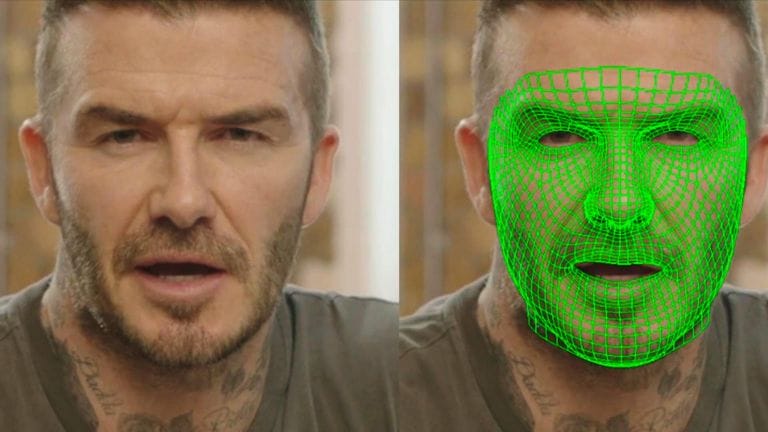
- Face replacement technology and deepfakes: One of the fastest-growing areas is face replacement technology. Whilst the term ‘deepfake’ is usually associated mainly with the internet, the advertising industry utilises professional face-replacement systems that enable an actor’s face to be photorealistically replaced with another, digitally rejuvenated, or a faithful digital copy created. Advertisements can thus feature historical figures or actors who have passed away, combine footage shot at different times, or significantly simplify the filming of challenging scenes.
- Virtual production: Instead of a green screen, giant LED screens are increasingly being used to project digital environments in real time – created, for example, in Unreal Engine or another rendering system. This allows actors to see the surrounding scene directly whilst filming; the camera captures natural light reflections, and the amount of post-production work is significantly reduced.
- AI-assisted post-production: Artificial intelligence now significantly speeds up a range of routine post-production tasks. For example, it helps to separate objects from the background, remove unwanted elements from shots, increase image resolution, stabilise video, automatically create masks, or generatively fill in missing parts of the image. Furthermore, modern tools are capable of tracking camera movement, automatically adjusting scene lighting, or facilitating the integration of digital objects into real-world environments. As a result, visual effects specialists can devote more time to creative work, whilst time-consuming technical tasks are handled by artificial intelligence.
- Generative AI: Whilst earlier forms of artificial intelligence primarily helped to speed up post-production work, the latest generative models are capable of creating entire image sequences, altering environments or generating new objects based solely on a text prompt. Although they are currently used mainly for concept development or for less complex advertising productions, their capabilities are developing very rapidly and are likely to significantly transform the entire process of producing advertising spots in the future. At present, the use of generative artificial intelligence is one of the most hotly debated topics in the industry.
The only difference lies in the duration
Computer-generated effects have long since ceased to serve merely to create a realistic explosion or a digital monster. Today, they can build an entire cinematic world in the space of just one minute. As a result, in many cases, adverts have become indistinguishable from Hollywood productions. The same studios, the same experts and the same technologies are involved in their production as in the most expensive feature films. The difference often lies solely in the length of the final piece.
An excellent example is the 2019 Hennessy advert entitled ‘The Seven Worlds ’. Director Ridley Scott, creator of films such as *Alien*, *Blade Runner* and *Gladiator*, has created a four-minute piece that feels more like a fantasy blockbuster than a cognac advert. During his journey, the protagonist travels through seven fantastical worlds filled with monumental landscapes, digital creatures, flowing gold and vast computer-generated environments. MPC Paris, a studio that regularly collaborates on Hollywood films, was involved in creating the visual effects. The advert demonstrates that modern CGI no longer serves merely as a complement to live-action footage – in a whole host of scenes, it creates virtually the entire image.
Video: Hennessy X.O – The Seven Worlds
Just two years later, Cadbury demonstrated that the future of advertising need not lie solely in more sophisticated computer graphics, but also in artificial intelligence. In the ‘Shah Rukh Khan – My Ad’ campaign, the famous Indian actor became the face of millions of different adverts simultaneously. Thanks to artificial intelligence and advanced face-swapping technology, it was possible to automatically generate thousands of versions of the advert in which the actor addressed specific local shops by their actual names. This advert demonstrated for the first time on a large scale that artificial intelligence can personalise television advertising in a way that would not have been technically or financially feasible just a few years ago.
Video: Shah Rukh Khan-My-Ad
The ‘Malaria Must Die’ campaign, featuring former English footballer David Beckham, pushed the boundaries even further. In fact, Beckham never recorded the individual lines himself. The creators used deepfake technology and speech synthesis , enabling him to speak fluently in several languages in the video. The aim was not to shock the viewer, but to ensure that the same message reached people around the world in their native language. The advert demonstrated that technology, which until recently was primarily associated with online experiments, can also find legitimate and socially beneficial applications.
Video: David Beckham speaks nine languages at the launch of the ‘Malaria Must Die’ voice petition
In the following video, which is definitely worth watching, you can see how the production team taught David Beckham to speak nine languages:
Video: How we got David Beckham to speak 9 languages
What’s next?
When you look at today’s adverts, it’s quite surprising how seamlessly visual effects have become an integral part of them. Whilst in the past they were primarily intended to dazzle the viewer, today their greatest success is that most people don’t even notice them. The best visual effect isn’t the one that draws attention to itself, but the one whose presence the viewer isn’t even aware of.
In the coming years , the distinctions between film, advertising and computer games are likely to continue to blur. Virtual production will make it possible to change locations with a single click. Real sets will be replaced by giant LED screens, and game engines will render entire worlds in real time. Routine tasks will be taken over by artificial intelligence, whilst artists will be able to focus more on the creative side of their work. And it is quite clear that the advertising industry is, and will continue to be, not only a showcase for brands, but also a laboratory in which technologies are developed that shape the future of the moving image. A place where creators can afford to take risks, experiment and push the boundaries of visual effects, which may subsequently feature in major film productions.