

The first-ever Cannes Lions Wrap-Up Live was kicked off by Natasha Woodward and Paul Kemp-Robertson, who are responsible for the content across the entire Lions festival. They described the purpose of the new format simply: “We know what’s in store for you when you return to the office on Monday. Questions, requests for debriefs – what you’ve learnt and what it means for others. Our aim was to put together the most valuable ninety minutes of the whole week for you.”
We’ll be breaking downthis practical guide to the festival into four parts on the aka.cz website.
- The four biggest themes of this year’s festival and what they mean (Part 1 and Part 2)
- The jury presidents’ debate: what lessons can we take away from this year’s winning entries (Part 3)
- Which personalities stood out the most, which views resonated most with the audience, and why (Part 4)
The first topic of the ‘wrap-up’ was AI, and Alex Jenkins, editor-in-chief of Contagious, was tasked with covering it. Right at the start, he described the current state of the debate on AI using the term ‘severance’ – separation. By this he meant the increasingly clear effort to distinguish between what is uniquely human and what is machine-generated.
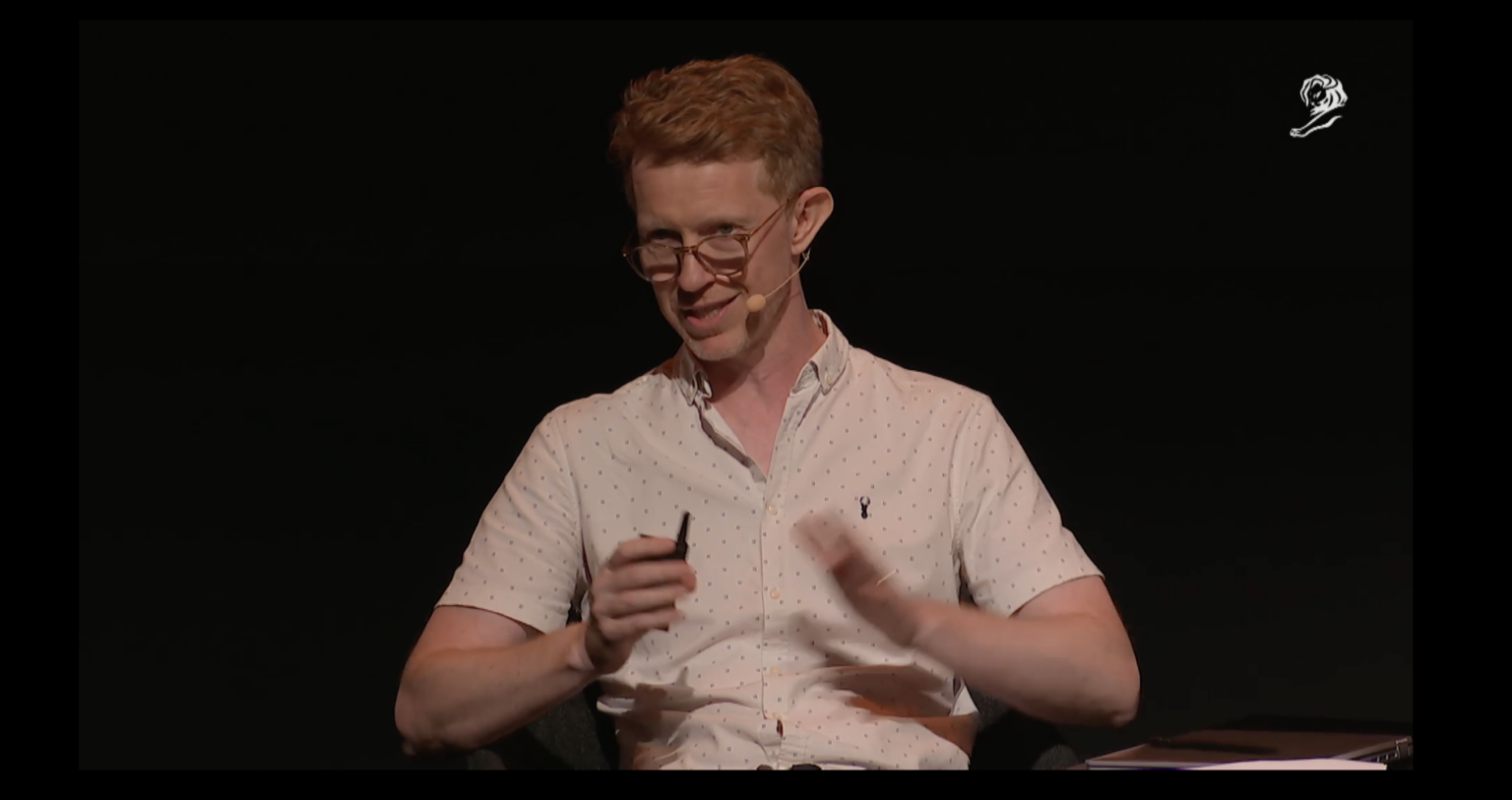 Alex Jenkins, Editor-in-Chief, Contagious
According to Alex Jenkins, the tone of the festival has shifted in recent years. Two years ago, the main message coming out of Cannes was: we are technologically literate, we understand this, so work with us. Last year, the defence of humanity and the assertion that AI will never replace human creativity dominated the discourse. This year, he says, the discussion has moved on; it is no longer just about a general defence of humanity, but about finding a more precise boundary between what belongs to humans and what a machine can handle better.
On the side of the scales labelled ‘uniquely human’, a number of statements emerged over the course of the week explaining why human creativity still holds irreplaceable value. The festival’s organisers took the trouble to compile the statements made from the stages about human creativity, human judgement and human experience. The image below does not show a complete list, but at least a small selection of quotes. And regardless of whether all these statements are literally true, many visitors to this year’s festival would, according to Jenkins, like them to be true.
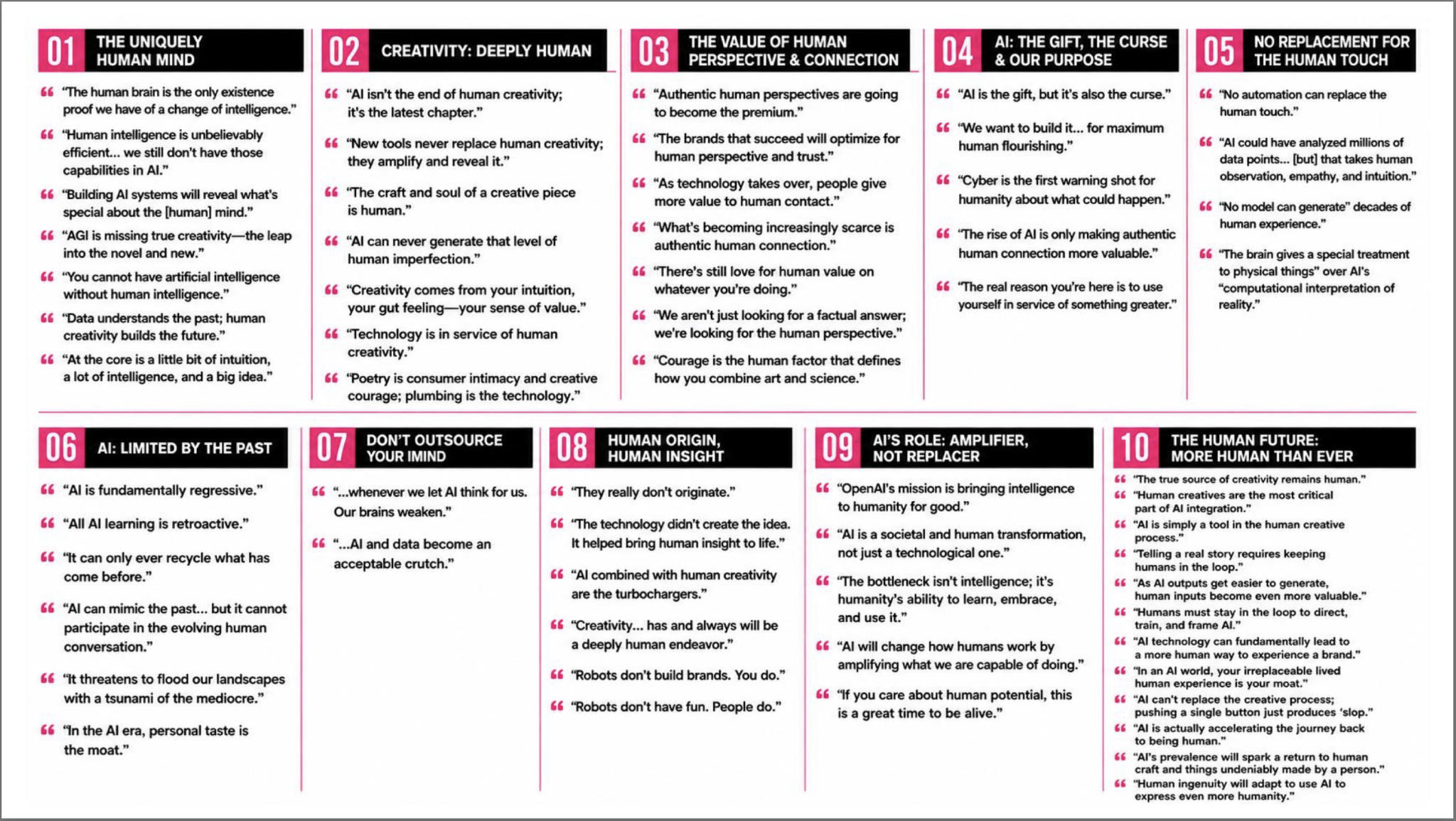 Source: Cannes Lions International Festival of Creativity 2026
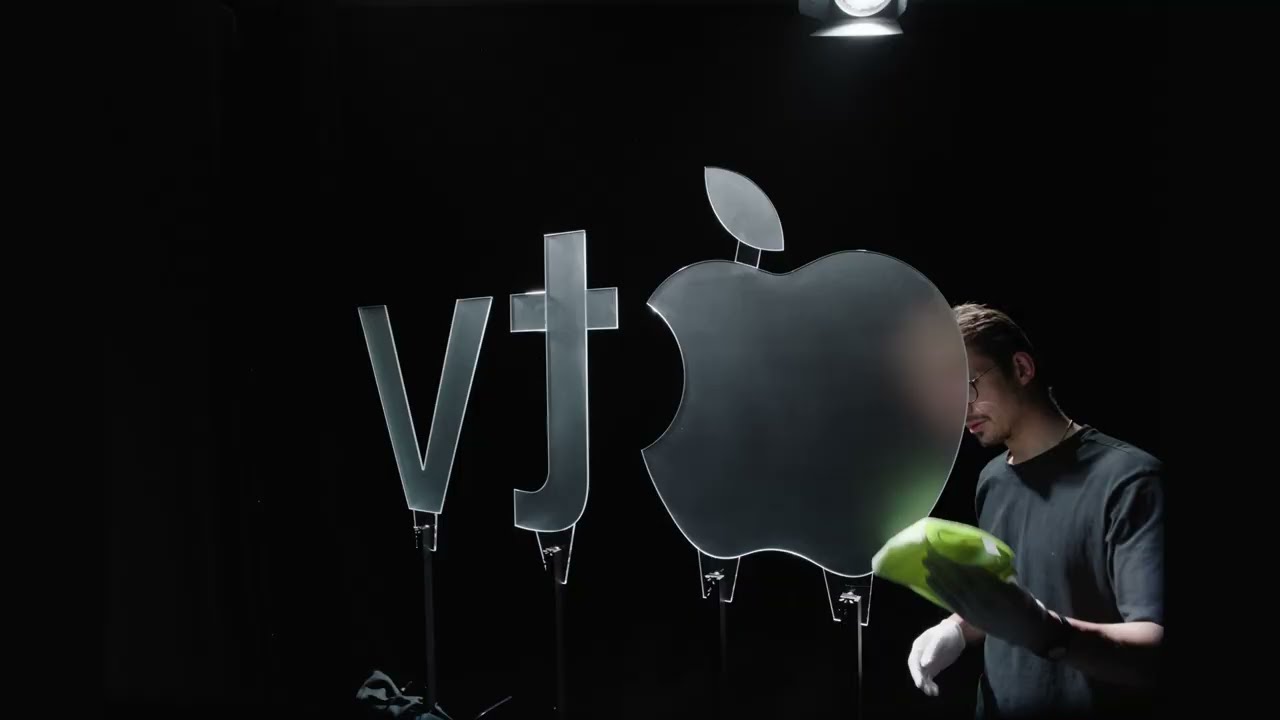
Jenkins also pointed out that the juries explicitly recognised work created by people using more labour-intensive methods. One example was the Apple TV Rebrand by TBWA\Media Arts Lab in Los Angeles, which won the Grand Prix in the Design Lions category. Among other things, the jury praised the fact that the identity had been created by hand, using physical props and traditional techniques. It was even suggested that if Apple hadn’t shown the ‘making-of’ video, the work might not have received such widespread recognition.
Laura Nestler from Reddit looked at the issue from a human perspective. During her presentation, she said that intelligence stems from real people and their “strange, chaotic, contradictory conversations on the internet”, and that the rise of AI only enhances this value.
What is unique to machines
On the other hand, however, works that were recognised precisely for what AI and other modern technologies are capable of also received acclaim. A counterpoint to Apple was, for example, Google and its Project Genie, which won the Grand Prix at the Digital Craft Lions. The project enables the creation of interactive virtual worlds based solely on text prompts. The jury praised it for “showing the future” and for its potential to help people become better storytellers.
Tech companies generally presented a positive narrative about AI as a force capable of changing lives. Tessa Lyons from Instagram reassured the audience that AI does not spell the end of human creativity, but rather marks the next chapter in its evolution. According to her, new tools have never replaced human creativity; on the contrary, they amplify and reveal it. Denise Dresser from OpenAI, meanwhile, noted that not a day goes by without someone telling her an incredible story about how ChatGPT literally saved their life.
Jenkins, however, pointed out that, closer to the real world of marketing, AI manifests itself in much more practical ways. Marc Pritchard from P&G, for example, spoke about how some teams have increased their production of social media ‘assets’ tenfold thanks to internal AI tools ( read more here). This points to another direction in the debate: AI as a tool for scaling, speed and production capacity.
Three critical areas
However, tension remains between the two poles – the human and the machine. Rupen Desai, Global CMO at Dole Sunshine Company and a professional recognised by the World Federation of Advertisers, warned on stage that AI could actually make life worse for marketers, as it would enable the production of even more waste and even more communication smog.
If your CEO is using AI to cut staff numbers, it means only one thing. He lacks imagination.
Another source of tension relates to work and employment. Let us recall the words of Jensen Huang, CEO of Nvidia: “If your CEO is using AI to cut staff numbers, it means only one thing. He lacks imagination. He’s been handed the most powerful tool in human history, and his first instinct was to lay people off.” John Hegarty echoed this view when he described it as a tragedy that many business leaders view AI primarily as a cost-cutting tool, rather than as a means of expanding opportunities.
At the same time, AI raises a fundamental issue of trust. Charlotte Scaddan, Senior Adviser on Information Integrity at the UN, pointed out that AI affects virtually every area the organisation deals with – from climate change through democracy and elections to public health.
Demis Hassabis of Google DeepMind also warned of the negative impacts of AI, such as its misuse in cyberattacks. However, he ended his speech on an optimistic note, suggesting that, thanks to the transformation AI will bring, a new era for humanity lies ahead.
What to take away for practical application
Despite the risks and concerns, the overall tone of the festival regarding AI was largely positive. Three key recommendations for working with AI emerged from the talks:
- Be mindful of the boundary between humans and AI.
If you do not define for yourselves what constitutes human value, AI will do it for you. Companies and teams must therefore deliberately distinguish between the strengths of AI and those of humans.
- Prioritise quality over quantity.
After all, David Abbott’s legendary quote still holds true: “Shit arriving at the speed of light is still shit.” Marketers should ask themselves whether their problem really lies in producing too little, or rather in producing poor-quality work. AI should only be brought into the process once we have a clear answer to this question.
- Prioritise adaptability over efficiency.
In a rapidly changing environment, it is not enough to be efficient. If companies are not set up to adapt, they can very easily find themselves in a situation where they can no longer catch up with the rest.
Source: aka.cz