

The research agency ResSolution Group, in collaboration with the media agency Media Age, tested the strength of Czech brands’ visual elements. Modelled on McDonald’s New Zealand campaign, the study investigated the extent to which brands are recognisable based solely on a few basic elements of their visual style – that is, without a logo, name or distinctive graphic symbols.
Using a sample of 500 respondents from the Czech online population aged 15 and over (National Sample CZ), mock-ups of creative designs inspired by the basic brand elements of individual brands (colour, font) and product category labels were tested, without explicit identification by a logo. Respondents were asked to spontaneously identify the brand in question, based solely on the visuals presented.
A total of six creative designs across various categories were included in the test: soft drinks (Kofola), bottled water (Mattoni), insurance (Kooperativa), automotive (Škoda Auto), beer (Pilsner Urquell) and retail/footwear (Baťa).
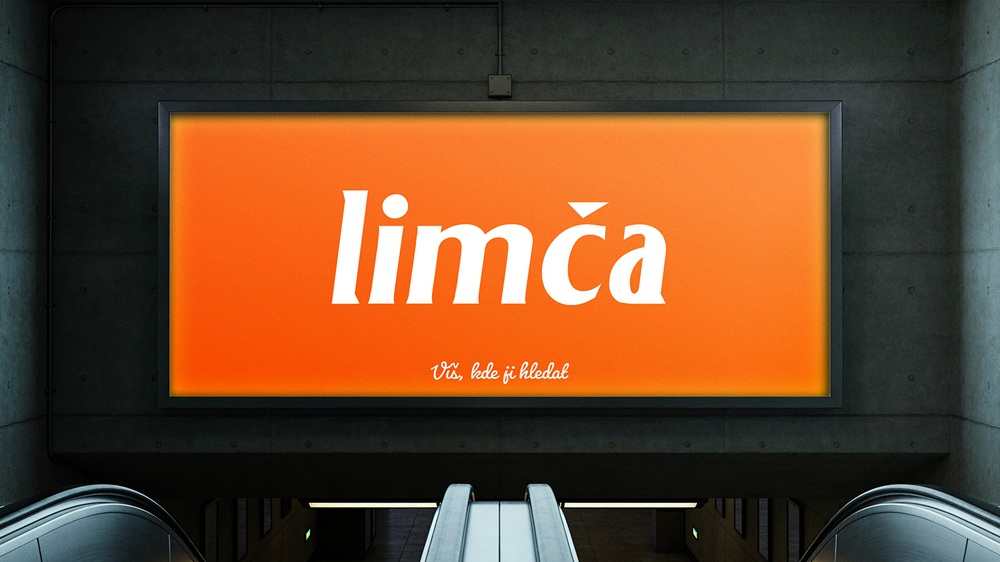 Advert tested (Kofola); Source: Media Age, ResSolution Group
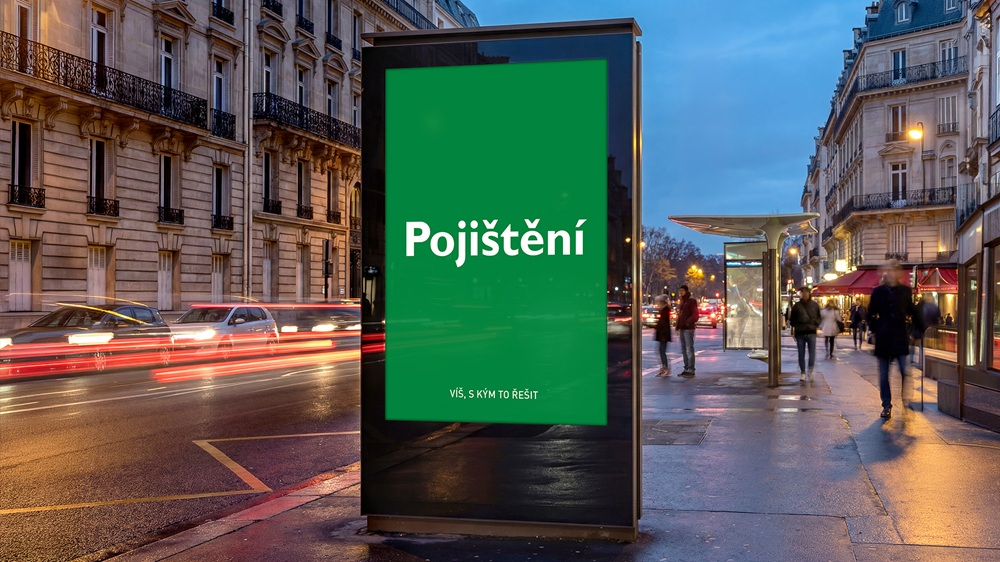 Advert tested (Kooperativa); Source: Media Age, ResSolution Group
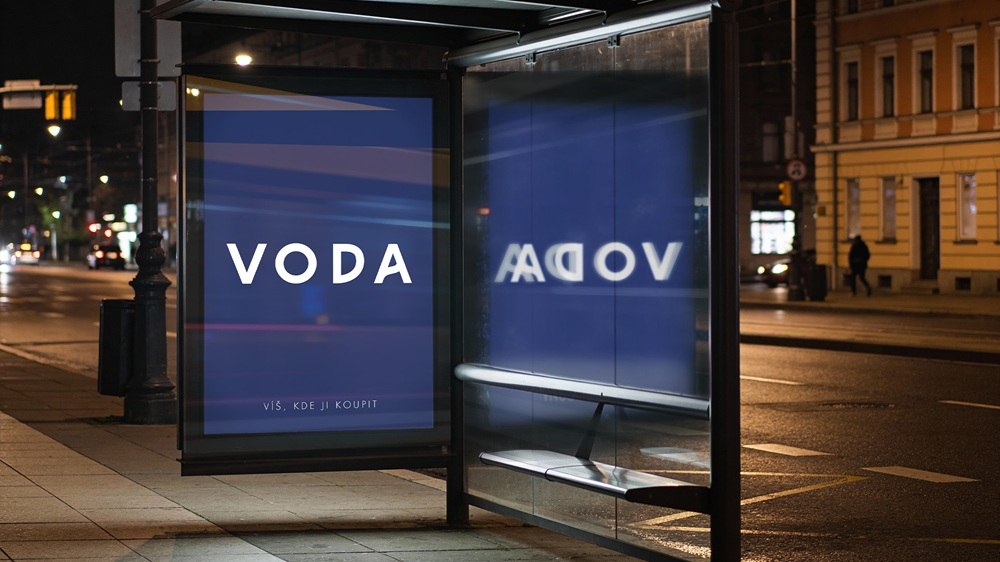 Advert tested (Mattoni); Source: Media Age, ResSolution Group
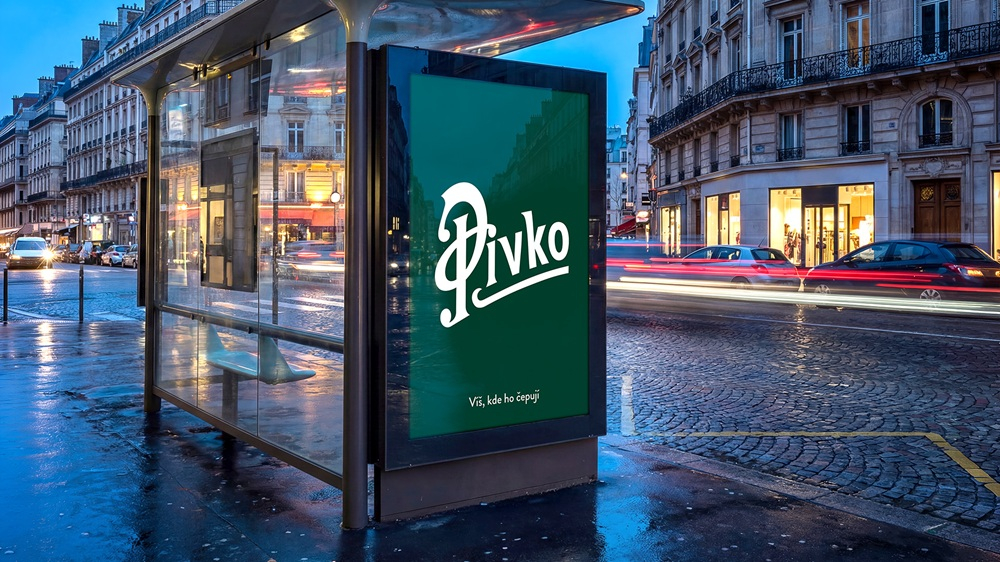 Advert tested (Plzeňský Prazdroj); Source: Media Age, ResSolution Group
 Advert tested (Škoda Auto); Source: Media Age, ResSolution Group
Without a logo, it falls flat; there is also a risk of confusion with competitors
The recognition rate for Czech brands did not exceed 50% in any of the cases tested. The best-performing adverts were those for Pilsner Urquell, which was correctly identified by 45% of respondents, and Škoda Auto, with 39%.
“The minimalism that a brand like McDonald’s can afford may not work for everyone. Its recognisability is built on decades of consistency and huge media investments. If we were to strip back a brand’s presentation to a level similar to that seen in the New Zealand campaign, we risk the majority of people simply not recognising us,” says Jan Pacas, a strategist at Media Age.
Across the test, the same pattern recurred: in spontaneous recall, people were more likely to recognise the product category than the specific brand. The exceptions were precisely the two most successful creative concepts, where the proportion of correctly identified brands exceeded the responses at the category level.
The extent to which the brand was confused with competitors is surprising. Alongside correct answers, competing brands appeared repeatedly. This was most pronounced in the bottled water category, where 12% of respondents mistook the tested brand (Mattoni) for a competitor’s brand – the same proportion as those who identified it correctly.
A curious situation arose with the advert inspired by the Baťa brand. Due to the similarity of the visual identity, 6% of respondents identified the brand as Coca-Cola, even though the advert contained the text ‘cvičky’. In this case, associations with the colour red and white block letters apparently outweighed even the product category itself.
The audience determines a brand’s recognisability
A brand’s ability to function ‘without a logo’ depends heavily on the specific target group. With one exception, younger respondents aged under 35 were more successful at identifying the correct brand behind the visuals in all the adverts tested.
“Younger target groups generally have a better grasp of brands’ visual styles. It can be assumed that they are more exposed to brands, process context and associations more quickly, and generally interpret brand signals better,” comments Klára Hoffmann, Client Service Director at ResSolution Group, on the results.
The exception is the insurance segment, where the Kooperativa brand was best recognised by the middle-aged group (35 to 54 years old). In this case, the higher relevance of the category—due to life circumstances and experience—likely plays a role, which is also reflected in the ability to correctly identify the brand.
Differences were also evident between men and women, specifically with the Pilsner Urquell and Škoda Auto brands. The beer brand was correctly identified by 49% of men, whilst the figure for women was 8.5 percentage points lower. Similarly, Škoda Auto was recognised more often by men (47 per cent) than by women (31 per cent).
“The test results show that, as marketers, we should be wary of what seems obvious at first glance within our own bubble. People need strong cues to recognise a brand, and playing on double meanings may not pay off,” summarises Pacas.
Source: mediaguru.cz