

As streaming services struggle to gain market share in a consolidating industry and continue to face high levels of subscribers churning in and out of their services, a new survey from Hub Entertainment Research indicates that major streaming platforms still struggle to differentiate themselves, with viewers unable to clearly articulate what sets one service apart from another.
The finding come at a time when media consolidation is in the air, with Paramount slated to acquire Warner Brothers Discovery, Comcast spinning off its cable channels to Versant, and Hulu becoming more deeply woven into Disney+. To boost revenue and subs, streamers are also super-sizing their ad-supported services and enhancing sports content to grow viewership.
“The Evolution of Video Branding”—Hub Entertainment Research’s annual study tracking consumer awareness and perceptions of streaming brands—continues to so that while most respondents have heard of the top streamers, people aren't gaining clarity on what makes each service more special than another.
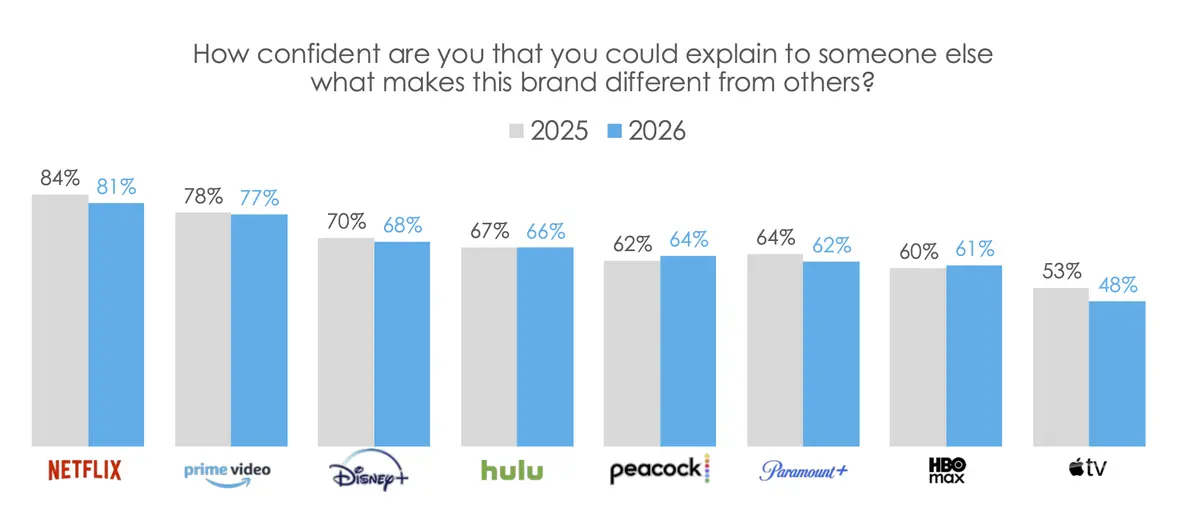
Since last year’s survey, the researchers reported there has been no movement on viewer's ability to confidently "explain what makes each brand different" from other brands—stalled at about two thirds of consumers for most top streaming brands.
The finding is important because the lack of features that clearly differentiate a service make it difficult to stand out from the pack and potentially force services to spend more on marketing and subscriber retention.
"As the industry faces more consolidation, streamers need to consider how their originals strategy can move beyond seasonal hits and lever up to more brand-defining distinctions that make them stand out from the crowd,” said Jason Platt Zolov, senior consultant for Hub and study author. “Being able to clearly own ‘quality, ‘value,’ or a specific genre of content in the eyes of consumers is critical to get them to say yes to a service, especially when they can't remember where to watch specific shows."
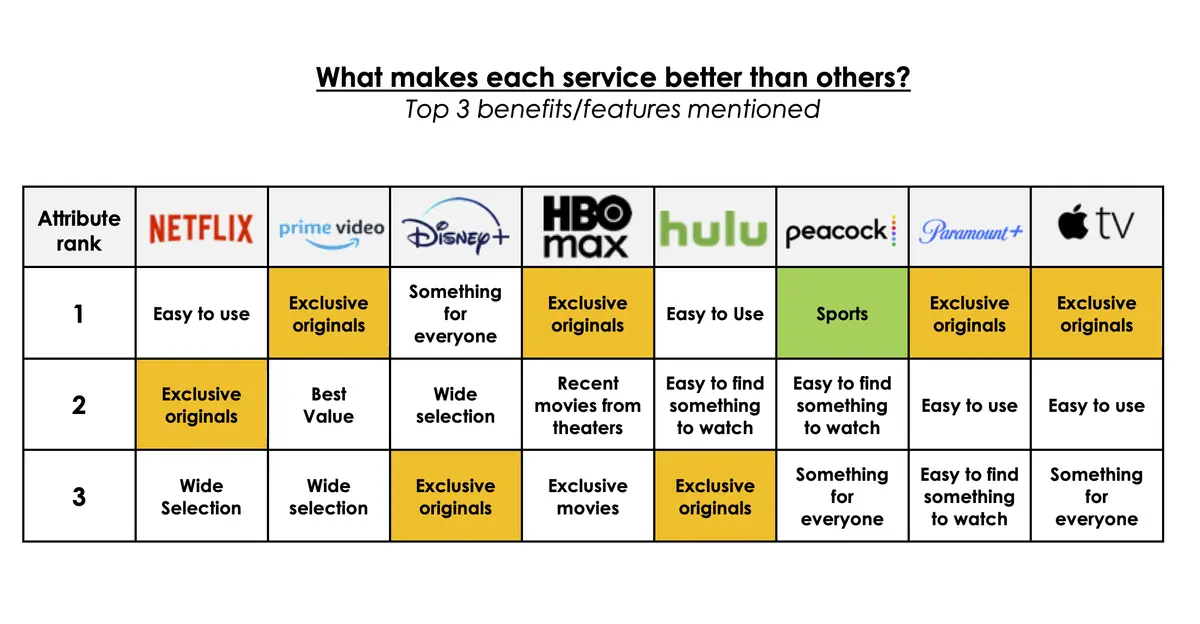
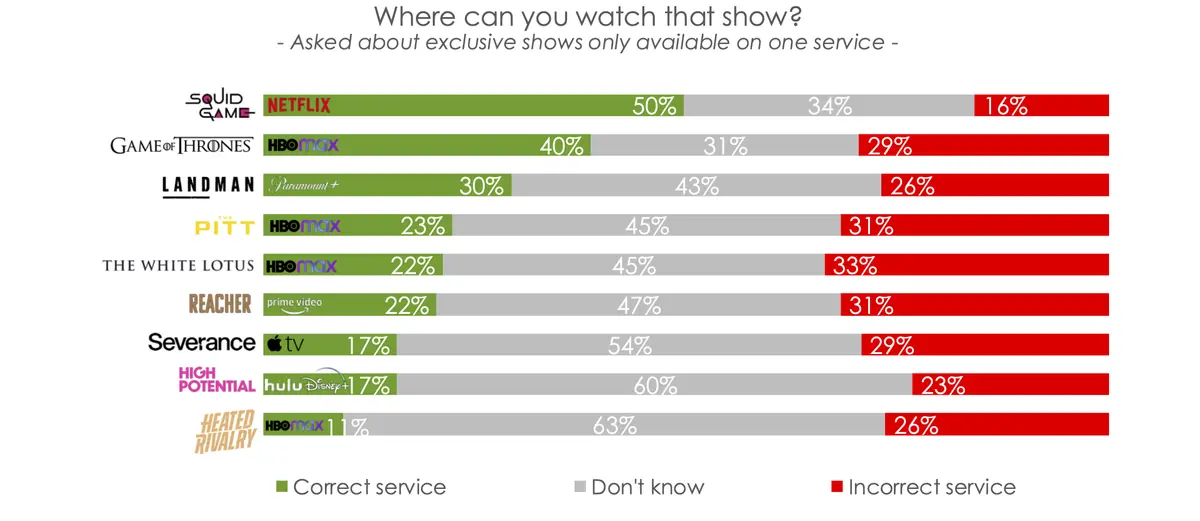
In this sea of "Exclusive originals," viewers are confused about where to find specific shows, the study found. Less than half of consumers could correctly pinpoint where they could watch signature shows like Landman (Paramount+), The Pitt (HBO Max), and High Potential (Hulu/Disney+).
In addition, barely 1 out of 10 consumers could correctly identify where to watch the recent, buzzy Heated Rivalry (on HBO Max).
Meanwhile, across this crowded streaming landscape, YouTube has continued to encroach on traditional streamer territory with its popular social/creator content and growing portfolio of long-form viewing.
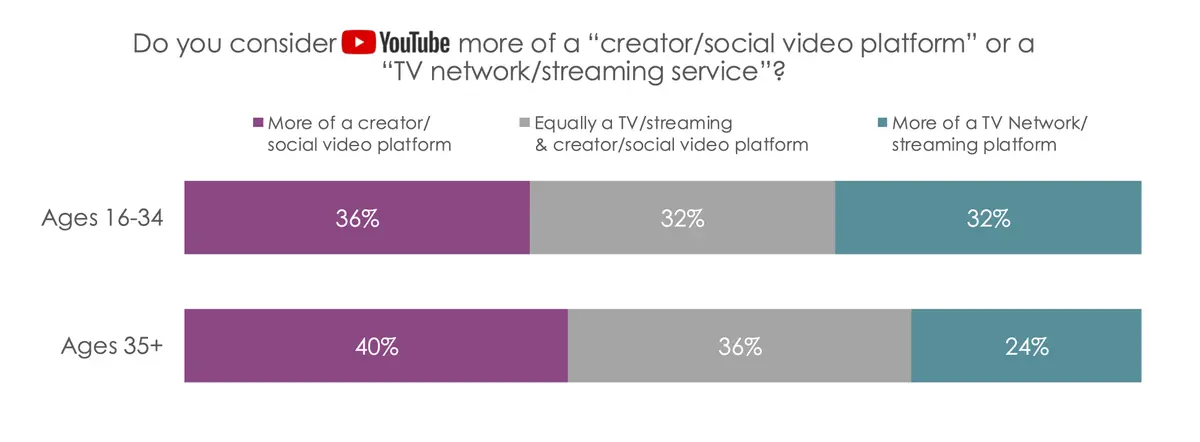
While many viewers still consider YouTube primarily a social/creator platform, a similar amount of people consider YouTube more of a "TV network/streaming service." Younger viewers are more likely (32%) to consider YouTube more of a "TV/streaming service" than older viewers age 35+ (24%).
These findings are from Hub’s 2026 “Evolution of Video Branding” report, based on a survey conducted among 1,601 US consumers ages 16-74 with broadband access. Interviews were conducted in February 2026, exploring how TV and streaming brands impact viewer decision-making on what to watch. A free excerpt of the findings is available on Hub’s website.
Source: tvtechnology.com