
The Prima Group and its sales agency Media Club will increase TV advertising prices by 17.5 to 19.5% from January 2026. The reasons for this are a shortage of available GRPs, high sell-out rates and rising costs associated with the market’s shift towards more premium content.
The CPP for a 30-second spot will increase by 12–14%, surcharges and coefficients will also be adjusted, e.g., the super break from 25% to 35%, and a new 10% surcharge will be introduced for premium advertising space known as the Prima Premium programme. The basic target group of 18–69-year-olds remains unchanged, as does the portfolio of represented stations, including the TV Barrandov and Óčko groups. The company is motivating clients to sign contracts early with preferential daypart coefficients.
The year 2026 will also bring mobile out-of-home audience measurement, which may increase the total reach by 5–15%. Further expansion of the electronic eGRP, which applies to the purchase of advertising in online video, may partially eliminate the decline in linear GRPs with the planned expansion of ad insertion to include operators and Oneplay.
Media Club is also introducing premium video as a new standard in digital advertising, with prices ranging from CZK 530 to CZK 730 per CPT and year-on-year price growth of 6–8%.
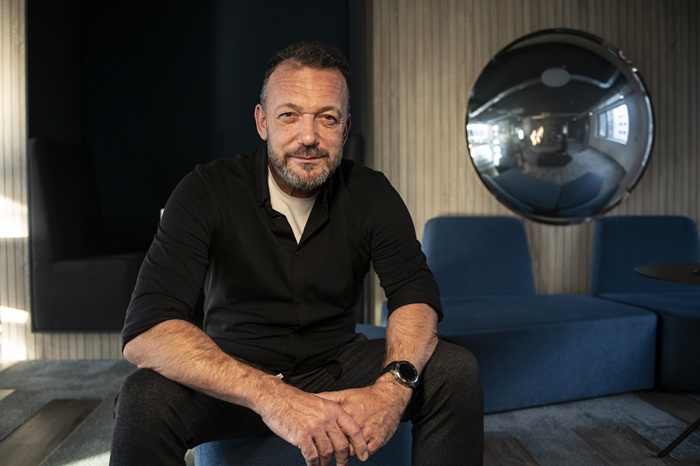
In an interview, Media Club CCO Jan Čadek states that this autumn season has started better for the Prima group than last year, with a higher audience share. In September, Media Club stations achieved a 34.44% share in the 18–69 viewer group. In addition to investments in quality programming, shorter advertising breaks should also help them achieve even better results. “In my opinion, the ideal length would be around six minutes,” he says, adding that breaks are currently up to a third longer at certain times. He also believes that television will remain an integral part of advertisers’ media mix. Media Club sees potential primarily in the local market and therefore focuses intensively on these advertisers.
The most significant change in commercial policy for the television segment is a price increase of 17.5 to 19%. Why such a wide range?
The range is related to the size of individual clients’ investments and to the volumes they achieve with us. In other words, clients with larger investments have a different level of increase than those with smaller investments.
Is it still the case that the more clients invest, the higher their CPP increase?
That’s right, for clients with the largest volumes, the total price increase is close to 20%. This is not only an increase in CPP, but it also reflects index increases.
Why is the price rising so significantly again?
We are still in a situation where we are practically sold out, and at the same time, we have extremely long commercial breaks. This is actually unfair to our television content. Until we adjust this parameter, the content will not perform as successfully as intended. Research shows that as soon as a commercial break exceeds a certain limit, viewers start to leave. And that is exactly what we want to change.
For several years in a row now, advertising space has been fully booked, and demand has been high. Over the past two years, prices have risen significantly, by around 20%. Perhaps it was expected that this year’s price increase would be lower...
Yes, the situation is gradually improving, partly thanks to the fact that we have had double-digit inflation for two years in a row. This year, we only had problems filling capacity in a few months when we were “full to the brim”. Nevertheless, it is still not a comfortable situation for viewers. We need to achieve a sustainable state and take advantage of the fact that television remains an important part of media budgets. I think the market can still absorb this.
Until we adjust the sell-out rate, our content will not perform as successfully as intended.
Jan Čadek
What is Prima’s sell-out rate this year? Last year, you said it was 108%. Is it similar this year?
I would rather not give a specific figure, as I do not want to influence the market. It is still a high figure.
How is the demand for television advertising developing this year?
As far as television advertising is concerned, we are seeing stable demand on the market, or perhaps slightly higher, by about 2%.
By how many minutes would advertising breaks need to be shortened, and what length do you consider optimal?
In my opinion, the ideal length would be around 6 minutes. Now we sometimes have up to 8 minutes, and when we add sponsorship and self-promotion, we get up to 10 minutes, which is not comfortable for the viewer.
The fact is that the volume of advertising GRPs in linear TV broadcasting is declining, which is also evident from developments this year. What decrease has Media Club seen?
This year, it is down by about 4%.
Can we expect this trend to reverse next year, or will it again result in fewer GRPs and the need to increase their price?
Linear GRPs are declining, and it is unrealistic to expect them to increase. This is a global trend that affects not only the Czech Republic but all of Europe. However, this decline may be offset by the introduction of out-of-home measurement, which the ATO audience measurement project is expanding next year. This could increase viewership by 5 to 15%. In addition, television consumption is increasingly shifting between different platforms such as IPTV, online and cable, which may bring additional GRPs. So I do not expect a significant overall decline in GRPs.
Do you have an estimate of how many new GRPs expanding screen measurement to second households could bring you?
We do not have an exact calculation. If, for example, we managed to gain an additional 10%, theoretically this would mean an approximately 10% increase in GRPs. In reality, however, the results will be influenced by market developments and changes in viewership, so it is not possible to provide an accurate estimate.
Linear GRPs are declining, and it’s unrealistic to expect them to increase. This is a global trend, not just in the Czech Republic but across Europe.
Jan Čadek
Time-shifted viewing is increasing thanks to IPTV, and Media Club is trying to generate additional GRPs by limiting ad-skipping in catch-up viewing. From the fourth day onwards, traditional TV spots can also be replaced by dynamic advertising as part of time-shifted viewing. Combined with the advent of out-of-home measurement, could this at least partially offset the decline in linear GRPs?
Partially yes, but not entirely yet. However, we are counting on in-programme advertising with IPTV operators, which will be measurable. This space will be smaller, but at the same time, it will be high-quality inventory – on large screens, with longer videos and fewer adverts, because we will limit advertising breaks to six minutes. We believe that this will expand the high-quality digital base, which may slightly slow down the decline in linear GRPs. It is therefore a way to maintain valuable advertising space in the digital environment.
In the case of in-programme advertising, you intend to expand the range of IPTV operators with whom Prima cooperates. Will this also apply to O2 or Oneplay?
In-programme advertising on Oneplay will expand next year, as the goal is to collaborate with all major operators. Skylink will also be joining. The television audience remains essentially the same, only the way content is consumed is changing. I do not think that young people’s shift away from television is as dramatic as is sometimes claimed, because it is more a matter of consumption shifting between different platforms. Television remains an important medium thanks to its reach and ability to elicit an emotional response from viewers. The key is to maintain high-quality content, ensure an appropriate amount of advertising, and thus preserve the attractiveness of the programme. At the same time, however, we must ensure that television can finance its production. These are strategic steps to maintain the position of television in the digital environment. We certainly feel that the two worlds are converging more and more and that client demand for integrated solutions is growing.
I don’t think young people’s shift away from television is as dramatic as is sometimes claimed, because it’s more a matter of consumption shifting between different platforms.
Jan Čadek
In previous years, Media Club has included eGRP in its television sales bundle. That’s why clients are also putting some of their investment into eGRPs. Will this trend continue?
With us, eGRP cannot be purchased separately and is always part of our business policy. This means that a certain percentage of eGRP helps achieve the desired affinity. It is a measured parameter, and we are gradually strengthening our position in this area as we work to maximise our inventory. Simply put, it is about connecting the worlds of television and online, which are measured using similar methodologies. eGRP thus complements linear broadcasting and ensures better affinity with target groups.
And what will be the percentage representation of eGRPs in the bundle next year?
We have a limited number of eGRPs available. We only use them for target groups where they are effective. Their share in the bundle remains low and unchanged from last year. What is changing, however, is the coefficient. We will now sell them at a multiple of 1.3.
This means a 30% increase in price compared to this year...
It should be noted that the original price was very low and that eGRPs bring good affinities, thus significantly increasing the value of the entire product. And because their share in the bundle is not too large, the price increase is not so dramatic.
A new addition for next year is the Prima Premium programme. What exactly does that mean?
This is an additional surcharge when premium content is broadcast during prime time. We can predict this and announce it to the market well in advance. In practice, this means that if our prime-time slot is highly in demand, we can apply a 10% surcharge to selected advertising blocks. This applies to periods of high demand for the most attractive times. Clients can continue to purchase premium space, but at a higher price that reflects the value of our most-watched content. At the same time, this may help free up some space and make commercial breaks more enjoyable for viewers.
And will you label these premium programmes separately each month?
We will always provide sufficient advance notice so that clients can plan accordingly. I suspect that the market may not react enthusiastically to this change, but it is a step we must take.
So the 10% is added to the overall price increase?
Exactly. The 10% surcharge is not part of the regular year-on-year price increase. It is a separate surcharge that only applies to selected premium programmes.
If our prime-time slot is highly in demand, we can apply a 10% surcharge to selected commercial breaks.
Jan Čadek
Another new feature is the introduction of unskippable 30-second adverts within premium videos. This applies to online videos, not television. What is the main reason for introducing unskippable adverts?
The main goal is product quality. Premium video should be like a polished diamond for advertisers, offering the highest possible quality. It is related to another new feature we are introducing, namely, premium video. Its aim is to set the market standard for digital content and, in doing so, differentiate itself from the flood of user-generated content (UGC) and short videos. It is content in which we invest considerable resources, creativity and professional know-how.
Will premium videos be marked in some way? Or how will clients know that this is the type of service they are getting?
Advertisers will recognise it by the price, and thanks to the presentations we give to all agencies. We explain to them that this package or service is just starting and that it is available for purchase.
Can you describe the strength of premium advertising, such as AVOD on prima+ and online in-programme advertising placed with operators?
Online video has seen year-on-year growth of around 109%, totalling several hundred million. The entire media house is doing its utmost to ensure that prima+ continues to improve its results. Already in the autumn, it was clear that inventory growth was having an impact, and as our own high-quality online content increases, we are able to make full use of it for sales.
Global advertising predictions for next year are not entirely consistent, with some suggesting caution. What are your expectations for the advertising market next year?
I expect online to grow. Everything depends on the quality of the content offered. Basically, our level of success is in our own hands. Quality content will always find consumers. Television should grow slightly, and I firmly hope that radio will also grow, albeit by a few per cent. In my opinion, the more important factor will be the change in the industry landscape, which is reflected in the growth of local businesses at the expense of agency budgets. I came to the commercial management with the Prima All In project, which represents a complete range of our services to local clients. The aim is to strengthen sales from Czech advertisers, as there is still considerable potential there. That’s why we are focusing on the Czech market. We want to provide local clients with the same services we offer national advertisers, and at the same time, control most of the investments in television, radio and online, to which agencies often do not have access.
We want to provide local clients with the same services we offer national advertisers, while also controlling most investments in television, radio and online, which agencies often do not have access to.
Jan Čadek
Will you be expanding your teams for this?
We have established our own media agency, Media Booster. It will not participate in tenders for clients of large media agencies. It is designed to use our experience in the local market for small, medium and larger companies and provide them with the best possible service. This could attract investment from local clients, of which there are many in the Czech Republic. If we offer clients exclusive service, market analysis and creative support, including the use of artificial intelligence, we will gain their trust and be able to use these funds effectively.
Does that mean you believe that national clients are already close to their maximum investment capacity?
No, they are not at their maximum, but they often choose to invest in YouTube or Facebook instead. In my opinion, this is not optimal. Just as radio went through a crisis and then experienced a revival, television will continue to be a key medium. It can have a targeted effect before a purchase decision is made and create a need in the consumer. I think interest in television will continue for at least another 8–12 years, and part of the budget may return to TV from digital platforms.
Source: mediaguru.cz