


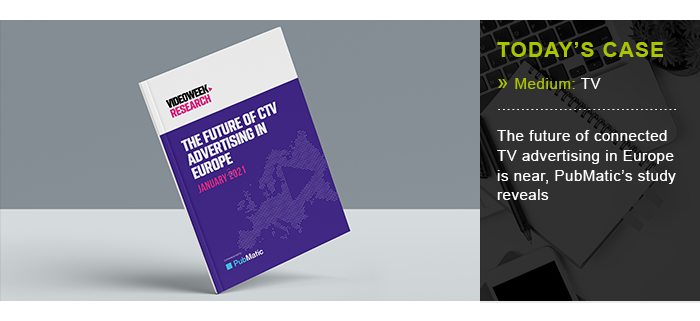
In this week’s egtabite, we examine the future of connected TV (CTV) advertising in Europe, on the occasion of PubMatic’s recently published study on the topic. The research paper, commissioned by Video Week Research, assesses CTV advertising developments in the region and dives specifically into six European markets: The ‘Big 5’ of France, Italy, Germany, Spain and the UK, as well as Sweden.
Two-speed Europe moving forward
One of PubMatic’s key findings is what can be described as “two-speed Europe”. While large, global players are moving quickly to disrupt the European CTV advertising space, powered by unified content, technology and data infrastructure, local players move more slowly. The smaller players are nonetheless actively deploying next-generation TV advertising solutions, as CTV in Europe pushes from abstract intentions to tangible solutions.


Overall, respondents to PubMatic’s study agree that Europe as a region for CTV advertising lags behind the US. The good news is that in the last 12 months, markets have broken through the glass ceiling of innovation, with programmatic solutions moving from being an afterthought to its infancy. Over the past year, a host of new solutions has come to the market resulting in an unprecedented density of supply and demand in all of the markets analysed. The sell-side is now building a future where programmatic advertising is a driving force for future growth. On the buy-side, programmatic CTV advertising is approached as a means of bringing their own data to the mix.
Friction for buyers
The study examines the challenges of CTV advertising and buyers’ need for frictionless functionality across sell-side offerings. Here, streamlining is needed as inventory currently resides in multiple silos. “Traditional TV advertising owes its success in part to the ability to deliver harmonious reach across different broadcasters. In contrast, individual CTV advertising deployments from broadcasters and limits of technical interoperability currently restrict the ability to recreate this benefit,” PubMatic’s experts say on the matter.
The study specifies five key areas where development is needed to improve the user experience, deliver outstanding performance for brands and help publishers, and now CTV content providers, with maximum yield:
Definitions need to be simplified for buyers and sellers to accelerate standard best practices and consistency throughout the supply and demand paths.
Measurement needs to be standardised transparently and fairly.
Broadcasters need to move beyond the focus on addressable linear TV solutions (e.g. HbbTV, STBs) to develop deep app economy expertise. In the future, this will be a significant battleground for consumer attention on CTV.
Collaboration – individual CTV market participants need to understand that success comes from developing solutions and making decisions together, not by fighting for control of, e.g. data and measurement.
Further experimentation and application of programmatic technologies – especially header bidding – and a more holistic approach to yield are required to secure additional spending.
Developing CTV specific header bidding solutions is identified as an essential part of the transition. Unlike video and linear TV ads, CTV ads are served in pods meaning there are two or more sequential ads. To avoid overexposure of a single ad and ensure competitive separation, CTV-specific header bidding solutions are required to maximise campaign performance and viewer experience.
Education and talent required
To exploit the unique opportunities of CTV advertising, brands and agencies need to invest in building internal knowledge of CTV. Without education and talent, the channel’s nuances will diminish the value for brands and content producers. To reach this goal, specialists need to play an active role in defining CTV and educating the broader ecosystem, not only the biggest players. Positively, the 60 in-depth interviews conducted for the study across agencies, advertisers, broadcasters and publishers, reveal that industry participants are already collaboratively working together to create a level playing field, fair competition, and thus increasing the value of CTV.
PubMatic’s research, The Future of CTV Advertising in Europe, is available in full here as well as special chapters on the researched countries in local languages.
OTHER CASE STUDIES

HOW DPG MEDIA TURNS THE BACKSTAGE OF A PRIME-TIME MUSIC SHOW INTO A RETAIL ENGINE
17. 8. 2026In a category where retailers typically compete on price and visibility, Albert Heijn, the supermarket retailer,…

AN IMMERSIVE CANAL+ BRAND SOLUTIONS COLLABORATION FOR SKIN-CARE BRANDS WITH SENSITIVE STORIES TO TELL
26. 6. 2026CANAL+ BRAND SOLUTIONS and its in-house studio LA FACTORY created “Marquer l’Invisible” for Avène, linking Cicalfate+…

M6 UNLIMITED TESTS AI SPOT CREATION FOR SMALLER TV AND STREAMING ADVERTISERS
22. 5. 2026M6 Unlimited is testing a simpler route into TV and streaming for SMEs and new advertisers…
THE TV ADVERTISING PARADOX, A THINKTV NEW ZEALAND CASE STUDY (2/2)
22. 5. 2026ThinkTV New Zealand built its campaign around the contradiction that linear TV was being called obsolete…

A BIG-SCREEN STUDY FINDS STRONGER ATTENTION ON TV4 PLAY THAN ON YOUTUBE
24. 4. 2026TV4 just launched its third attention study, comparing the viewing experience on its streaming service (TV4…

THE TV ADVERTISING PARADOX, A THINKTV NEW ZEALAND CASE STUDY (1/2)
24. 4. 2026In late 2024, ThinkTV New Zealand, under the leadership of Jacqueline Freeman, GM Communications, undertook a…

AD EMISSIONS MEASUREMENT: LESSONS FROM THE FINNISH MARKET
31. 3. 2026Finland’s commercial TV broadcasters spent the past year developing a carbon emissions measurement framework for linear…
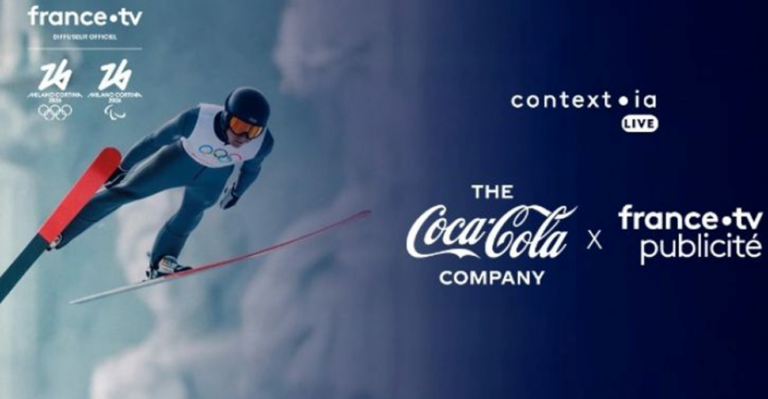
A NEW WAY FOR FRANCETV PUBLICITÉ TO SELL CONTEXTUAL VIDEO ADVERTISING
27. 3. 2026FranceTV Publicité (FTP), the advertising sales house for French public television, has introduced Context.IA into its…
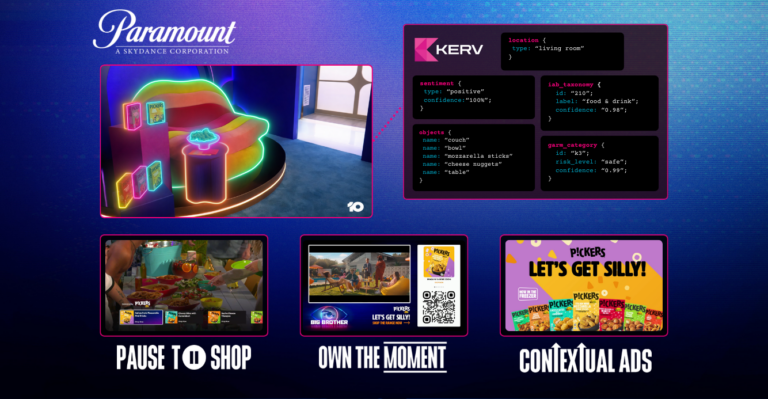
BUILDING A SHOPPABLE, ATTENTION-READY CTV OFFER: THE BIG BROTHER CONTEXTUAL CASE
26. 3. 2026In 2025, Paramount Australia, in partnership with FreeWheel and egta, hosted a webinar outlining a forward-looking…

GLOBO CREATES HOME SCREEN PROMINENCE FOR FREE-TO-AIR TV ON SMART TVS
26. 2. 2026Globo, Brazil’s largest commercial TV group, is rolling out DTV+, a next-generation free-to-air TV standard designed…

THE VISUAL TRANSFER EFFECT: HOW SOUND BUILDS BRANDS
24. 2. 2026In collaboration with neuro-marketing agency Unravel, Talpa Media has produced the scientific proof that audio does…

RMB TURNS QR CODE VOTING INTO A SHARED VIEWING MOMENT THAT STRENGTHS BRAND IMAGE FOR SPRITE AND DELI CHOC
24. 2. 2026Campaign objectives The chocolate snack Deli Choc and soft drink Sprite brands worked with RMB to…