


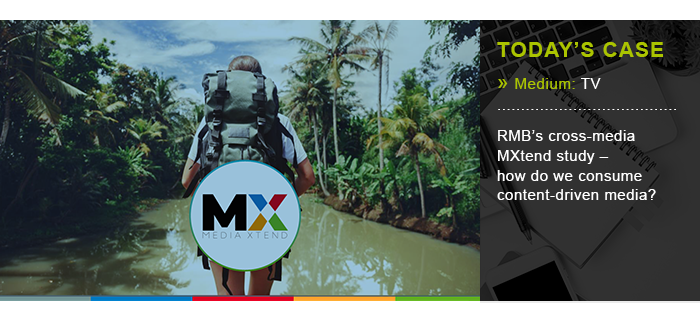
Media make up a large part of our daily lives, accompanying us everywhere, from the moment we get up until we go to bed, without us even realising it. Like travel, media open the way to discovery, enrich our knowledge and help us relax. While we can live without travelling, it is much harder without media.
This week’s egtabite features RMB’s MediaXtend (MXtend) study, a continuation of the MediaXperience cross-media study conducted in Belgium in 2016, analysing the daytime consumption of five main content-driven media: video, audio, social media, internet, and press.
MXtend extends the MediaXperience
The objectives of the MediaXtend study are to analyse the evolution of media consumption – given the explosion of content offers and the multiplication of media brands and establish a comparison with the MediaXperience study from 2016.
However, a comparison with the past is never easy as not only did brands and content multiply but new business models also emerged. The structure of the MediaXtend study has been fully in line with the current media offer, with changes mainly concerning media segmentation (i.e. subcategories within the video, audio, etc.).
Extensive methodology
The strong point of the MediaXtend study is that it is a single-source national study, based on a large sample, using a unique interview method common to all media analysed, measuring media consumption on all devices, platforms, and locations. The online survey, with over 3,000 both French and Dutch speaking respondents aged 16 to 64 was conducted in collaboration with the Kantar TNS Institute in October 2019 and spread out over 3 weeks.
The study questionnaire consisted of two parts. The first part, identical to the 2016 questionnaire, focussed on people’s media behaviour of the previous day and provides data on the average daytime audience, consumption duration, and volume shares.
The second part, as a new feature of the MediaXtend study, focuses on the media brands respondents had consumed in the past 7, 15 and 30 days. The feature pursues a more tactical objective; it provides food for thought in terms of media planning and allows the evaluation of a broadcaster’s or a commercial offer’s coverage potential over weeks. It also makes it possible to test the functioning of a certain mix of media brands.
In addition to the second part of the study, the integration of a questionnaire dedicated to some attitudes and consumption habits of Belgians is another novelty that allows to measure the interest of Belgians in different types of content, the attitudes of the population towards current topics such as environment and food trends and to better understand consumers’ behaviour in a few service sectors or FMCGs such as banking, food and beverages
Video and linear TV are still winners
The results of the MediaXtend study offer an overview of the global media consumption, and then each medium (video, audio, social media and websites) is analysed individually.
The figures that remained the same compared to the 2016 study are media penetration, as 98% of Belgians still visit one of the five media every day and daily consumption time, showing that Belgians spend 54% of their waking time with media. 71 % of media is consumed at home and the average number of devices used to consume media each day is still 3.6. While the average number of devices used daily has not changed in 3 years, the distribution between the devices used has changed significantly.
Moreover, out of the media analysed, video, which attracts 85% of Belgians and represents 4.5 hours of their time daily, is the one that performs the best, both in terms of daily audience and in terms of duration of consumption. As video dominates both in terms of the number of consumers and duration, it is also the leader in terms of volume share, as 37% of the time Belgians spend consuming media is dedicated to video, followed by audio (23% volume), websites (20% volume), social media (16% volume) and, finally, press (4% volume).
At the heart of video, linear television takes the lion’s share as 24% of the overall time spent with media is spent watching TV channels which proves the popular opinion about the decline of linear television to be wrong. Between 2016 and 2019, the overall duration of media consumption remained similar (approximately 9 hours per day). The study shows that no other form of video consumption takes the place of TV channels as each day, 70% of Belgians watch at least one TV programme.

The results show that on average over the day, 65% of the total video volume goes to offline TV, live and time-shifted combined. Video on demand accounts for 16% of the video time consumed while Internet TV has a 12% share.
Key takeaways
The MediaXtend study results point to some remarkable conclusions. Since 2016, the basics of media consumption have not fundamentally changed, while video and audio remain at the centre of media consumption, with linear media being far from forgotten. Young people are one step ahead, but they do not abandon linear television, as it remains their medium of choice. Despite technological advancements, the study shows overall stability for media consumption as people continue to devote the same amount of time to media at our home, on multiple devices. While standard television remains very popular, part of the viewing time has however shifted to online video platforms launched by broadcasters. Thanks to their digital development, broadcasters are maintaining their share of video consumption in terms of volume, thus limiting the growth of streaming services.
OTHER CASE STUDIES
HOW DPG MEDIA TURNS THE BACKSTAGE OF A PRIME-TIME MUSIC SHOW INTO A RETAIL ENGINE
17. 8. 2026In a category where retailers typically compete on price and visibility, Albert Heijn, the supermarket retailer,…

AN IMMERSIVE CANAL+ BRAND SOLUTIONS COLLABORATION FOR SKIN-CARE BRANDS WITH SENSITIVE STORIES TO TELL
26. 6. 2026CANAL+ BRAND SOLUTIONS and its in-house studio LA FACTORY created “Marquer l’Invisible” for Avène, linking Cicalfate+…

M6 UNLIMITED TESTS AI SPOT CREATION FOR SMALLER TV AND STREAMING ADVERTISERS
22. 5. 2026M6 Unlimited is testing a simpler route into TV and streaming for SMEs and new advertisers…
THE TV ADVERTISING PARADOX, A THINKTV NEW ZEALAND CASE STUDY (2/2)
22. 5. 2026ThinkTV New Zealand built its campaign around the contradiction that linear TV was being called obsolete…
A BIG-SCREEN STUDY FINDS STRONGER ATTENTION ON TV4 PLAY THAN ON YOUTUBE
24. 4. 2026TV4 just launched its third attention study, comparing the viewing experience on its streaming service (TV4…
THE TV ADVERTISING PARADOX, A THINKTV NEW ZEALAND CASE STUDY (1/2)
24. 4. 2026In late 2024, ThinkTV New Zealand, under the leadership of Jacqueline Freeman, GM Communications, undertook a…
AD EMISSIONS MEASUREMENT: LESSONS FROM THE FINNISH MARKET
31. 3. 2026Finland’s commercial TV broadcasters spent the past year developing a carbon emissions measurement framework for linear…
A NEW WAY FOR FRANCETV PUBLICITÉ TO SELL CONTEXTUAL VIDEO ADVERTISING
27. 3. 2026FranceTV Publicité (FTP), the advertising sales house for French public television, has introduced Context.IA into its…
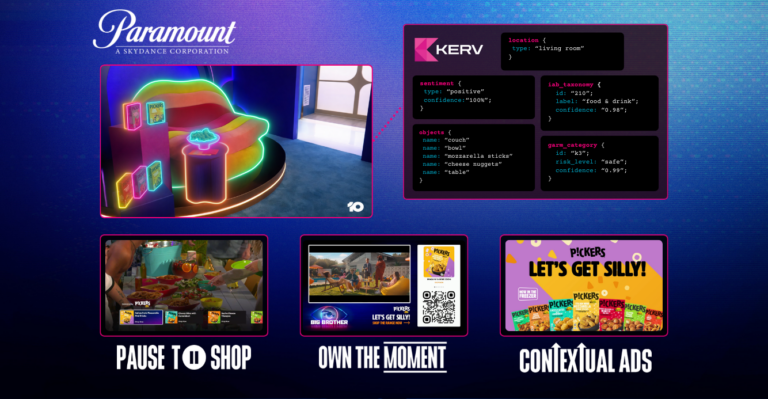
BUILDING A SHOPPABLE, ATTENTION-READY CTV OFFER: THE BIG BROTHER CONTEXTUAL CASE
26. 3. 2026In 2025, Paramount Australia, in partnership with FreeWheel and egta, hosted a webinar outlining a forward-looking…
GLOBO CREATES HOME SCREEN PROMINENCE FOR FREE-TO-AIR TV ON SMART TVS
26. 2. 2026Globo, Brazil’s largest commercial TV group, is rolling out DTV+, a next-generation free-to-air TV standard designed…

THE VISUAL TRANSFER EFFECT: HOW SOUND BUILDS BRANDS
24. 2. 2026In collaboration with neuro-marketing agency Unravel, Talpa Media has produced the scientific proof that audio does…

RMB TURNS QR CODE VOTING INTO A SHARED VIEWING MOMENT THAT STRENGTHS BRAND IMAGE FOR SPRITE AND DELI CHOC
24. 2. 2026Campaign objectives The chocolate snack Deli Choc and soft drink Sprite brands worked with RMB to…