


Campaign objectives
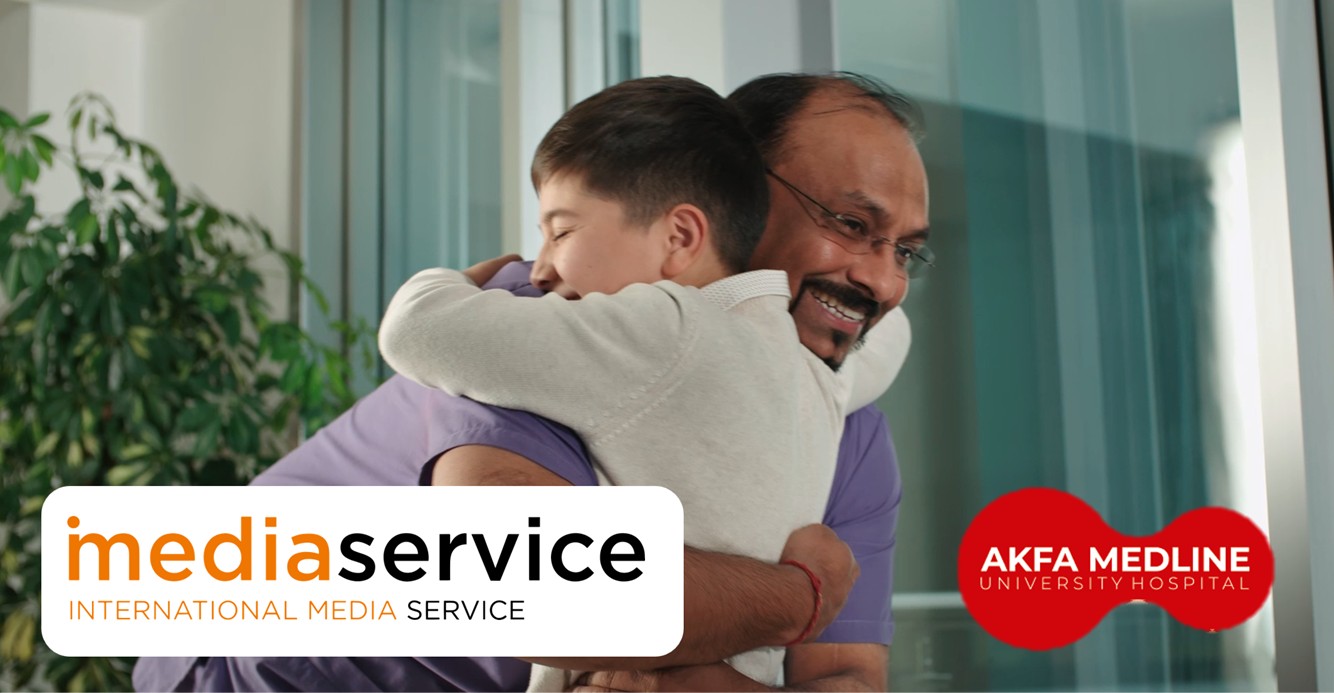
To challenge the belief that only state hospitals deliver life-saving care, AKFA Medline decided to produce a doctor-led manifesto film and placed it on national TV, with IM Service handling broadcast delivery, timing, and exposure for a sensitive message.
The campaign brief combined awareness with credibility: increase brand awareness, strengthen trust and loyalty, reframe perceptions of private healthcare, and place doctors at the centre of the brand. Post-campaign evaluation was framed around brand awareness growth, emotional engagement, trust/loyalty signals, and audience response such as inquiries and interest.
The communication goal was specific: move the perception of private healthcare away from a “commercial service” label and towards clinical duty, responsibility made visible, with doctors as the proof. That choice set the tone for both creative (a manifesto-style film) and distribution (TV first, then a long-form version online).

Context
AKFA Medline is one of Uzbekistan’s largest private medical centres, transitioning toward a university hospital operating under international medical standards.
The trust barrier was cultural as much as competitive. Life-saving, high-quality medicine was widely associated with state hospitals. Private healthcare, by contrast, was often seen as commercial and limited in capability. For a private institution, that perception can narrow what audiences consider “credible” when the situation is serious. This shaped the media choice, as the plan treated television as the place where a healthcare commitment could land at national scale, with the weight of a public statement rather than the feel of a tactical offer.

Creative Minds
The advertiser and the advertising agency led the creative concept and production.
The sales house joined at activation and worked with TV channels on on-air delivery: broadcast handling, timing, and exposure planning. The priority was to keep the message clear and the tone consistent in a category where context matters.
Campaign video
The film centred on the line: “We will not let you give up.” Doctors were portrayed as modern-day heroes, fighting for patients’ lives “until the very end,” with emphasis on teamwork and day-to-day responsibility.

Results
TV delivery was reported through reach: 79% total campaign reach (All 30+, 3+ OTS) and 21% average monthly reach (All 30+, 3+ OTS).
Those figures were delivered through a pulsing plan across 19 weeks. With a budget of about €35,000, the schedule kept the campaign returning in bursts over the year rather than relying on one heavy run. The point of that approach was repetition: the same promise reappearing often enough to stay present, while overall reach accumulated across the full period.
The campaign’s effects were described in both short- and longer-horizon terms. Call-centre inquiries rose immediately after TV activity and were quantified as doubling. Brand awareness was also described as increasing nationwide. Recognition followed as AKFA Medline received a “Brand of the Year” award at the Brend Goda ceremony, in the category of Medical Centers.
Three practical learnings were linked to the work: television’s role as a trust-building medium for healthcare; emotional storytelling used instead of direct service advertising; and a clear split between creative development and media delivery during on-air execution. The concept was described as repeatable and influential on later campaigns, with potential relevance for other trust-based categories facing similar credibility barriers.
Source: egta.com
OTHER CASE STUDIES
HOW DPG MEDIA TURNS THE BACKSTAGE OF A PRIME-TIME MUSIC SHOW INTO A RETAIL ENGINE
17. 8. 2026In a category where retailers typically compete on price and visibility, Albert Heijn, the supermarket retailer,…
AN IMMERSIVE CANAL+ BRAND SOLUTIONS COLLABORATION FOR SKIN-CARE BRANDS WITH SENSITIVE STORIES TO TELL
26. 6. 2026CANAL+ BRAND SOLUTIONS and its in-house studio LA FACTORY created “Marquer l’Invisible” for Avène, linking Cicalfate+…

M6 UNLIMITED TESTS AI SPOT CREATION FOR SMALLER TV AND STREAMING ADVERTISERS
22. 5. 2026M6 Unlimited is testing a simpler route into TV and streaming for SMEs and new advertisers…
THE TV ADVERTISING PARADOX, A THINKTV NEW ZEALAND CASE STUDY (2/2)
22. 5. 2026ThinkTV New Zealand built its campaign around the contradiction that linear TV was being called obsolete…

A BIG-SCREEN STUDY FINDS STRONGER ATTENTION ON TV4 PLAY THAN ON YOUTUBE
24. 4. 2026TV4 just launched its third attention study, comparing the viewing experience on its streaming service (TV4…
THE TV ADVERTISING PARADOX, A THINKTV NEW ZEALAND CASE STUDY (1/2)
24. 4. 2026In late 2024, ThinkTV New Zealand, under the leadership of Jacqueline Freeman, GM Communications, undertook a…
AD EMISSIONS MEASUREMENT: LESSONS FROM THE FINNISH MARKET
31. 3. 2026Finland’s commercial TV broadcasters spent the past year developing a carbon emissions measurement framework for linear…
A NEW WAY FOR FRANCETV PUBLICITÉ TO SELL CONTEXTUAL VIDEO ADVERTISING
27. 3. 2026FranceTV Publicité (FTP), the advertising sales house for French public television, has introduced Context.IA into its…
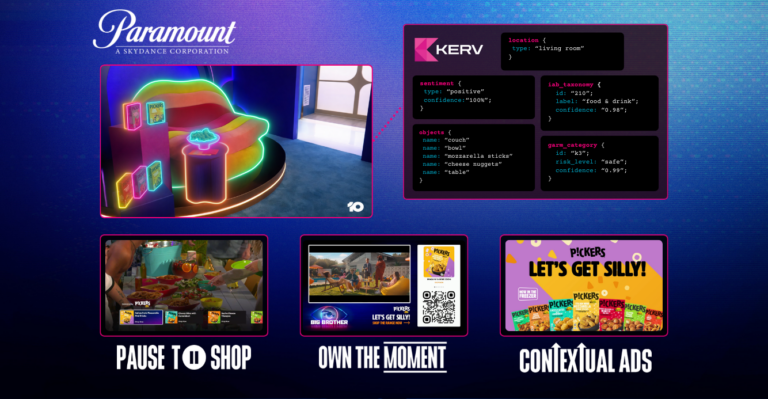
BUILDING A SHOPPABLE, ATTENTION-READY CTV OFFER: THE BIG BROTHER CONTEXTUAL CASE
26. 3. 2026In 2025, Paramount Australia, in partnership with FreeWheel and egta, hosted a webinar outlining a forward-looking…
GLOBO CREATES HOME SCREEN PROMINENCE FOR FREE-TO-AIR TV ON SMART TVS
26. 2. 2026Globo, Brazil’s largest commercial TV group, is rolling out DTV+, a next-generation free-to-air TV standard designed…
THE VISUAL TRANSFER EFFECT: HOW SOUND BUILDS BRANDS
24. 2. 2026In collaboration with neuro-marketing agency Unravel, Talpa Media has produced the scientific proof that audio does…

RMB TURNS QR CODE VOTING INTO A SHARED VIEWING MOMENT THAT STRENGTHS BRAND IMAGE FOR SPRITE AND DELI CHOC
24. 2. 2026Campaign objectives The chocolate snack Deli Choc and soft drink Sprite brands worked with RMB to…