

How should communication evolve at a time when the audience, the cultural context and the way people discover products are all changing simultaneously? This question permeated this year’s SXSW conference and crystallised into three key insights. Here is the second part of the observations recorded by Alex Turtschan from the media agency Mediaplus.
Creators are the new infrastructure
Creator marketing is no longer a niche discipline. For serious brands, it has become a structural part of the media mix. And the next generation is taking it even further: creators and customers themselves are becoming genuine business partners and co-creators of brands.
At a packed talk on building worlds rather than “moment marketing”, Ben Kay from WPP and Leandro Barreto, Global Marketing Director of Unilever’s Beauty & Wellbeing division, described how this works in practice. The basic idea: brands should not chase trends, but actively engage with existing “worlds”. Communities have their own rituals, heroes and language – and anyone who wants to be part of them must understand them.
Unilever now signs three- to five-year contracts with creators – not as media space, but as co-creators of brand stories. The Dove brand has maintained one key value and promise for 20 years, whilst innovating its form every year. Hellmann’s, for example, created a special garlic-flavoured edition of a vampire novel for the BookTok community. Different worlds, the same strategic consistency.
In the case of Nordstrom, this shift is even more pronounced: according to Vice President of Marketing Marie Langhout-Franklin, 60 to 70% of their content now comes from creators (compared to 20% a few years ago). The reason is simple – it performs better across all metrics. Recommendation for briefs? Half a page at most. Tell creators what to do, show them what worked, and then give them space.
The impact on paid media is clear. Research shows that if a creator’s organic content achieves 1% engagement, boosting it with paid advertising delivers above-average results. Organic and owned content first, then paid amplification – that is the current best practice.
But another challenge is on the horizon. According to a presentation by the consultancy firm In Good Co, Generation Alpha doesn’t just want to follow brands, but to co-create with them. They see themselves as co-authors, and their loyalty is shifting accordingly. American Airlines now allows customers to use their accumulated miles not only for flights, but also for simulators and experiences. The new generation follows people, not brands. Brands that understand this build habits. The others build loyalty programmes that no one is interested in anymore.
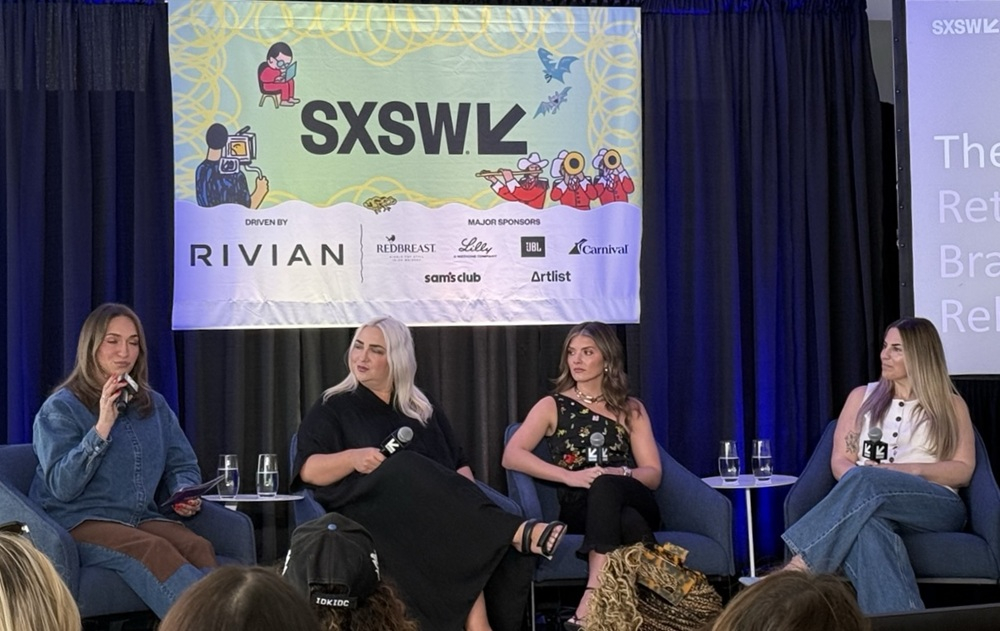 Marie Langhout-Franklin (second from right) at the SXSW 2026 conference; Source: Mediaplus
The price of uniformity
Designer Gülay Özkan began her talk with four photographs of cafés in Bangkok, Amsterdam, Istanbul and Austin – they all looked the same. She then showed four YouTube video thumbnails with different themes but an identical visual style.
Her thesis: uniformity is no longer a trend, but a systemic condition. She distinguishes three layers:
- Primary uniformity (the repetition of patterns across cultures).
- Structural uniformity (market logic selects what survives).
- Algorithmic uniformity (platforms optimise content to the mean).
Matt Klein from Reddit pointed out that 90% of trend insights come from just a few cities. If everyone reads the same reports and compares the same competitors, they reach the same conclusions. The result is the so-called ‘fellow kids’ effect – brands try to catch up with culture instead of creating it themselves.
The implications for media strategy are significant. Andrew Warden, CMO of SemRush, presented data showing that large language models actively filter out ‘duplicate content’. He speaks of an invisible ‘tax on mediocrity’. In an environment where AI increasingly influences brand discovery, being average means being invisible.
He cited the brand Patagonia as an example, which dominates searches related to sustainability. The reason is consistency across all signals – from the founding story through tools for measuring the carbon footprint to advertising that encourages discussion. Language models compare what a brand says about itself with what customers, partners and communities say about it.
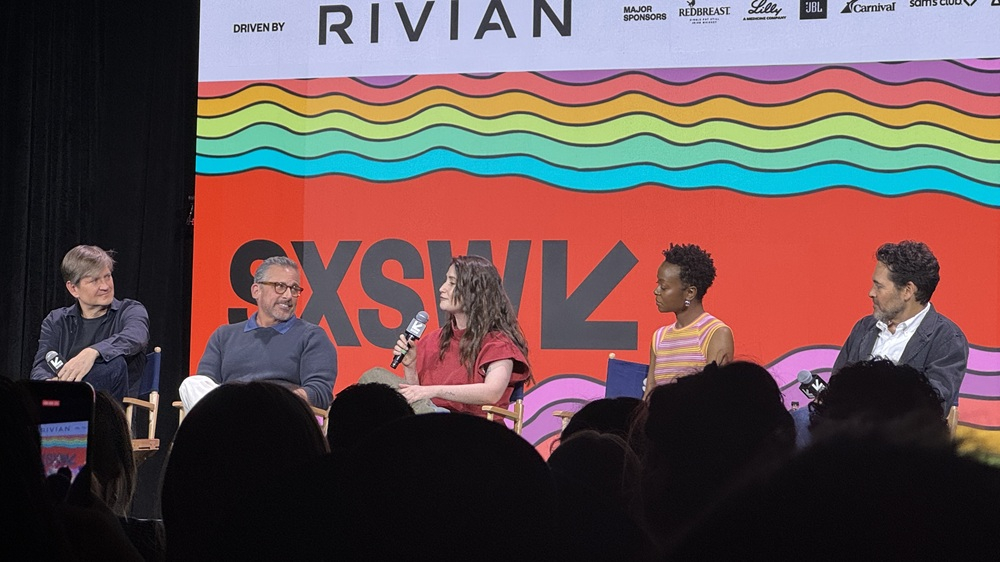 Andrew Warden (second from left) at the SXSW 2026 conference; Source: Mediaplus
The discovery layer is being rewritten
According to Chris Danton, future consumers may stop using search engines and instead deploy shopping AI agents. Websites as we know them today may see their role fundamentally change within a short time.
Language models do not just collect data from websites, but also link signals from Reddit, LinkedIn, YouTube, podcasts and reviews. If product marketing says something different from PR or the content team, AI will flag the inconsistency and penalise the brand. Aligning messaging across channels is thus becoming the new SEO – alongside technical optimisation.
Technology expert Ian Beacraft goes even further: companies must ‘encode’ their values and attitudes into the systems that AI works with. Increasingly, the first point of contact between a brand and a customer will not be a person, but an algorithm that recommends the brand – or, conversely, excludes it.
What links all three areas
The common denominator is the end of the era of fully controlled brand communication. Brands cannot control what creators say about them, whether AI includes them in a response, or how algorithms categorise their content.
What they can control, however, is clarity: who they are, what they stand for, and whether all their outputs across channels tell the same story.
The brands that stood out at SXSW were not the loudest, but the most consistent.
Source: mediaguru.cz