


Background
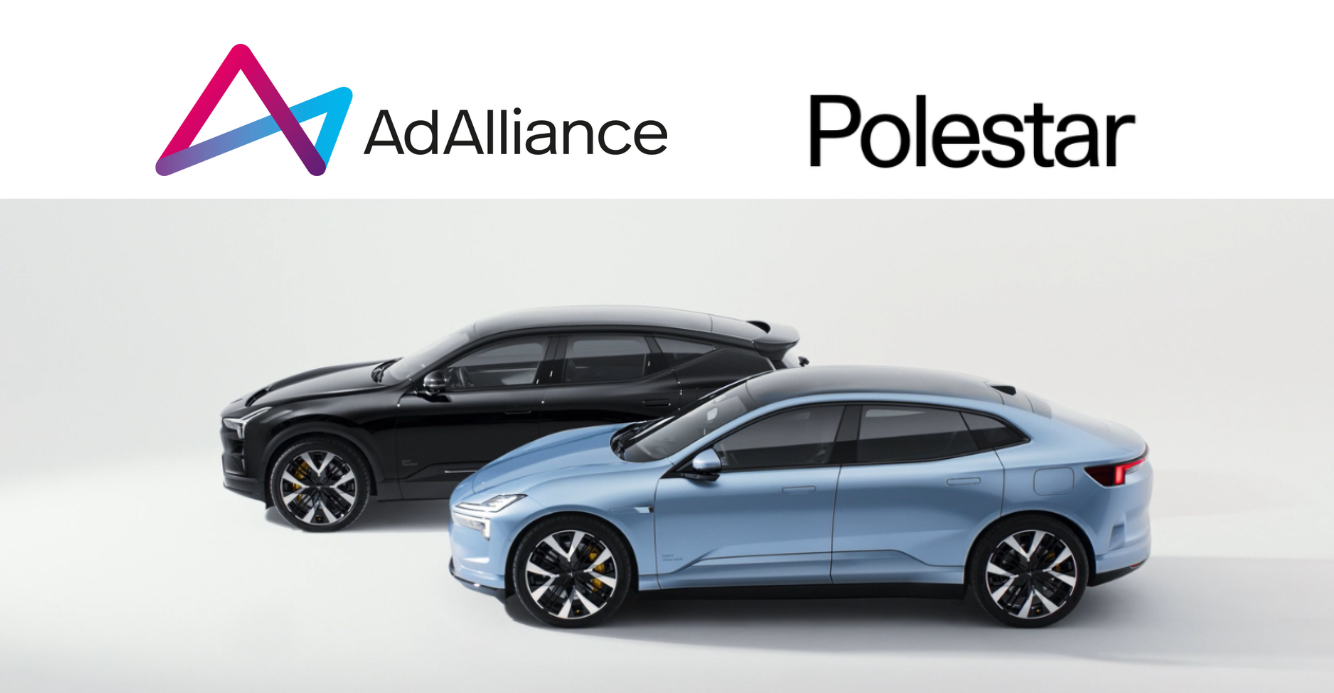
Polestar, the Swedish electric vehicle manufacturer, was rapidly expanding its dealer network across the Netherlands. New showrooms were opening in cities nationwide, but there was a challenge: how do you build awareness for a showroom in one city while also maintaining broad brand visibility? As this was not a typical brand-building campaign, for which an entirely national approach might have been perfect, but rather a call-to-visit campaign, dentsu Benelux suggested exploring this option together with Ad Alliance: making it more targeted, bringing Polestar the best of both worlds—reach and targeting within the same campaign.
Case description
Ad Alliance deployed its Addressable TV technology to solve Polestar’s regional awareness challenge. The technology works by replacing regular TV commercials with versions tailored to specific household characteristics. Instead of every Dutch household seeing the same Polestar ad, Ad Alliance could serve different versions to different viewers during the same ad break.
Working with Polestar and media agency dentsu Benelux, Ad Alliance developed a two-layered targeting strategy combining geography and income. The campaign specifically targeted households with above-average incomes, matching the profile of potential premium electric vehicle buyers. On top of this, regional targeting ensured viewers saw ads relevant to their nearest showroom location.
The creative execution involved seven versions of the Polestar commercial. Six were regional variants, each featuring an explicit call-to-action mentioning a specific city, for example: “Now also in Beverwijk” (a town in the northern Netherlands). The seventh was a generic version without any location mention, which served households outside the targeted regions to build broad brand awareness.
This dual approach created two distinct effects. The generic commercial kept Polestar visible to a wide audience, while the regional variants moved viewers further down the purchase funnel. The difference was subtle but significant: instead of just building brand awareness, the regional ads gave viewers a concrete next step by telling them exactly where they could test drive a Polestar.

Campaign results
The campaign reached over 551,000 households with above-average income across the Netherlands.
Research comparing the regional versions against the generic variant showed clear differences. Awareness of local test drive locations was 51% higher among viewers who saw the regional version. More importantly, intention to book a test drive was 29% higher compared to those who saw the generic ad.
Polestar reported that regional awareness for their new showrooms was essential to their growth strategy, and that Addressable TV successfully brought these new locations to regional attention. Ad Alliance noted that this campaign demonstrated exactly what the technology was created for: combining the trusted, brand-safe environment and reach of television with the ability to make unprecedented impact at regional and household level. The right message, at the right time, for the right audience, whilst also building the brand Why chose when you can have both?
Source: egta.com
OTHER CASE STUDIES

HOW DPG MEDIA TURNS THE BACKSTAGE OF A PRIME-TIME MUSIC SHOW INTO A RETAIL ENGINE
17. 8. 2026In a category where retailers typically compete on price and visibility, Albert Heijn, the supermarket retailer,…

AN IMMERSIVE CANAL+ BRAND SOLUTIONS COLLABORATION FOR SKIN-CARE BRANDS WITH SENSITIVE STORIES TO TELL
26. 6. 2026CANAL+ BRAND SOLUTIONS and its in-house studio LA FACTORY created “Marquer l’Invisible” for Avène, linking Cicalfate+…

M6 UNLIMITED TESTS AI SPOT CREATION FOR SMALLER TV AND STREAMING ADVERTISERS
22. 5. 2026M6 Unlimited is testing a simpler route into TV and streaming for SMEs and new advertisers…
THE TV ADVERTISING PARADOX, A THINKTV NEW ZEALAND CASE STUDY (2/2)
22. 5. 2026ThinkTV New Zealand built its campaign around the contradiction that linear TV was being called obsolete…

A BIG-SCREEN STUDY FINDS STRONGER ATTENTION ON TV4 PLAY THAN ON YOUTUBE
24. 4. 2026TV4 just launched its third attention study, comparing the viewing experience on its streaming service (TV4…

THE TV ADVERTISING PARADOX, A THINKTV NEW ZEALAND CASE STUDY (1/2)
24. 4. 2026In late 2024, ThinkTV New Zealand, under the leadership of Jacqueline Freeman, GM Communications, undertook a…

AD EMISSIONS MEASUREMENT: LESSONS FROM THE FINNISH MARKET
31. 3. 2026Finland’s commercial TV broadcasters spent the past year developing a carbon emissions measurement framework for linear…
A NEW WAY FOR FRANCETV PUBLICITÉ TO SELL CONTEXTUAL VIDEO ADVERTISING
27. 3. 2026FranceTV Publicité (FTP), the advertising sales house for French public television, has introduced Context.IA into its…
BUILDING A SHOPPABLE, ATTENTION-READY CTV OFFER: THE BIG BROTHER CONTEXTUAL CASE
26. 3. 2026In 2025, Paramount Australia, in partnership with FreeWheel and egta, hosted a webinar outlining a forward-looking…

GLOBO CREATES HOME SCREEN PROMINENCE FOR FREE-TO-AIR TV ON SMART TVS
26. 2. 2026Globo, Brazil’s largest commercial TV group, is rolling out DTV+, a next-generation free-to-air TV standard designed…

THE VISUAL TRANSFER EFFECT: HOW SOUND BUILDS BRANDS
24. 2. 2026In collaboration with neuro-marketing agency Unravel, Talpa Media has produced the scientific proof that audio does…

RMB TURNS QR CODE VOTING INTO A SHARED VIEWING MOMENT THAT STRENGTHS BRAND IMAGE FOR SPRITE AND DELI CHOC
24. 2. 2026Campaign objectives The chocolate snack Deli Choc and soft drink Sprite brands worked with RMB to…