
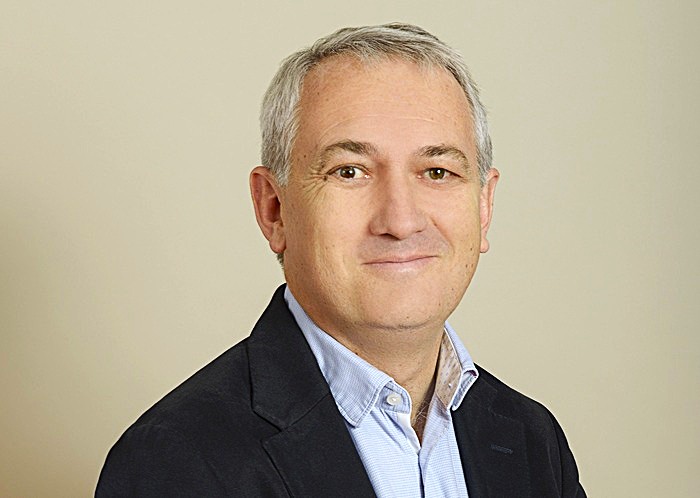
The international auditing organisation CESP audited the domestic television audience and video content measurement carried out by Nielsen for the Association of Television Organisations (ATO). CESP Associate Director Olivier Daufresne confirmed that the Czech television audience measurement system meets international standards and that digital site-centric measurement of television programmes on other devices (smartphones, PCs and tablets) is also in line with best practice. The audit report contains specific recommendations for further improvement and development, particularly regarding the assignment of demographic profiles and estimates of co-viewers on smart TVs as part of digital measurement of television programmes.
The audit focused on both household audience measurement and digital platforms, assessing the methodology and technological aspects of the research. Specific features of Czech measurement include, for example, the inclusion of Ukrainian refugees in the panel and real-time audience measurement. CESP audits media research in more than 25 countries.
Daufresne emphasises that the audit contributes to transparency and trust between advertisers, media and agencies. He considers a three-year audit cycle to be ideal. He identifies the transition to cross-media measurement, which will link traditional television with online video platforms, as the main challenge for the future.
How did the idea of auditing domestic television measurement, commissioned by ATO, come about?
We came to Prague at the request of ATO and Nielsen to audit the television audience measurement system in the Czech Republic. CESP is a French professional institution specialising in media research audits. We were founded more than 70 years ago and have been operating internationally since the 1990s, mainly in Eastern Europe, but also in Asia, the Middle East and Africa.
Can you describe how the measurement audit is conducted?
The audit has several stages. First, we request all the necessary documentation and data, then we hold meetings with the research agency and market representatives. We issue a preliminary report, to which both parties can respond. After the final meeting with the analytical committee, we issue a final report. In the Czech research, we started in the spring and presented the results in the summer.
Can you summarise the audit results, at least in general terms?
In general, the measurement system in the Czech Republic is in line with international standards. At the same time, we have suggested several areas for further improvement. The recommendations are more developmental in nature and are intended to help make the system more effective. In international comparison, this is high-quality research.
What does the audit evaluate? What criteria do you assess?
We assess whether the system complies with the contract between the client (ATO) and the contractor (Nielsen), and we also compare it with international recommendations, such as those of the organisation Toward Guidelines for TV Audience Measurement. This gives us both a contractual and a professional framework.
We cover all key areas of research, from designing introductory research, including descriptions of the television market, households and technical equipment, to the panel itself, people meter technology and audience measurement on digital platforms.
In what ways is Czech research specific compared to other countries?
We noticed three interesting differences. The first is the inclusion of Ukrainian refugees in the research, which is a relatively unique approach. The second is the existence of real-time TV audience measurement, which we have only seen in Brazil so far. And the third is the method of measuring audience on digital platforms – the research also covers video content from major broadcasters across devices.
CESP is an international organisation. Does this facilitate or complicate auditing in local markets?
We see this as an advantage. Independence and international experience are key. We are not part of any media group or agency. Thanks to audits in more than 25 countries, we are able to compare and recommend best practices. And if we encounter a very specific local problem, for example, in the sample structure, we know when to hand over to local experts.
International audits of domestic media research are not very common. What is the role of audits for the entire media market, and what are they good for?
Audits bring transparency and trust. It is not just about control but also about achieving results that can guide further development. Nielsen, for example, presented how it intends to proceed based on the recommendations. It is important that broadcasters, agencies and advertisers all participate in the debate, because measurement is a common currency for all of them.
Audits bring transparency and trust. It is not just about control but also about achieving results that can guide further development.
Olivier Daufresne
How often should the audit take place?
It depends on the country and market. In some countries, audits are conducted annually, such as in France or India. In others, they are conducted once every few years. In the Czech Republic, we do not believe there is a crisis, but an audit can help before further contract negotiations and when planning future research development. In general, we consider a three-year cycle to be reasonable.
What if the market is permanently distrustful and even paranoid, with no one believing anything...
We worked extensively in Russia before the war, and the television market there is really demanding. It is very paranoid. There are experts there, but also strong political pressures. The research agency Mediascope does good work there; it is fair and professional, but it is still constantly under attack. In such an environment, it is really necessary to conduct audits frequently and regularly in order to silence these speculations and rumours and show that the measurements correspond to reality. Without this, there are untrustworthy attacks on the research, often from people who do not really know it well. Sometimes someone just says, “My ratings have dropped, which means the measurements don’t work.”
Smaller players in the market often claim that they are underestimated in terms of measurements. That their results are worse than they actually are. What do you think about that?
It depends on the country, but in most cases, it is not entirely true. Statistically, if someone is small, their results will naturally fluctuate more. The results are not as accurate and, at times, may even show zero viewership.
This makes it difficult for smaller players to understand their audience. They know they have viewers, but it may be 0.1 or 0.02 per cent, which is not reflected in some measurements.
In some countries, set-top box data is used, which has a larger volume and thus allows for a more detailed view of small numbers – instead of zero, you will see, for example, 0.01. This makes it easier for the market to sell advertising, as it is easier to argue that the audience actually exists. Switzerland is the most advanced in this regard, having introduced this technology several years ago. Canada is on a similar path, and interesting things are also happening in Austria.
Statistically, when someone is small, their results will naturally fluctuate more.
Olivier Daufresne
In your opinion, what are the biggest challenges for television measurement today?
Definitely the transition to cross-media measurement. Television and video content are now consumed not only on traditional televisions, but also on YouTube, Netflix, Amazon and other platforms. Advertisers want to know their total reach across all channels. This is why cross-media studies are being developed, for example, in the UK and the US. The aim is to integrate all relevant platforms into a single measurement system.
Will this be possible given the policy of multinational platforms, which are reluctant to participate in unified national research?
The new European Media Freedom Act (EMFA), which integrates platforms into the broader monitoring structures of individual media systems, should help in this regard.
You mention media other than television. Do you also conduct audits in other areas?
Yes, we also have experience with audience research for radio, outdoor advertising, cinema and digital media. In radio, for example, passive measurement via mobile applications is on the rise, which increases the need for auditing and quality control. Recently, we audited passive radio measurement in the Netherlands.
Source: mediaguru.cz