
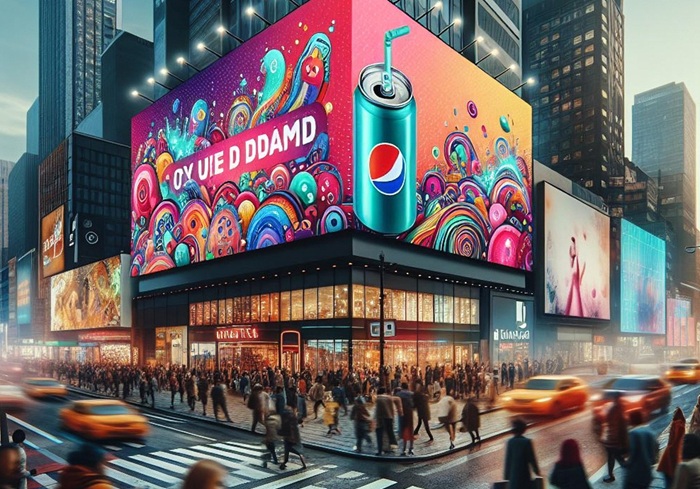
The view of the possibilities of digital out-of-home advertising (DOOH) is changing thanks to programmatic DOOH. Brands can now combine the cinematic power of large-scale creative outdoor advertising with the precision, measurability and flexibility that advertisers demand. Whether during a lunch break, on the way to a concert, or around a retail area, the system allows dynamic ads to be displayed in real-time based on context and environment.
Global spending on DOOH is estimated to reach £19 billion ($530 billion) by 2029. As an increasing proportion of outdoor spaces become digital, the potential is significant. However, these screens are only part of the whole.
Consumer attention flows naturally from mobile in hand to listening to audio in headphones to a billboard on the street. No channel works in isolation, and programmatic DOOH advertising is no exception. To realize its full potential as a powerful multiplier of reach and engagement across channels, advertisers must overcome the insularity of DOOH and integrate it into the overall omnichannel experience.
Transparency and fragmentation
Unified buying workflows and third-party integrations make DOOH easier today. Previously, it was hampered by the lack of transparency in measurement and fragmented planning tools. Activation was complex, integration with other channels almost impossible and returns hard to prove. What once required extensive technical know-how and a dedicated team can now be handled by a single media buyer.
Crucially, cross-channel measurement has also been simplified. Metrics such as ad recall, brand impact or purchase intent can now be combined with data from DOOH as well as mobile, display, CTV and retail ad performance. This helps advertisers close the loop between exposure and outcome. Greater reporting transparency, real-time campaign optimization, and advanced tools like the map interface open up new possibilities for planning and dynamic content creation.
Creative and cultural power
DOOH remains one of the most powerful visual storytelling formats and often integrates naturally with other channels. In a world where video ads skip and banners scroll away, DOOH cannot be blocked. At the same time, it operates in a public, shared space. People see it, take pictures of it, and share it on social media.
Programmatic DOOH can make these moments even more relevant to individuals while maintaining cultural reach. Using contextual data and dynamic real-time delivery, DOOH advertising can respond to, say, a sudden rain shower or a change in the score of a local sports game.
An example of this is PHD 's campaign for KFC in Prague at the Kotva department store. The milkshake ads were only shown when it was sunny and the temperature exceeded 20°C. The result was higher sales at nearby KFC restaurants and less wasted advertising budget on colder days. This is an example of how programmatic data can strengthen DOOH creative and increase both impact and effectiveness.
Michael Štádler, country manager at Adform for the Czech Republic, adds that in recent months more digital space has been added in the Czech Republic that can be bought programmatically.
Newly, advertisers can buy advertising space through the Concept OOH network and Euronova Group from the Vision Thing group. The first devices have already been installed in the Galerie Butovice shopping centre in Prague. By the end of this year, Concept OOH plans to expand its network to 63 screens in several cities in the Czech Republic.
New players in the programmatic in-store advertising sector include Version 3, which has started offering to buy advertising space in COOP and Traficon convenience stores. Here, advertisers pay not for the space itself, but for the actual attention of the people standing in front of the screen. These new solutions allow for more accurate targeting and more efficient use of budgets by measuring the actual exposure of the ad to the audience.
The big picture
As media consumption becomes increasingly fragmented and audiences demand more relevance and authenticity, DOOH as a channel can deliver both scale and attention. What used to be considered a flashy but difficult to measure and inflexible format is now measurable, agile and strategically relevant thanks to programmatic technology.
The availability of outdoor digital space is also growing, making programmatic DOOH advertising accessible to brands and agencies of all sizes.
If an advertiser wants to leverage its full potential as an omnichannel accelerator, they should thoughtfully integrate its data and insights with other channels. Using integrated workflows that connect other digital campaigns and third-party data, brands can turn ordinary public places into relevant brand touchpoints while measuring their performance just like other media.
Vicky Foster, VP Global Commercial Partnerships, Adform
Source: mediaguru.cz