

What you will find in the article
- Total TV combines linear television, BVOD, streaming YouTube, and connected TV.
- Linear TV generates the largest share of TV-attributed profit through broad reach
- BVOD combines meaningful scale with above-average profit per exposure
- Streaming ads deliver the highest ROI and profit per exposure, but have limited reach
- The best channel mix depends on each advertiser’s audience and campaign objectives
From TV Effectiveness to 'Total TV' Effectiveness
Television's contribution to advertising profitability has been demonstrated repeatedly. The UK Profit Ability 2 study, previously covered by Screenforce, found that TV accounted for 54% of advertising-generated profit. But as the television landscape expands to encompass an increasingly diverse range of viewing and advertising environments, a new question emerges: how much does each component of 'Total TV' contribute to business performance?
To investigate this, Ebiquity, working with the UK advertiser trade body ISBA, analysed more than £100 million in TV advertising investment across thirteen brands over a twelve-month period. Using econometric modelling, the researchers calculated how much business profit could be attributed to the different forms of TV advertising. They also examined return on investment (ROI) and incremental profit generated per 1,000 advertising exposures.
Ebiquity adopts a broad definition of 'Total TV'. Alongside linear television and broadcaster streaming (BVOD), it includes advertising on subscription streaming services (SVOD), YouTube and certain forms of Connected TV. In the Netherlands, the Video Totaal audience measurement framework distinguishes between linear TV, video on demand and video platforms, including YouTube. Screenforce uses the term Total Video to describe premium long-form video content delivered through linear TV, BVOD and SVOD.
The analysis confirms that 'Total TV' remains a major driver of profit. More importantly, it reveals that its individual components contribute to business performance in different ways. What matters is the combination of reach, effectiveness per exposure and overall contribution to business profit.
Linear TV Remains the Biggest Driver of Total Profit
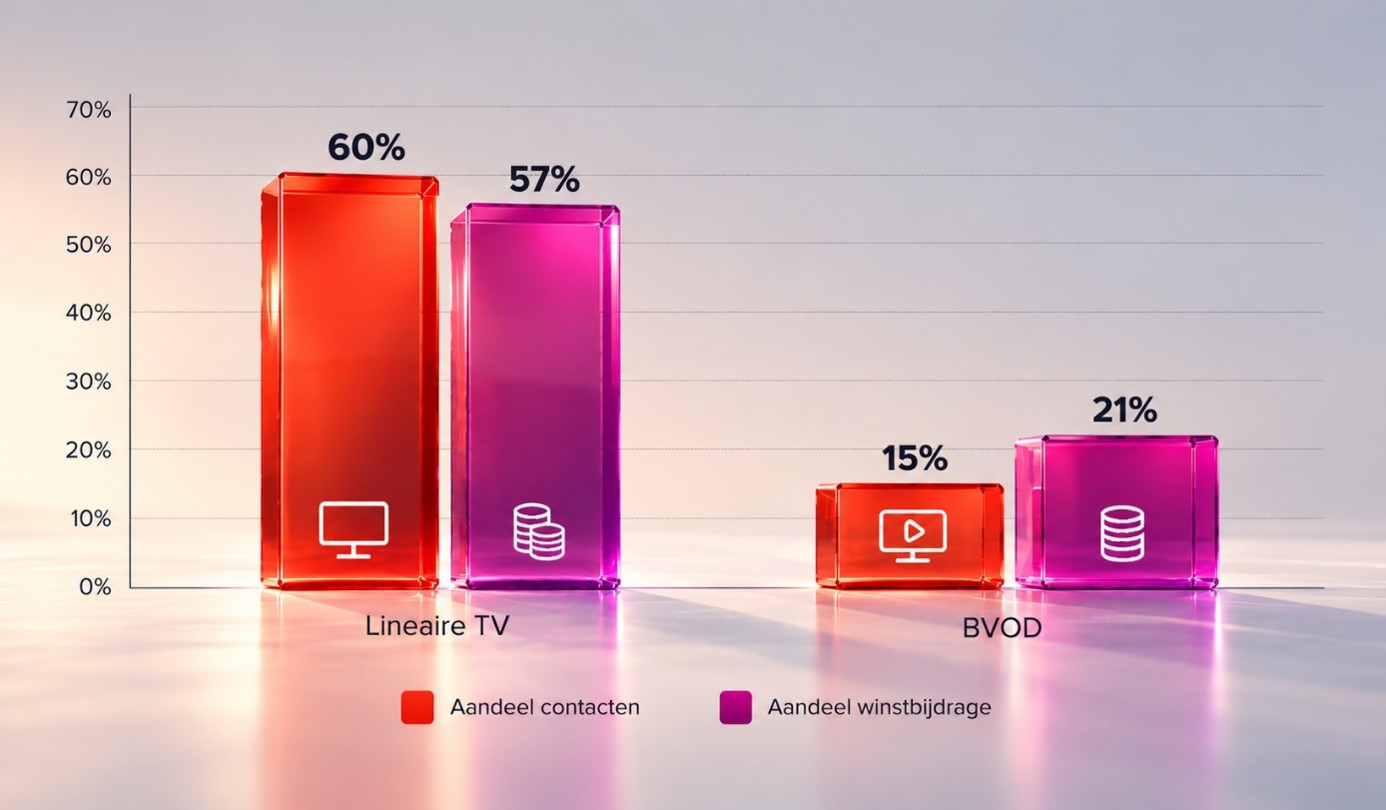
Linear television's greatest strength remains its ability to reach large audiences and, in doing so, generate substantial profit. Across the campaigns analysed, linear TV accounted for an average of 60% of TV advertising exposures and 57% of total TV-attributed profit, while receiving 54% of investment.
Interestingly, linear TV does not generate the highest incremental profit per 1,000 exposures within 'Total TV'. However, this does not mean it is less effective. The researchers explain that, precisely because linear TV delivers such a large volume of exposures, it becomes harder to maintain the same incremental return with each additional exposure. At the same time, its extensive reach enables linear TV to generate a total volume of profit that none of the other individual 'Total TV' components matched in this analysis.
For advertisers, this underlines the importance of scale. High effectiveness per exposure is valuable, but ultimately, the number of people a medium can reach – and the total profit it can generate – matters just as much.
BVOD Combines Scale with Effectiveness per Exposure
Broadcaster video on demand (BVOD) occupies a distinctive position within 'Total TV'. It combines the professionally produced content and trusted viewing environments of established broadcasters with the distribution and targeting capabilities of digital advertising.
Ebiquity's analysis shows that this combination also delivers commercial value. BVOD accounts for an average of 15% of TV advertising exposures but generates 21% of total TV-attributed profit. Its incremental profit per 1,000 exposures is also significantly above the average for the forms of TV advertising examined by Ebiquity.
BVOD therefore stands out for its relatively high profit contribution per exposure, combined with sufficient scale to make a meaningful contribution to overall results. For advertisers, broadcaster streaming offers more than simply incremental reach. It makes a distinct contribution to campaign profitability.
The chart below illustrates the differences between linear TV and BVOD described above. Comparing their respective shares of advertising exposures with their contributions to business profit reveals how each channel delivers value in its own way.
Streaming Advertising: High Effectiveness per Exposure
Advertising on streaming services (SVOD), such as Disney+ and Prime Video, has also established a clear role within 'Total TV'. Of all the TV channels examined, SVOD delivers the highest indexed ROI and the highest incremental profit per 1,000 exposures. According to the researchers, this may partly reflect the premium viewing environments offered by streaming services, where audiences are highly engaged with the content and exposed to relatively little advertising.
However, scale remains more limited for the time being. SVOD accounted for an average of 10% of TV advertising exposures across the campaigns analysed. As a result, its high effectiveness per exposure does not yet translate into a total profit contribution comparable to that of linear TV.
For advertisers, this means that streaming advertising can be a valuable complement to their wider TV investment. According to Ebiquity, the key question going forward is whether this high level of effectiveness per exposure can be maintained as reach and advertising volumes continue to grow.
The Optimal Mix Varies by Advertiser
Although the average results reveal clear differences between channels, the researchers emphasise that there is no universally optimal way to allocate a TV advertising budget. The right mix depends on the target audience and the objectives of each campaign.
Two real-world examples from the study illustrate this point.
One brand targeting a young, digitally oriented audience allocated approximately 60% of its TV budget to non-linear channels. BVOD, in particular, made a relatively large contribution to profit. More precisely targeted advertising exposures within digital TV environments proved commercially valuable for this audience.
For another brand seeking to reach a broad audience, linear TV played the leading role. With approximately half of the budget, it delivered around 70% of advertising exposures and generated 60% of TV-attributed profit. Other channels made additional contributions, but the extensive reach of linear TV provided the foundation for the overall result.
These examples demonstrate why the different components of 'Total TV' should not be regarded as competing alternatives. Their value varies from campaign to campaign. The aim is not to use as many channels as possible, but to find the right combination.
The Strength of Total Video Lies in the Mix
Ebiquity's analysis demonstrates that the different components of TV advertising each contribute to business performance in their own way. Linear TV delivers scale and substantial profit, BVOD combines scale with high effectiveness per exposure, while advertising on streaming services offers additional opportunities to reach consumers effectively.
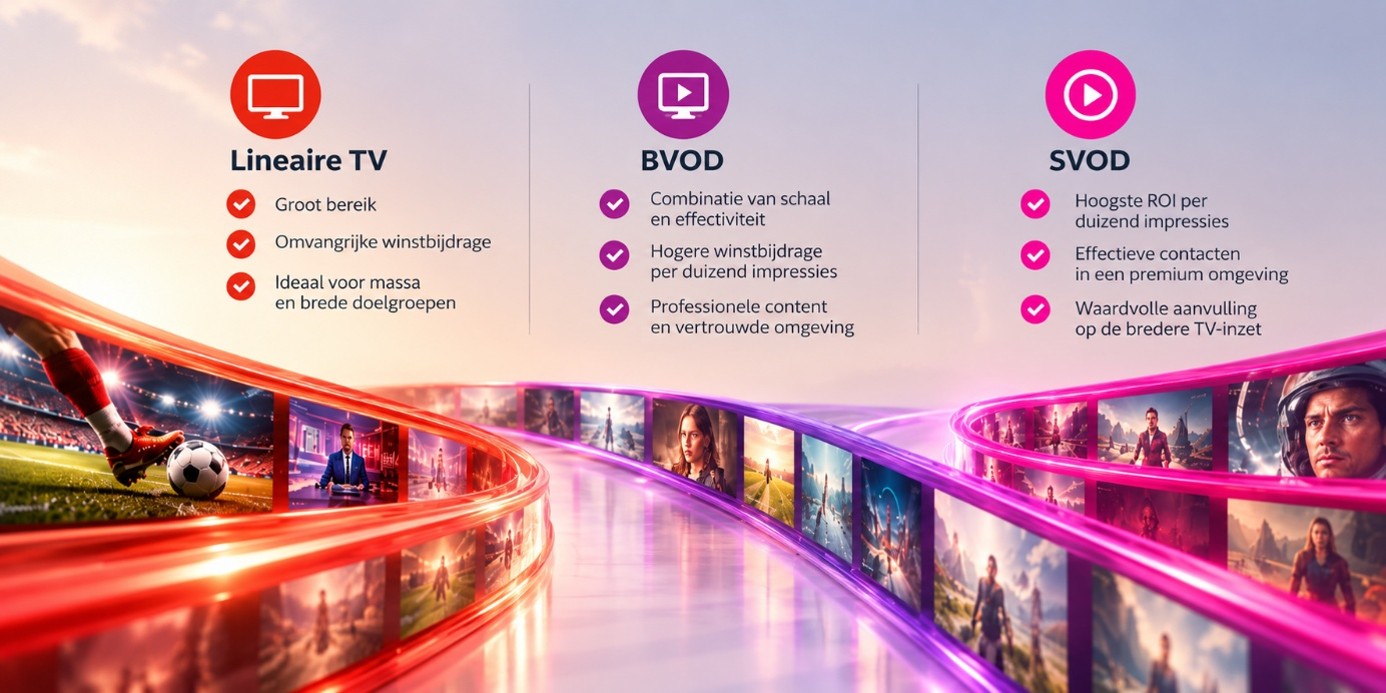
For advertisers, the challenge is therefore not to choose between linear TV and streaming, but to make the most of their complementary strengths. This calls for an integrated approach to media planning and effectiveness measurement – one that considers not only returns per exposure, but also each channel's total contribution to business results.
This article is a Screenforce summary of the study 'Total TV: From Evolution to Effectiveness', conducted by Ebiquity and ISBA (September 2026). The full research report is available on the Ebiquity and ISBA websites.
The images in this article were generated using AI.
Source: screenforce.nl