


Mirror, mirror on the wall, who has the best beauty strategy of them all? This week’s egtabite features an in-depth look at IP Germany’s Beauty Study – a comprehensive dive into the world of beauty brands in Germany and the significant role of television in their market strategy.
The sales house joined forces with the market research agency Facit Research to analyse the national beauty market and present a comprehensive industry report. The study encompasses 61 beauty brands, 8 consumer profiles and 17 different TV shows broadcast on RTL, Sat.1, ProSieben and Vox.
The European Champion in Beauty Care
Each year a huge amount of money is spent on beauty care, with Germany as the European champion: across all product groups, Germans spent 13.6 billion euros last year on beauty products*. The tough competition of available brands and products, on top of the growing number of customer touchpoints, makes it increasingly difficult for advertisers to stay top of mind.
In this context, Facit Research and IP Germany launched their research which focused on the product categories such as: nourishing facial cosmetics, decorative cosmetics and hair care. The report – which gathered information from 6925 respondents (aged 14-69) through an online survey – provides insights into various consumer profiles, buying behaviour, brand affinities, media usage habits and more – in short: everything an advertiser needs to address a specific beauty target group.
Eight different beauty types
As buyers of beauty products differ widely, clearly differentiated target groups are vital for advertisers’ marketing strategy. For this reason, a beauty-specific typology was created in the course of the study, which provides a clear overview of the various types of consumers in the German beauty market.
The eight different beauty types, with apt names such as Trendsetter, Minimalist or Pragmatist, are based on life and consumption attitudes, rather than pure socio-demographics.
The research allows advertisers to see which beauty type is the best fit for their brand – based on brand values such as luxury, innovation, sensuality – and which of the 17 TV formats would be the best context for their television spot or special ads such as product placement or sponsoring.

Eight different beauty types
Moreover, the research also indicates that the various beauty types have a high affinity for TV. As the selection of cosmetic brands is very wide and as consumers prefer to choose brands they are familiar with, advertisers need to build an emotional connection and brand loyalty with their consumers.
Thanks to the combination of sight and sound, TV can move and emotionally inspire viewers particularly well. The lean-back attitude during television viewing keeps the mood relaxed and open, making viewers more receptive to advertising messages, as shown by the study.
In the further customer journey, print and online can further reinforce the desirability of the product created by the TV campaign and positively influence the emotional purchase decision.
Finally, the goal of this study is to remind beauty advertisers of the effectiveness of TV and to encourage them to include the target groups in their future marketing communication campaigns.
*Annual Report 2017/2018 of the Industry Association Body Care and Detergent
OTHER CASE STUDIES

HOW DPG MEDIA TURNS THE BACKSTAGE OF A PRIME-TIME MUSIC SHOW INTO A RETAIL ENGINE
17. 8. 2026In a category where retailers typically compete on price and visibility, Albert Heijn, the supermarket retailer,…
AN IMMERSIVE CANAL+ BRAND SOLUTIONS COLLABORATION FOR SKIN-CARE BRANDS WITH SENSITIVE STORIES TO TELL
26. 6. 2026CANAL+ BRAND SOLUTIONS and its in-house studio LA FACTORY created “Marquer l’Invisible” for Avène, linking Cicalfate+…

M6 UNLIMITED TESTS AI SPOT CREATION FOR SMALLER TV AND STREAMING ADVERTISERS
22. 5. 2026M6 Unlimited is testing a simpler route into TV and streaming for SMEs and new advertisers…
THE TV ADVERTISING PARADOX, A THINKTV NEW ZEALAND CASE STUDY (2/2)
22. 5. 2026ThinkTV New Zealand built its campaign around the contradiction that linear TV was being called obsolete…

A BIG-SCREEN STUDY FINDS STRONGER ATTENTION ON TV4 PLAY THAN ON YOUTUBE
24. 4. 2026TV4 just launched its third attention study, comparing the viewing experience on its streaming service (TV4…

THE TV ADVERTISING PARADOX, A THINKTV NEW ZEALAND CASE STUDY (1/2)
24. 4. 2026In late 2024, ThinkTV New Zealand, under the leadership of Jacqueline Freeman, GM Communications, undertook a…

AD EMISSIONS MEASUREMENT: LESSONS FROM THE FINNISH MARKET
31. 3. 2026Finland’s commercial TV broadcasters spent the past year developing a carbon emissions measurement framework for linear…
A NEW WAY FOR FRANCETV PUBLICITÉ TO SELL CONTEXTUAL VIDEO ADVERTISING
27. 3. 2026FranceTV Publicité (FTP), the advertising sales house for French public television, has introduced Context.IA into its…
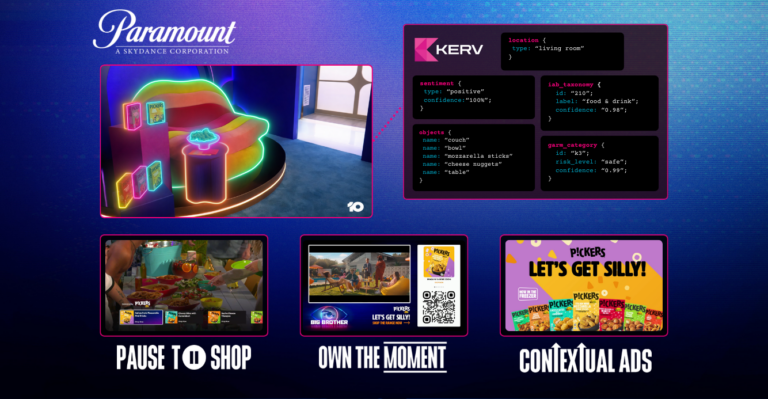
BUILDING A SHOPPABLE, ATTENTION-READY CTV OFFER: THE BIG BROTHER CONTEXTUAL CASE
26. 3. 2026In 2025, Paramount Australia, in partnership with FreeWheel and egta, hosted a webinar outlining a forward-looking…

GLOBO CREATES HOME SCREEN PROMINENCE FOR FREE-TO-AIR TV ON SMART TVS
26. 2. 2026Globo, Brazil’s largest commercial TV group, is rolling out DTV+, a next-generation free-to-air TV standard designed…

THE VISUAL TRANSFER EFFECT: HOW SOUND BUILDS BRANDS
24. 2. 2026In collaboration with neuro-marketing agency Unravel, Talpa Media has produced the scientific proof that audio does…

RMB TURNS QR CODE VOTING INTO A SHARED VIEWING MOMENT THAT STRENGTHS BRAND IMAGE FOR SPRITE AND DELI CHOC
24. 2. 2026Campaign objectives The chocolate snack Deli Choc and soft drink Sprite brands worked with RMB to…