

The central message of Ritson’s presentation was to draw attention to the fact that television and television advertising offer unrivalled effectiveness, reach and cultural impact thanks to their ability to capture viewers’ attention and evoke emotion, especially when compared with today’s fragmented, inattentive and emotionally flat digital media landscape.
A world tired of digital advertising
Right from the outset, Ritson criticises the current state of marketing: users being bombarded with hundreds of advertising messages every day, extremely low click-through rates, widespread use of ad blockers, ineffective ad viewing on small screens, and people’s inability to remember the ads they see. “Friends, we’ve been doing advertising wrong for years — perhaps a quarter of a century,” he says. In his view, digital advertising has suffered from an excessive focus on micro-targeting, performance metrics, cookies and the like, while forgetting what constitutes advertising’s real power: broad reach, attention and emotion.
The birth of television advertising
Within his alternative-reality presentation, Ritson introduces television and television advertising as a spectacular paradigm shift. Effective advertising, experts argue, depends on two key factors: attention and emotion — the areas in which digital media tend to fall short.
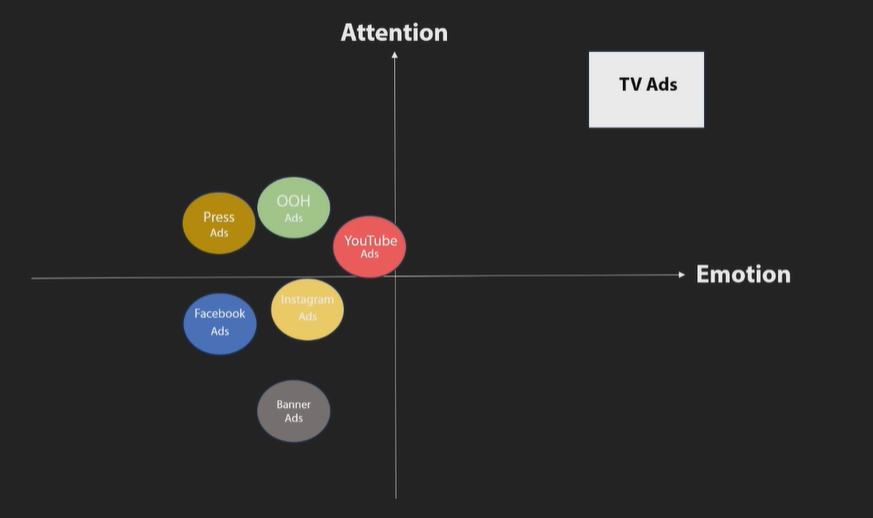 Source: Vision 2025 Webinar – Mark Ritson
As Ritson noted, the average viewing time exceeds 20–25 minutes and can reach up to three hours, with 71% active attention. Entertainment also acts as a form of “natural immunity to ad blocking”. The television screen offers a “big canvas” with a resolution of 1920 × 1080 pixels and surround sound for complete immersion into the viewing experience. It generates 2.5 times stronger emotional responses than mobile devices and delivers 42% higher ad recall than online video. After all, emotion is what matters most — as demonstrated by the following television advert:
Video: Specsavers UK
Of course, reach must not be overlooked. According to Ritson, television is capable of reaching more than five billion people worldwide, and in some countries as much as 95% of the population, with zero app downloads. It simply works instantly, straight “out of the box”.
Beyond the advantage of thirty seconds of uninterrupted attention, there is also the element of shared viewing. People watch adverts and then talk about them. The result is a shared cultural experience that allows creativity and commerce to intersect.
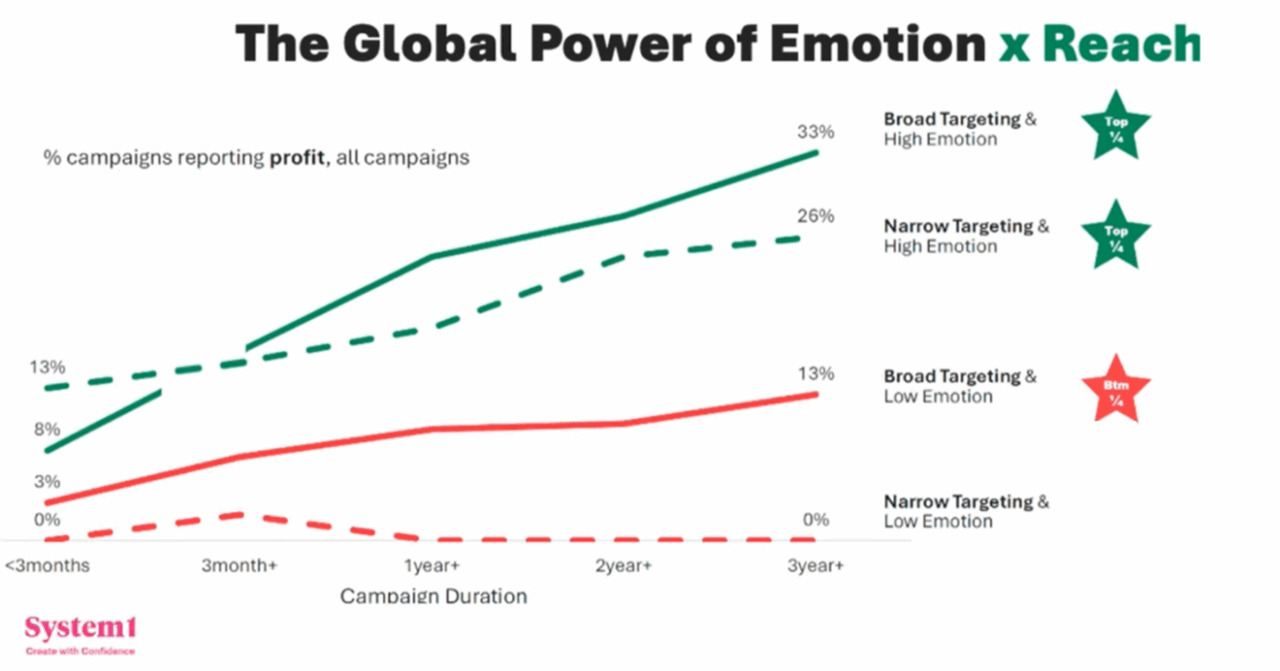
Broad reach (mass marketing), combined with strong emotional impact, significantly increases campaign profitability — in line with the principles of brand building.
% campaigns reporting profit, all campaigns
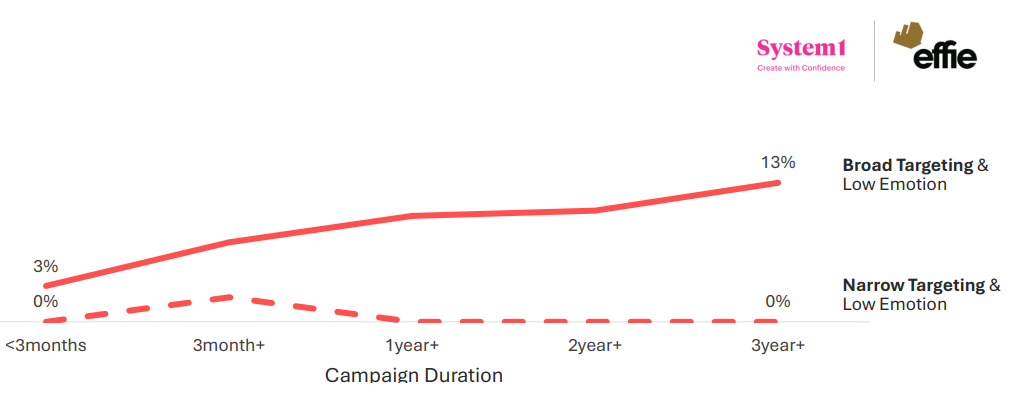 Source: System1, Vision 2025 Webinar – Mark Ritson
Brands that use television as an advertising channel grow 2.6 times faster, achieve an average return on investment of £1.73 for every pound spent, and also see a 17% improvement in price elasticity.
Attention and emotion rulez!
Attention has been a major topic of discussion over the past five years, and there is compelling data to support it. The figures show that television achieves an average of 11 seconds of attention within a 30-second spot, which is more than double the level recorded for other media:
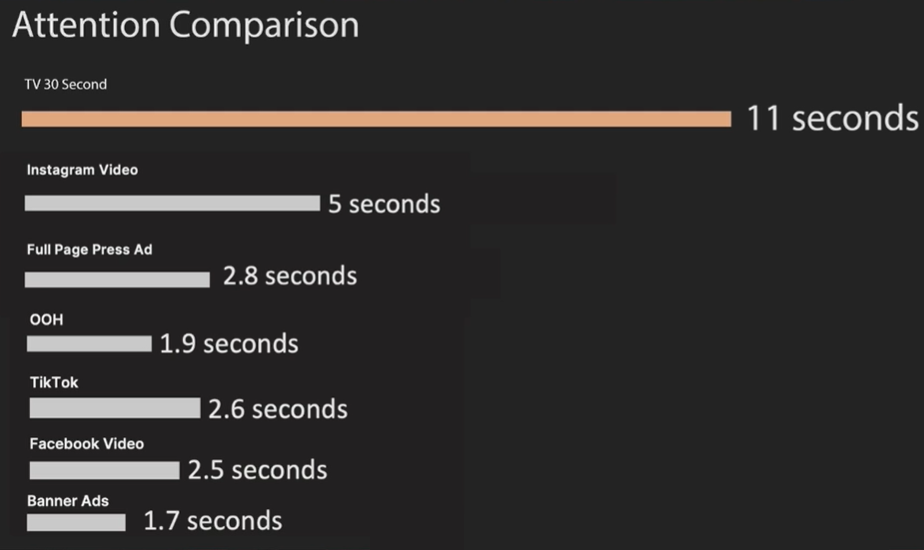 Source: Vision 2025 Webinar – Mark Ritson
Beyond attention, emotional impact is at play — an area in which television excels: 52% of people report laughter, 47% an emotional response, and 40% say they like the advertising content. This is multiple times higher than for digital formats:
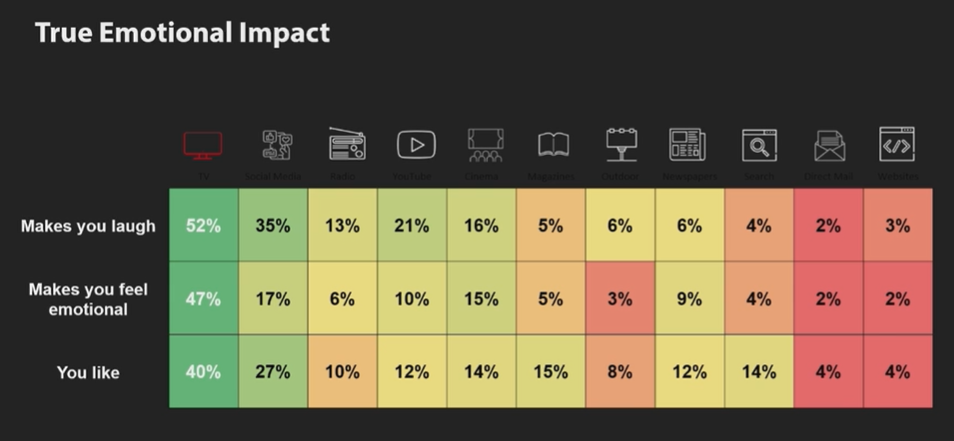 Source: Vision 2025 Webinar – Mark Ritson
As an example of strong emotional impact, Ritson presented a television advert by Cadbury:
Video: Cadbury – Garage
However, the best results can be achieved by combining broad reach with a powerful emotional charge:
 Source: Vision 2025 Webinar – Mark Ritson
Television enjoys high levels of trust
In Ritson’s alternative reality, the “new invention” of television also breaks through other barriers that digital channels struggle with. “We know that consumers —for possibly very good reasons — don’t really attach a lot of trust to a lot of media,” Ritson said, adding that television advertising once again challenges this paradigm. “Our scientists estimate that with TV advertising, we can achieve levels of trust you’ve never seen before from consumers,” he noted. Television advertising reaches a consumer trust level of 35%, significantly higher than other media facing credibility issues, and signals greater brand trustworthiness.
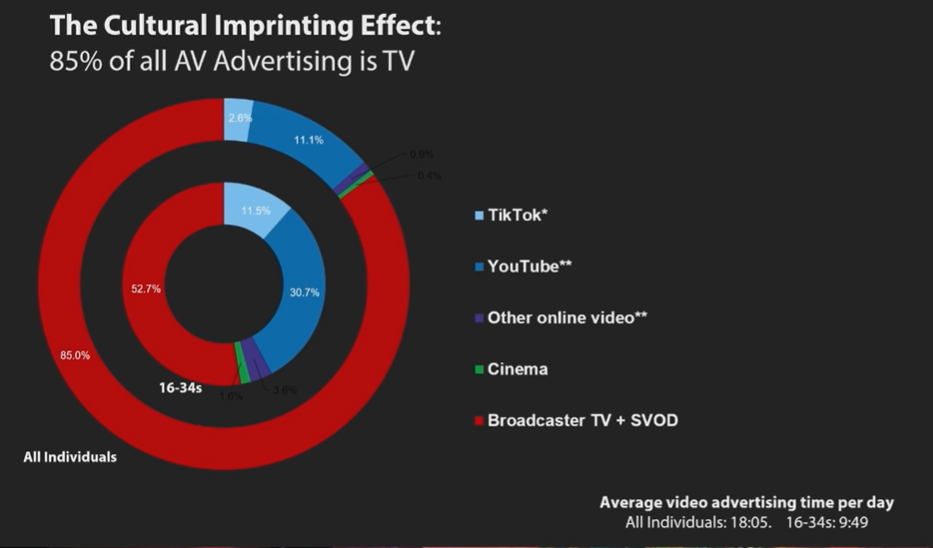
Ritson also pointed out that television advertising does not have to destroy traditional digital media — quite the opposite. It can strengthen them. Unlike the isolated consumption typical of online media, television advertising is often watched in groups, creates a cultural imprint and generates a so-called multiplier effect. Looking ahead to the future of this “new invention”, Ritson suggested that “all individuals will consume AV advertising at a massive level. Eighty-five per cent of all audiovisual ads will be encountered on TV. And yes, it’s less for 16–34s, but still more than half of the total audiovisual advertising they’ll experience will happen on a television. And that means not just it’s becoming a dominant technology, it means the interactions and social interactions around these ads will provide a very important effect — one we don’t see with legacy (editor’s note: digital) media.”
 Source: Vision 2025 Webinar – Mark Ritson
Television therefore offers a whole range of advantages: a large screen that serves as an emotional canvas, a simultaneous mass audience, more attention, greater emotional charges, cultural impact and increased trust. It is an ecosystem effect that makes not just the television advertising effective, but all digital channels will get a boost as well. “Yes, it will be a premium product,” Ritson reflected on the alternative reality he presented in his talk, “but the value and return on investment you will get will be spectacular,” he added.
He concluded by presenting several examples of real brands and real results achieved with the help of television advertising:
- John Lewis: 340% ROI, nearly 25% brand consideration uplift
- Amazon: 67% reduction in acquisition costs when they added TV to their formerly digital-only approach
- McDonald’s: 89% prompted awareness among light buyers
- Airbnb: 51% increase in direct bookings when they supplemented their digital tools with television
Mark Ritson wrapped up his creative presentation at the Vision 2025 conference with a touch of humour. He remarked that the only significant obstacle to this innovation was “marketers and agencies” who are “lagging behind in their media choices”, despite television being “the most powerful advertising medium on the planet”. He then added a tongue-in-cheek comment about inventing a “remote control”. However, it will be “so fu**ing small” that it will get lost and you will be unable to find it for weeks, ensuring the uninterrupted consumption of advertising. What more could you ask for?
Source: thinkbox.tv