
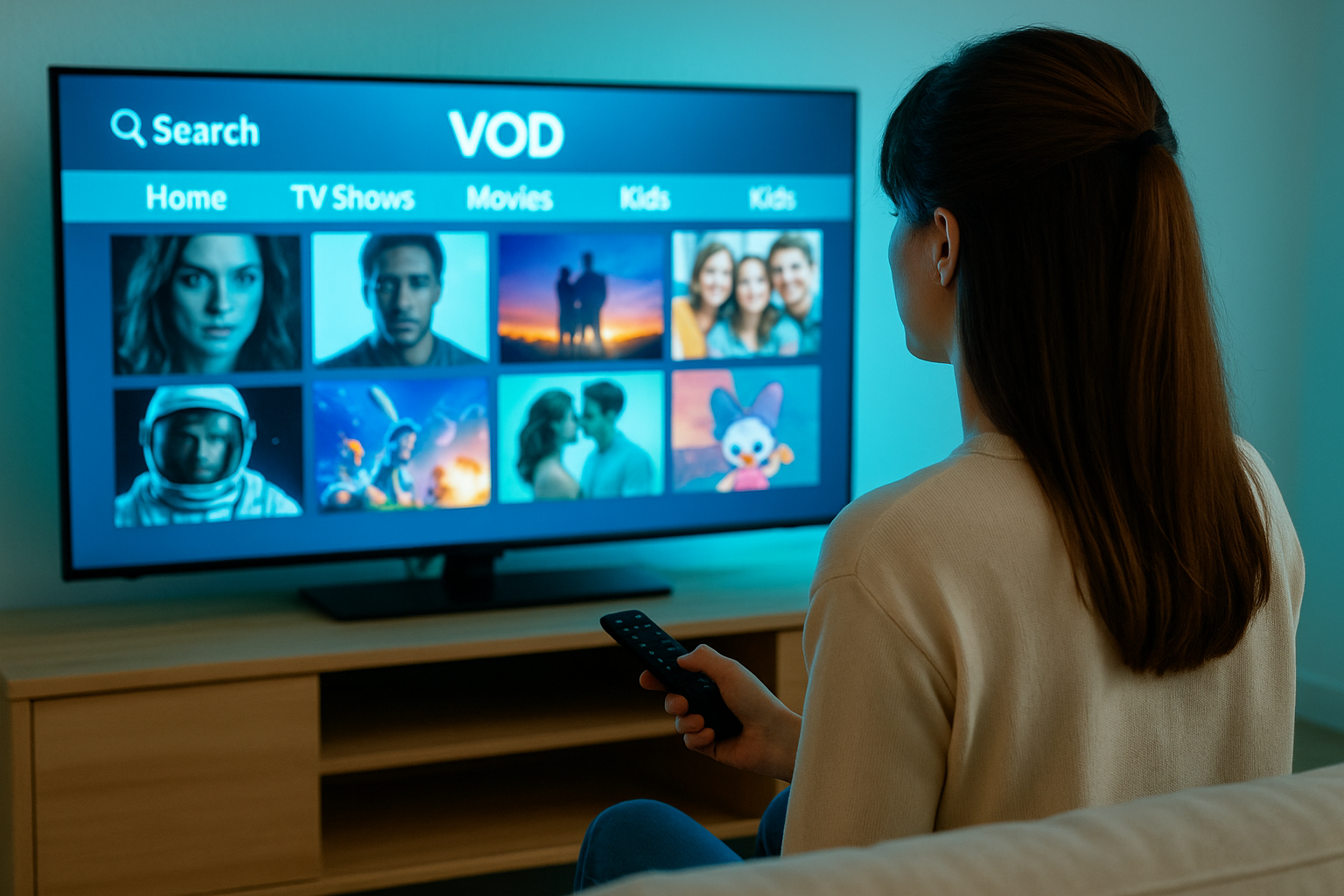
Streamers value the flexibility and choice that platforms like Netflix, Prime Video and Disney Plus offer them in the breadth of content and the devices where they can watch their shows and movies, but many are growing frustrated with the ongoing fragmentation of the streaming landscape.
That was one of several takeaways from a new report issued by Gracenote, Nielsen’s content data business unit, which further proves that streaming has become the mainstream delivery method for video content, but not without its challenges.
The report is based on survey responses from consumers in six countries: the United States, the United Kingdom, Germany, France, Brazil and Mexico. A total of 3,000 participants were evaluated — 500 from each named country — with responses collected this past summer.
Three-quarters of respondents said they find the overall streaming experience to be enjoyable, but when drilled down to specific concerns, some of that cracks start to show.
Nearly half of respondents — 46 percent — said it is getting hard to find the precise show, movie or live event they want to watch because of the vast number of services on the market, a figure that is higher (51 percent) in the United Kingdom and the United States, two countries with an abundance of premium and free platforms. More than 45 percent of streamers said the marketplace is overly-saturated with services and choices, and 32 percent said that overwhelming feeling has led to a negative experience at times.
Streamers also reported an absurd amount of time trying to find something to watch — the average amount of time spent looking through content for a show or movie was around 15 minutes, according to Gracenote, a figure that is higher in France (26 minutes) than it was in the U.S. (12 minutes). While lower overall, the amount of time reported in the U.S. was actually two minutes more than what survey respondents said two years ago — demonstrating that, as content libraries expanded and more services hit the market, streamers are having to spend more time sifting through the different options.
Nearly one out of five streamers said they typically decide to do something else when they’ve abandoned their search for something to watch, a figure that is higher (29 percent) among younger streamers surveyed. Notably, nearly half of streamers (49 percent) said they were likely to cancel a premium streaming service if they couldn’t find anything to watch — and that affirmation jumps to 56 percent among adults between the ages of 25 and 34 years old, a key consumer demographic.
Streamers are craving simplicity: Two-thirds of those surveyed by Gracenote said they wanted a single guide or menu that serves as a reference point for the apps and services they want to access, and the same amount said they’d like a service that tells them where they can watch a show, movie or live event, even if that destination is on a rival platform.
That consumer sentiment is supported by surveys and data released by other companies over the past few years: Bango, a technology developer that helps enable unique subscription bundles, has long touted the benefits of companies offering a single platform where consumers can activate and manage their streaming services. (MyBundle, a company that offers a subscription marketplace to broadband companies, has said the same.)
Antenna, which tracks streaming sign-ups, revealed Amazon’s Prime Video Channels marketplace offers powerful exposure to smaller and niche-oriented streaming apps in recent years — when customers purchase a subscription through Prime Video Channels, they manage their plan and stream content from within the Prime Video app. Amazon’s driving force in streaming explains why bigger companies like Apple and Comcast’s NBCUniversal have been willing to sell subscriptions to their video services through Prime Video in recent months.
While streaming marketplace are great for centralizing the experience of activating and managing subscription bundles, they have yet to address challenges that exist with search and discovery. Turning back to the Gracenote survey, more than half of consumers (55 percent) said they use the Internet to find shows, movies and live events across apps, services and channels, and nearly 70 percent of young adults still rely on search engines to do the same.
Increasingly, artificial intelligence tools are becoming a playing a bigger role in the search and discovery experience. Beyond finding specific titles, large language models (LLMs) and generative AI tools like ChatGPT and Perplexity are helping connect users with content based on conversational language — things like, “What is a good comfort movie?” or “Find me horror films adapted from books.”
For now, many of those tools exist in the form of websites and apps, but connected TV developers are increasingly integrating their own LLMs and AI tools into their platforms. Last month, Google’s Vice President & General Manager of Android TV Shalini Govil-Pai said the company was increasingly focused on bringing its Gemini solution to Google TV-powered smart TVs and streaming devices through next year, with the goal of enabling conversational-style, knowledge-based searches.
“What we’re finding is that people are gravitating toward a new pillar of queries, and that’s knowledge-based,” Govil-Pai said in an exclusive interview with The Desk. “We saw a recent query, can dogs eat broccoli? In the past, you’d never think to ask your TV about that — but, now, you can do it right in your living room, and have natural responses delivered.”
Other companies, including Amazon, Roku and Apple, are making similar efforts with their respective platforms. Gracenote is banking on most major tech platforms to move in this general direction, and they have a clear position: When it comes to streaming, those search queries will only return good results if the available data is tagged and organized in a reliable, standardized way.
“Effective search, discovery and recommendation capabilities that enable platforms to connect viewers to the content they’ll enjoy most are more critical than ever,” Tyler Bell, the Senior Vice President of Product at Gracenote, said in a statement. “Organizations that deliver these capabilities will simplify the fragmentation of content and channels which impact viewers’ entertainment experiences. In doing so, they can capitalize on opportunities to become the first and most valuable viewing sources for their users.”
Source: thedesk.net