



The Italian media Sales Houses Association (FCP), in collaboration with Politecnico Milano and Nielsen, has conducted an in-depth industry study titled ‘’The Streamcasting Challenge and the Battle for Ad-Tension’’. This research explores the evolving dynamics of total audience measurement across broadcasting and streaming platforms, with a particular focus on ad-tention, the quality and quantity of attention given to advertisements in different media contexts. The study aims to provide broadcasters and advertisers with strategic insights to maximize audience engagement and advertising effectiveness.
Industry Context & Challenges
In an era dominated by digital transformation and shifting media consumption habits, broadcasters and advertisers face increasing competition from streaming services and social media platforms. Measuring total audience engagement across linear TV, on-demand platforms, and social media has become increasingly complex, requiring new methodologies to accurately assess how audiences interact with content. Understanding the factors influencing audience attention and advertising recall is critical to developing effective marketing strategies, especially given the varying degrees of active and passive attention across different media formats.

Study Objectives & Methodology
The research aimed to analyse and quantify the impact of different viewing contexts on advertising effectiveness. Specifically, it evaluated audience engagement levels across linear TV, video-on-demand (VOD), and social media to identify the correlation between content quality, attention levels, and advertising recall. The study also measured physiological and behavioural responses to editorial and advertising content, employing a multi-disciplinary approach to capture audience attention and engagement.
A total of 600 individuals aged 18-55 participated in the study, with data collected across multiple environments, including linear TV (passive viewing), VOD and video-sharing platforms, and social media, particularly short-form video content. Viewers were observed using TV, laptops, and smartphones, allowing for an in-depth analysis of engagement patterns across different devices. To achieve precise measurements, the study employed various tools, including electroencephalography (EEG) to track brain activity, electrodermal sensors to assess micro-sweating as an indicator of engagement, and eye-tracking technology to monitor visual attention. Additionally, questionnaires were used to evaluate advertising recall and perception, providing a comprehensive dataset on audience behaviour.

Key Findings & Insights
One of the most significant insights from the study was the concept of the “attention parabola” which highlights the shift in focus between editorial content and advertising. Editorial content tends to attract focused attention, as viewers actively engage with programming. In contrast, advertising generally induces a more relaxed state of attention, meaning engagement is contingent upon the relevance and creativity of the advertisement itself. During the transition from editorial content to advertising, two key shifts occur. First, there is a drop in active attention, as advertisements typically require less cognitive effort compared to editorial content. However, the second shift is an increase in involvement—when an advertisement is engaging, it can generate spontaneous attention and emotional resonance with the audience.
Another important finding relates to the variability in advertising engagement. Advertising attention levels are highly inconsistent and are influenced by individual and subjective factors. The study found that attention to editorial content can explain between 22% and 31% of the variance in advertising involvement, demonstrating the importance of high-quality programming in sustaining audience attention across the transition to advertising. The highest correlation was observed in linear TV environments, where editorial engagement plays a more significant role in shaping advertising recall.
The study also revealed important insights into advertising recall and brand memorization. Increased involvement in advertising was found to lead to higher spontaneous brand recall, reinforcing the idea that engagement and memory retention are closely linked. The effectiveness of ad spending should be assessed in relation to attention retention levels, ensuring that advertisements are placed strategically within high-attention content environments. Additionally, gender-based differences in advertising retention suggest that advertisers should tailor their approaches based on audience composition to maximize effectiveness.
he study further examined the full-funnel differential effects of TV + Broadcaster Video On Demand (BVOD) versus streaming platforms. Findings indicate that TV and BVOD drive stronger upper-funnel brand awareness due to sustained audience attention, whereas streaming platforms generate higher variability in recall due to fragmented viewing patterns. Mid- and lower-funnel effects, such as brand consideration and purchase intent, were also more consistently influenced by TV + BVOD due to the structured programming environment and repeated brand exposure. These insights highlight the unique role of each platform within an integrated media strategy, reinforcing the need for cross-platform optimization to maximize advertising impact.

Strategic Implications for Broadcasters & Advertisers
The findings from this study highlight several strategic implications for broadcasters and advertisers looking to enhance engagement and maximize advertising effectiveness. First, optimizing advertising placement is crucial. High-attention editorial content should be leveraged to create seamless transitions into advertisements, reducing the drop in cognitive engagement during commercial breaks. Broadcasters and advertisers should use ad-tention metrics to determine the optimal moments for placing ads, ensuring that audiences remain engaged rather than tuning out.
Another key strategy involves enhancing creative approaches to advertising. Since engagement levels during advertisements vary significantly, it is essential to develop ad content that sustains or even enhances audience involvement. Advertisers should prioritize immersive storytelling, emotional appeal, and interactive elements to capture spontaneous attention. Ads that align with the tone and subject matter of the editorial content are more likely to maintain engagement, rather than feeling like interruptions.
Additionally, a holistic approach to measurement and analytics is required to keep pace with the evolving media landscape. The adoption of total video and total audience measurement frameworks will allow broadcasters and advertisers to gain a clearer picture of engagement trends. By integrating physiological and behavioural data into ad performance analytics, companies can refine their advertising strategies based on real-time audience insights. This data-driven approach ensures that advertising investments are directed toward formats and placements that yield the highest returns in terms of engagement and brand recall.
Source: egta.com
OTHER CASE STUDIES

HOW DPG MEDIA TURNS THE BACKSTAGE OF A PRIME-TIME MUSIC SHOW INTO A RETAIL ENGINE
17. 8. 2026In a category where retailers typically compete on price and visibility, Albert Heijn, the supermarket retailer,…

AN IMMERSIVE CANAL+ BRAND SOLUTIONS COLLABORATION FOR SKIN-CARE BRANDS WITH SENSITIVE STORIES TO TELL
26. 6. 2026CANAL+ BRAND SOLUTIONS and its in-house studio LA FACTORY created “Marquer l’Invisible” for Avène, linking Cicalfate+…

M6 UNLIMITED TESTS AI SPOT CREATION FOR SMALLER TV AND STREAMING ADVERTISERS
22. 5. 2026M6 Unlimited is testing a simpler route into TV and streaming for SMEs and new advertisers…

THE TV ADVERTISING PARADOX, A THINKTV NEW ZEALAND CASE STUDY (2/2)
22. 5. 2026ThinkTV New Zealand built its campaign around the contradiction that linear TV was being called obsolete…

A BIG-SCREEN STUDY FINDS STRONGER ATTENTION ON TV4 PLAY THAN ON YOUTUBE
24. 4. 2026TV4 just launched its third attention study, comparing the viewing experience on its streaming service (TV4…

THE TV ADVERTISING PARADOX, A THINKTV NEW ZEALAND CASE STUDY (1/2)
24. 4. 2026In late 2024, ThinkTV New Zealand, under the leadership of Jacqueline Freeman, GM Communications, undertook a…

AD EMISSIONS MEASUREMENT: LESSONS FROM THE FINNISH MARKET
31. 3. 2026Finland’s commercial TV broadcasters spent the past year developing a carbon emissions measurement framework for linear…
A NEW WAY FOR FRANCETV PUBLICITÉ TO SELL CONTEXTUAL VIDEO ADVERTISING
27. 3. 2026FranceTV Publicité (FTP), the advertising sales house for French public television, has introduced Context.IA into its…
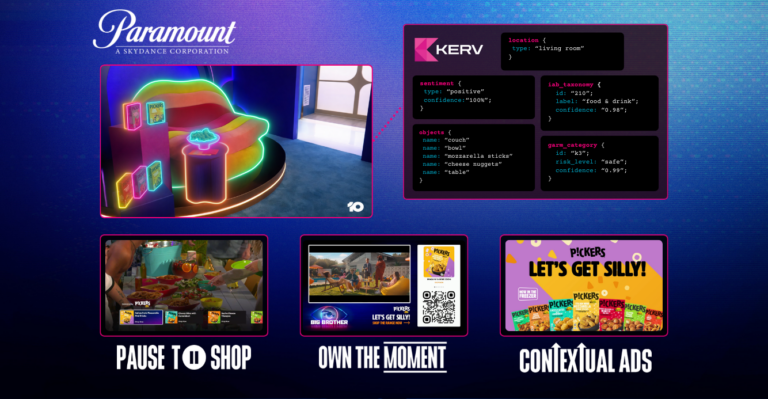
BUILDING A SHOPPABLE, ATTENTION-READY CTV OFFER: THE BIG BROTHER CONTEXTUAL CASE
26. 3. 2026In 2025, Paramount Australia, in partnership with FreeWheel and egta, hosted a webinar outlining a forward-looking…

GLOBO CREATES HOME SCREEN PROMINENCE FOR FREE-TO-AIR TV ON SMART TVS
26. 2. 2026Globo, Brazil’s largest commercial TV group, is rolling out DTV+, a next-generation free-to-air TV standard designed…

THE VISUAL TRANSFER EFFECT: HOW SOUND BUILDS BRANDS
24. 2. 2026In collaboration with neuro-marketing agency Unravel, Talpa Media has produced the scientific proof that audio does…

RMB TURNS QR CODE VOTING INTO A SHARED VIEWING MOMENT THAT STRENGTHS BRAND IMAGE FOR SPRITE AND DELI CHOC
24. 2. 2026Campaign objectives The chocolate snack Deli Choc and soft drink Sprite brands worked with RMB to…