



If you have been paying attention, you will remember the research study on the effectiveness of TV program sponsorships conducted by the Marketing Scientist Group in collaboration with Paramount ANZ (Australia & New Zealand). The study explores the impact of attention on brand assets within TV sponsorships. The study encompassed a comprehensive experiment involving 2200 Australian TV viewers aged 18–69, exposed to various advertisements and sponsored programmes, including globally recognised shows like MasterChef Australia and Australian Survivor, as well as the aforementioned comedy show. The research sought to unravel how attention to brand assets within content and advertising influences brand outcomes.
Measuring attention in TV sponsorships
The study was elaborated further using passive eye-tracking data collected to discover the impact of attention/gazes on visual brand assets. The researchers employed passive eye-tracking data, measuring participants’ gazes on logos, products, and text via a camera. Merging this data with metadata and survey responses, the study unearthed several key findings.

The impact of paying attention to brand assets
A pivotal discovery revealed that when viewers paid attention to brand assets, there were notable increases across various metrics:
- top-of-mind brand awareness increased by 37%,
- the average number of brand associations increased by 16%,
- brand asset fame increased by 18%.
This suggests that attention to brand assets contributes to constructing brand memories and enhancing asset fame.
The study also delved into the impact of asset size on attention and memory. While there was a positive correlation between asset size and attention, the association with top-of-mind awareness was weaker. Medium-sized logos, in some instances, outperformed their larger counterparts, underscoring the influence of factors like time-on-screen, location, and context on building brand memories.

The impact brand assets in content on subsequent advertising
Furthermore, the research investigated whether brand assets featured in sponsored programmes influenced subsequent advertising. For example, participants exposed to a sponsored programme featuring a Quick Service Restaurant (QSR) brand were later presented with different advertisements—billboards, standard TVCs, and bespoke TVCs featuring the brand asset. Intriguingly, participants who gazed at the QSR brand assets in the content were more inclined to pay attention and recognise the subsequent advertisements, underscoring the priming effect of content-advertising alignment.
In summary, the study’s key insights for TV sponsorships include the idea that attention to brand assets positively impacts memory metrics. Additionally, while brand asset size matters for attention, other factors also play a crucial role. Finally, brand assets in content prime viewers to respond effectively to subsequent advertising. This research advances our comprehension of TV sponsorships, providing further evidence why they work and how brand assets within content and advertising can shape brand outcomes.
Source: egtaknowledgehub.com
OTHER CASE STUDIES

HOW DPG MEDIA TURNS THE BACKSTAGE OF A PRIME-TIME MUSIC SHOW INTO A RETAIL ENGINE
17. 8. 2026In a category where retailers typically compete on price and visibility, Albert Heijn, the supermarket retailer,…

AN IMMERSIVE CANAL+ BRAND SOLUTIONS COLLABORATION FOR SKIN-CARE BRANDS WITH SENSITIVE STORIES TO TELL
26. 6. 2026CANAL+ BRAND SOLUTIONS and its in-house studio LA FACTORY created “Marquer l’Invisible” for Avène, linking Cicalfate+…

M6 UNLIMITED TESTS AI SPOT CREATION FOR SMALLER TV AND STREAMING ADVERTISERS
22. 5. 2026M6 Unlimited is testing a simpler route into TV and streaming for SMEs and new advertisers…

THE TV ADVERTISING PARADOX, A THINKTV NEW ZEALAND CASE STUDY (2/2)
22. 5. 2026ThinkTV New Zealand built its campaign around the contradiction that linear TV was being called obsolete…

A BIG-SCREEN STUDY FINDS STRONGER ATTENTION ON TV4 PLAY THAN ON YOUTUBE
24. 4. 2026TV4 just launched its third attention study, comparing the viewing experience on its streaming service (TV4…

THE TV ADVERTISING PARADOX, A THINKTV NEW ZEALAND CASE STUDY (1/2)
24. 4. 2026In late 2024, ThinkTV New Zealand, under the leadership of Jacqueline Freeman, GM Communications, undertook a…

AD EMISSIONS MEASUREMENT: LESSONS FROM THE FINNISH MARKET
31. 3. 2026Finland’s commercial TV broadcasters spent the past year developing a carbon emissions measurement framework for linear…

A NEW WAY FOR FRANCETV PUBLICITÉ TO SELL CONTEXTUAL VIDEO ADVERTISING
27. 3. 2026FranceTV Publicité (FTP), the advertising sales house for French public television, has introduced Context.IA into its…
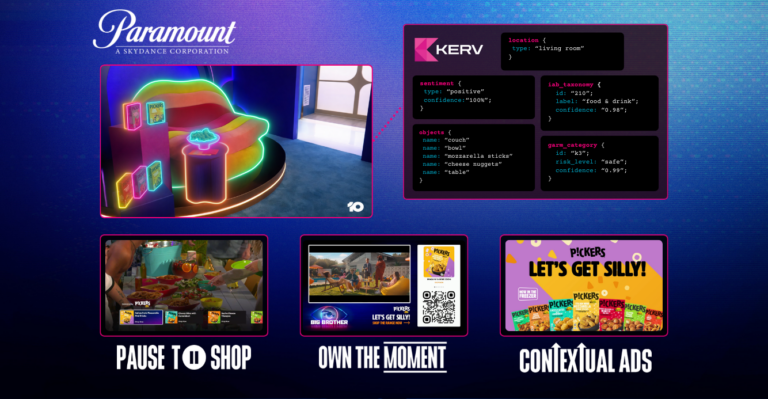
BUILDING A SHOPPABLE, ATTENTION-READY CTV OFFER: THE BIG BROTHER CONTEXTUAL CASE
26. 3. 2026In 2025, Paramount Australia, in partnership with FreeWheel and egta, hosted a webinar outlining a forward-looking…

GLOBO CREATES HOME SCREEN PROMINENCE FOR FREE-TO-AIR TV ON SMART TVS
26. 2. 2026Globo, Brazil’s largest commercial TV group, is rolling out DTV+, a next-generation free-to-air TV standard designed…

THE VISUAL TRANSFER EFFECT: HOW SOUND BUILDS BRANDS
24. 2. 2026In collaboration with neuro-marketing agency Unravel, Talpa Media has produced the scientific proof that audio does…

RMB TURNS QR CODE VOTING INTO A SHARED VIEWING MOMENT THAT STRENGTHS BRAND IMAGE FOR SPRITE AND DELI CHOC
24. 2. 2026Campaign objectives The chocolate snack Deli Choc and soft drink Sprite brands worked with RMB to…