


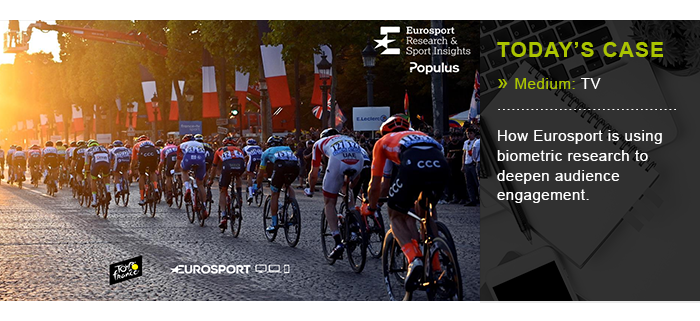
Keeping viewers engaged throughout a live sporting event on television – which may last up to several hours – often remains a challenge for TV companies. This week’s egtabite features the use of biometric measurement by Eurosport to tackle this challenge – an innovative approach aimed at understanding which moments during these events drive higher engagement and which moments are less engaging for viewers.
The Discovery-owned pan-European television sports network implemented the technology during its coverage of the 2019 Tour de France for the UK market – with the aim of better understanding viewer sentiment and eventually build a benchmark database with best practices for different sports.
What is biometric measurement?
Understanding audience engagement, in general, relies on post-event survey data that feed back into future coverage. This approach, however, demands of viewers a rational response to what is an in-the-moment emotional reaction to what they see in front of them. Biometric research, on the other hand, offers TV companies second-by-second measurement of viewers’ emotional reactions to live sports, which can help influence how they present the content and also inform marketing communications and advertising/sponsor relations.
2019 Tour de France
Eurosport used the coverage of the Tour de France as a pilot project recruiting 75 viewers who reflected the broadcaster’s cycling demographic profile. These viewers each received a palm-held device that measures galvanic skin response: sweat gland activity that reflects the wearer’s emotional state, and heart rate. The device transmits the information via an app for researchers to analyse. The set-up allowed viewing to take place in the participants’ normal TV environment for a two-hour period during a mountain stage of the Tour.
In addition to measuring the emotional engagement with the content on screen, the research also aimed to gather information about other areas, such as short sponsored programmes inserted into the coverage, on-screen graphics, camera angles, commentary, post-race analysis and ad breaks.
In short, such questions as: How many split screens are optimal? Do people understand the on-screen graphics? Does the advertising work? When and what advertising works best? Who are the best commentators?
Results
The highest point of engagement was found to be a descent where the riders reached speeds of up to 70 kph. Forward-facing motorcycle cameras behind the riders gave viewers the sense of being in amongst the peloton. At this point, cameras focused on a rider struggling with a damaged wheel and Eurosport commentators attempt to diagnose the problem. The high engagement in this instance was driven by the sensation of speed, a rider’s perspective, focused commentary and problem-solving. Meanwhile the lowest point of engagement came during a relatively quiet period during an 11km climb, with no attacking moves and commentary of more general nature, waiting for some excitement. Helicopter views of the landscape and riders taking on water appear more frequently – it was a quiet moment in the race.
The research provided interesting insights for advertisers. “While previous research indicates that audiences can lose interest during ad breaks, this research shows us that we can take steps to retain audiences,” Susi Thorimbert, head of research at Eurosport, said. “We were able to look within the ad breaks to understand which ads perform better, and why.” The pilot project revealed the best ways to position ads relative to live sport content, and which ads saw an uptick in engagement among cycling fans. This, says Thorimbert, has provided Eurosport with new benchmarks to aid clients in developing creative executions that resonate with fans.
Next steps
“We will continue to use this type of biometric measurement to build a kind of benchmark database with different sports,” said Thorimbert. As well as cycling, her team has just finished a similar research project based around tennis coverage of the Australian Open in Germany, and during the Tokyo Olympics is planning to measure several different sports.
“For the Olympics, for example, we’re planning to use this technique and measure several moments of the Games with the same respondents. This will allow us to measure separate sports, several locations, different type of commentary, different type of broadcast. We are confident that this biometric research adds significant value for our evaluation of our broadcasts and our future productions and will provide valuable data to our editorial teams so that they can optimise their decision making to increase viewer engagement.”
OTHER CASE STUDIES

HOW DPG MEDIA TURNS THE BACKSTAGE OF A PRIME-TIME MUSIC SHOW INTO A RETAIL ENGINE
17. 8. 2026In a category where retailers typically compete on price and visibility, Albert Heijn, the supermarket retailer,…
AN IMMERSIVE CANAL+ BRAND SOLUTIONS COLLABORATION FOR SKIN-CARE BRANDS WITH SENSITIVE STORIES TO TELL
26. 6. 2026CANAL+ BRAND SOLUTIONS and its in-house studio LA FACTORY created “Marquer l’Invisible” for Avène, linking Cicalfate+…

M6 UNLIMITED TESTS AI SPOT CREATION FOR SMALLER TV AND STREAMING ADVERTISERS
22. 5. 2026M6 Unlimited is testing a simpler route into TV and streaming for SMEs and new advertisers…
THE TV ADVERTISING PARADOX, A THINKTV NEW ZEALAND CASE STUDY (2/2)
22. 5. 2026ThinkTV New Zealand built its campaign around the contradiction that linear TV was being called obsolete…
A BIG-SCREEN STUDY FINDS STRONGER ATTENTION ON TV4 PLAY THAN ON YOUTUBE
24. 4. 2026TV4 just launched its third attention study, comparing the viewing experience on its streaming service (TV4…

THE TV ADVERTISING PARADOX, A THINKTV NEW ZEALAND CASE STUDY (1/2)
24. 4. 2026In late 2024, ThinkTV New Zealand, under the leadership of Jacqueline Freeman, GM Communications, undertook a…

AD EMISSIONS MEASUREMENT: LESSONS FROM THE FINNISH MARKET
31. 3. 2026Finland’s commercial TV broadcasters spent the past year developing a carbon emissions measurement framework for linear…
A NEW WAY FOR FRANCETV PUBLICITÉ TO SELL CONTEXTUAL VIDEO ADVERTISING
27. 3. 2026FranceTV Publicité (FTP), the advertising sales house for French public television, has introduced Context.IA into its…
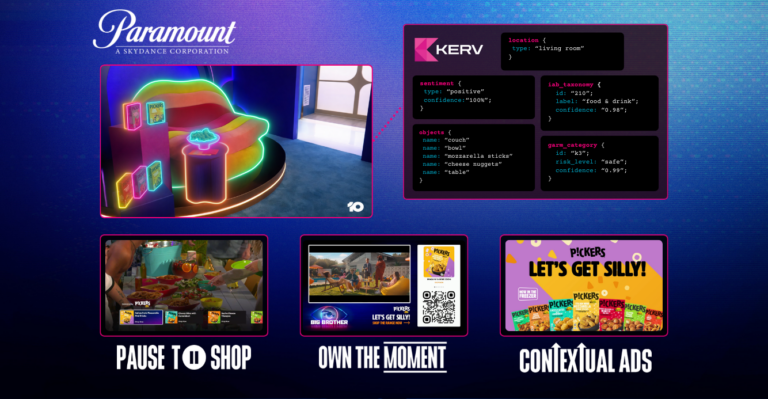
BUILDING A SHOPPABLE, ATTENTION-READY CTV OFFER: THE BIG BROTHER CONTEXTUAL CASE
26. 3. 2026In 2025, Paramount Australia, in partnership with FreeWheel and egta, hosted a webinar outlining a forward-looking…

GLOBO CREATES HOME SCREEN PROMINENCE FOR FREE-TO-AIR TV ON SMART TVS
26. 2. 2026Globo, Brazil’s largest commercial TV group, is rolling out DTV+, a next-generation free-to-air TV standard designed…

THE VISUAL TRANSFER EFFECT: HOW SOUND BUILDS BRANDS
24. 2. 2026In collaboration with neuro-marketing agency Unravel, Talpa Media has produced the scientific proof that audio does…

RMB TURNS QR CODE VOTING INTO A SHARED VIEWING MOMENT THAT STRENGTHS BRAND IMAGE FOR SPRITE AND DELI CHOC
24. 2. 2026Campaign objectives The chocolate snack Deli Choc and soft drink Sprite brands worked with RMB to…