
An alternative becomes a vision of the future
In 2020, the American company Beyond Meat decided to completely overhaul its existing marketing strategy. The goal was to promote plant-based meat as a product suitable for mainstream consumers. This also involved a shift away from a narrative based on moralising (“you must”) toward one emphasising choice (“what if”). The result was the company’s first-ever nationwide television commercial, “What If We All Go Beyond?”, which aired in the United States on 3 August 2020 on Spectrum SportsNet during a game between the Los Angeles Lakers and the Utah Jazz.
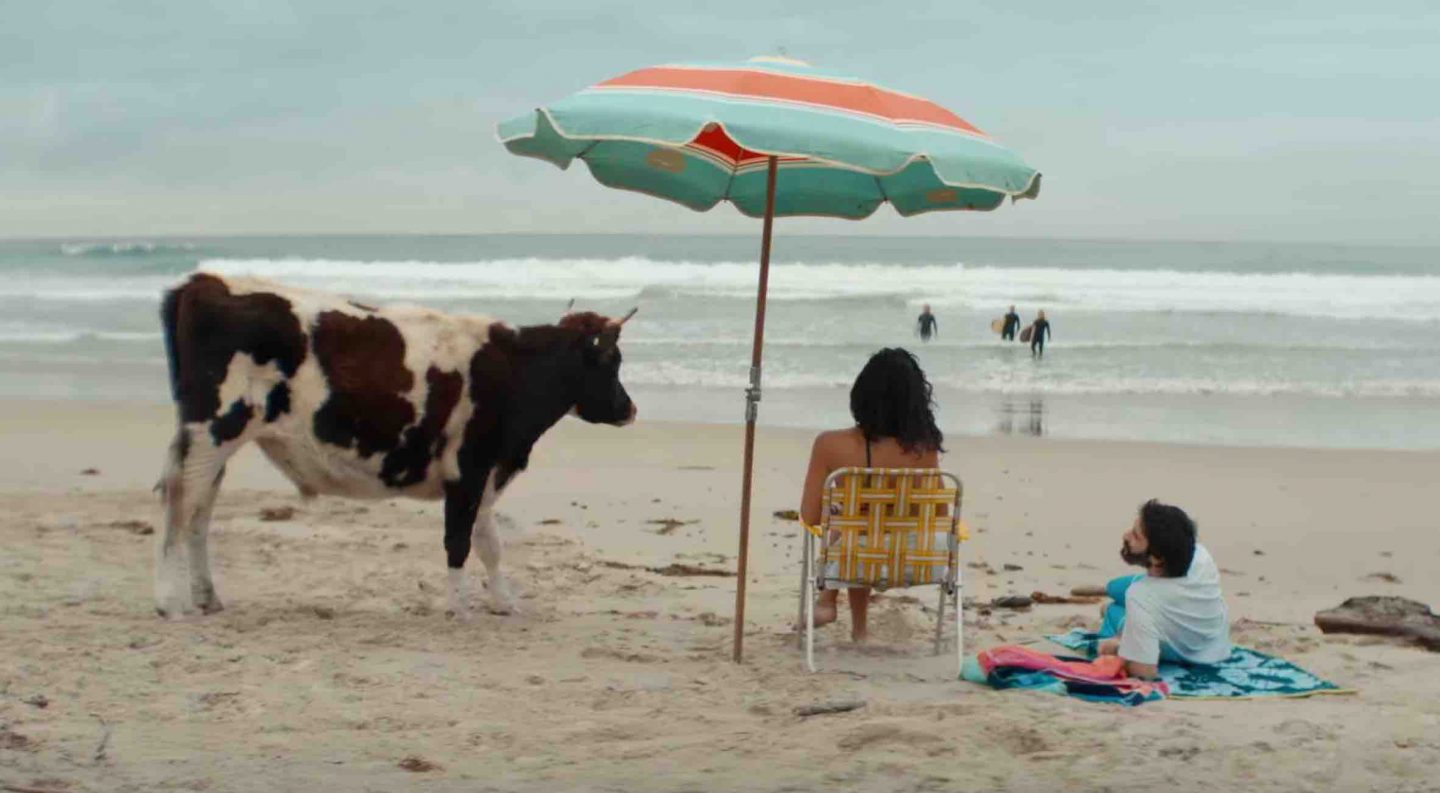
The commercial is guided by a voiceover from actress Octavia Spencer, who also serves as a brand ambassador for Beyond Meat. At its core is the hypothesis: “What if?” The ad has a clear aim — to encourage viewers to think about why they should eat less meat, or ideally none at all. As part of the company’s broader strategy, the commercial relies on an inclusive approach, presenting this change as a choice and carefully avoiding moralising or condemnation. The ideal situation, after all, is one in which people know about plant-based alternatives even outside vegetarian and vegan communities. Plant-based meat is depicted here as a completely ordinary part of the diet, not as a revolutionary or groundbreaking novelty.
Video: DD_What If We All Go Beyond
From a content perspective, the commercial could be described as minimalist. For the most part, it features shots of plant-based burgers and other meat alternatives, as well as a diverse range of consumers that includes athletes and senior citizens. The creators place emphasis on the product’s mainstream appearance — the plant-based burger simply looks like a classic burger, underlining the idea that plant-based meat is suitable for everyone. It is therefore no surprise that the commercial also features, for example, NFL player Todd Gurley.
According to the company’s official data, Beyond Meat products are now available in approximately 94,000 retail and food-service outlets in more than 75 countries worldwide. It is therefore clear that the company’s ambitions — and its first major investment in television advertising with explicitly mainstream aspirations — have paid off to a significant degree. From a marketing standpoint, the commercial is understated in both production and visuals, but historically very important. It succeeded in breaking down a barrier with nothing more than a simple invitation to try something new.
The anti-commercial that rocked the Super Bowl
Only a few months after Beyond Meat’s marketing success, Oatly, the company specialising in plant-based oat milk, decided to enter into a sharper confrontation. On 7 February 2021, during Super Bowl LV, it introduced its new commercial “Wow, No Cow.” The television spot was deliberately controversial and managed to spark a broad public debate about the current state of the dairy industry, the forms of marketing used for plant-based alternatives, and above all, what is considered “proper” and what is considered “ordinary” within the plant-based milk category. The core message is economical but clear: it’s milk, just without the cow.
By its very nature, the Oatly spot is an anti-commercial. The Super Bowl is traditionally seen as a showcase for high-budget advertising production, and Oatly rebelled against that expectation with a simple yet highly authentic clip. The entire spot is essentially built around a single motif: we watch Oatly CEO Toni Petersson standing in a field, playing a keyboard, and singing. Many media outlets described it as the strangest commercial in Super Bowl history, while some journalists even called it trolling. Both assessments contain an element of truth — and that is precisely why the commercial became famous.
Video: Super Bowl LV (55) Commercial: Oatly – Wow No Cow (2021)
Slogans such as “It’s like milk, but made for humans” provoked a sharp audience response, effectively dividing viewers into two camps — some loved the commercial, others hated it. Petersson’s company had naturally anticipated this kind of reaction. The spot was a revamp of an earlier ad that had aired in Sweden in 2014. At the time, it was challenged by the Swedish dairy lobby LRF Mjölk, which ultimately succeeded in getting it pulled from the air. After its appearance at the Super Bowl, however, Petersson’s vision gained truly global reach. The fact that he appeared in the commercial personally also ensured that the brand came across as personal and open, further reinforcing Oatly’s reputation as a brand with values, not merely a product.
The commercial clearly helped position the plant-based milk category as a choice for mainstream audiences, not just vegans and vegetarians. From the very beginning, however, Oatly chose a different strategy from Beyond Meat. After the commercial premiered, the company began selling T-shirts bearing the slogan “I totally hated that Oatly commercial,” continuing its well-established approach based on self-irony and trolling. At that point, it was already clear that this was a safe bet.
Ethics without words
We watch a man preparing a sandwich in his kitchen. The moment he stuffs it with ham, we realise that a small pig has been sitting opposite him the entire time, watching him intently. The tension in the room thickens — until, at the end of the 40-second spot, we learn that it is plant-based ham. Through the story, the pig, which had previously been perceived as a “something,” becomes a “someone.” It was 4 October 2024 — a date that traditionally falls on World Animal Day — and with its campaign “Le Duel,” the French company La Vie sought to spark a public debate in France and the United Kingdom about plant-based alternatives.
By definition, this is an example of a successful advert that does not primarily promote a product (that is, plant-based ham), but ethical values with broader resonance. The revelation that the man is eating a plant-based substitute for pork ham functions as a crucial emotional and ethical twist, suggesting that there is no need to remain trapped in established ways of doing things. La Vie achieves this through a kind of reverse logic — first presenting us with a common but undesirable situation, and then, at the end, suggesting that things can be done differently and that alternatives exist. This is reinforced by simple cinematic editing: the creators do not focus on stylistic flourishes, but rather on emphasising contrast and building tension between the man and the pig.
Video: La Vie™️ – Duel
This television spot is not graphically expressive, and yet it manages to raise emotions to the highest level. It does so thanks to the narrative link between the pig protagonist and the ordinary ham sandwich. On the one hand, the ad is humorous and gently amusing; on the other, at its core, it conveys a genuinely serious message. The fact that it works more on a suggestive level and relies heavily on symbolism makes it accessible to the general public. The narrative is simple and universal enough for almost anyone to understand. It was no coincidence that this was the first piece of its kind in Europe to achieve such massive reach.
The ad was frequently mentioned as one of the boldest ads of 2024, and for good reason. It is an excellent example of storytelling for a plant-based alternative — the ham here is not merely an expressive device, but the true foundation of the entire punchline. La Vie succeeded in creating an ethical marketing campaign that avoids excessive moralising. It leaves each viewer to interpret what they have seen in their own way. The sequence of tension – realisation – relief proves highly effective in conveying such emphatic messages.
The New Wave of Plant-Based Marketing
It did not take long for other European companies focused on plant-based foods to follow La Vie’s lead. One of them is the British brand THIS, which launched its biggest advertising campaign to date under the headline “THIS Changes Everything” this year. The campaign was aimed primarily at the British market and was launched in January, during Veganuary. The mockumentary-style spot made it into prime-time broadcasting and was built entirely around presenting what the brand THIS is not — and in doing so, precisely defined what it actually is.
This ad also relies on an inclusive approach and targets traditional consumers of meat products as well, even addressing them implicitly with the slogan “Meat lovers welcome!”. Plant-based alternatives are therefore not treated as a compromise but as a fully-fledged food category, one whose choice is above all a matter of taste and lifestyle. Because THIS opted for a mockumentary style, the campaign is built on self-irony that is at times funny and at other times provocative. Rather than moralising, it seeks to turn entrenched assumptions upside down. Most of the time, we watch fairly ordinary situations with a humorous narrative twist.
Video: THIS Changes Everything
“Hey, meat eaters, come take a look at this!” — that is one way to summarise its central message. And it arrives at exactly the right moment: just after the New Year, when many consumers make resolutions, often including eating less meat or fewer dairy products. Presenting plant-based alternatives without unnecessary ornamentation and placing them in ordinary life situations is a strategy that has long worked well for like-minded companies. It is, therefore, no surprise that the narrative here also makes use of the familiar device: let’s try this, because it’s trendy. In this respect, the spot by THIS is a textbook example of the new wave of plant-based marketing.
THIS is not some global corporate hyperbrand. It is rather a local British company of small to medium size, which nevertheless succeeded, thanks to a carefully targeted creative strategy, in entering the marketing mainstream and reaching the broader public. It perfectly underlines what works for marketers in this field — humour, inclusivity, minimalism, and presenting the alternative as the new normal. THIS is a vivid example of the fact that this can be achieved even without enormous budgets or corporate backing.
Change one meal and you change the world
Veganuary is truly a key marketing moment of the year for all companies focused on plant-based products. That is also confirmed by an earlier commercial from the British company Quorn, launched in 2022. The campaign “Tasty Resolutions” works explicitly with the theme of New Year’s resolutions and encourages consumers to begin by replacing just one meat-based dinner with a plant-based product from Quorn’s portfolio. The entire campaign carries a strong motivational undertone — it could essentially be summed up as: change one meal, and you’ve already won.
Quorn’s commercial is highly energetic and colourful, distinguished by fast cuts and optimistic music. It works with a number of humorous stereotypes that are widely recognisable to British audiences. For example, it features the archetype of the classic “wrestler dad” — a typical British meat-eater who, in the advert, accepts the challenge of eating more healthily from now on. The fact that Quorn had genuinely mainstream ambitions is also confirmed by its media-buying strategy. The ad aired during breaks in exceptionally popular programmes such as the soap opera Coronation Street, the competition show The Masked Singer, and the reality show First Dates.
Video: Tasty Resolutions Are Easy To Keep | TV Advert 2022 | Quorn
As such, the campaign formed part of the broader initiative “Helping the Planet One Bite at a Time”, thereby placing plant-based alternatives within a framework that presents them as beneficial not only to the health of the individual but also to the planet as a whole. By presenting a clear and simple challenge, it became highly understandable to a wide audience. And, as is typical for this kind of television advertising, it builds its argument primarily around taste, ease, and ordinary life situations. All of this is tied to a period when many people are trying to eat more healthily. In that sense, it foreshadowed the later wave of similarly structured marketing typical of La Vie and THIS.
This campaign by Quorn is an excellent example of how a plant-based alternative can be communicated through everyday life context — clearly, positively, and without ideological pressure. It shows that marketing can be built around taste and daily reality rather than focusing exclusively on ethics, that it can reach a broader segment including meat eaters, and that it can take advantage of a well-chosen seasonal moment (the New Year) to encourage changes in habits.
What only a few years ago seemed like a marginal trend has now been transformed into a fully-fledged strategy that is redefining the way brands communicate. Campaigns for plant-based products are no longer trying to convince consumers that they must change their habits. Instead, they show them that they can — and that such a change can be pleasant, natural, and meaningful. The common denominator of all these campaigns is a shift from persuasion to inspiration. Brands have stopped talking about an “alternative” and have begun creating a new language of the mainstream — one that is inclusive, light in tone, yet deeply value-driven. For marketers, this is a reminder that the power of communication lies not in what we say about a product, but in the kind of story we are able to tell about it.