



In this week’s egtabite, we delve into an intriguing research study carried out by TV4, the largest commercial broadcaster in Sweden, which aimed to compare their digital channel TV4 Play and the linear TV channel TV4 with the social media platforms TikTok, Instagram, YouTube and Facebook, as well as local news sites. The goal of the study was to gather evidence and insights to improve TV4’s offerings and adapt their communication with clients and media agencies, by focusing on actual behaviour rather than self-reported behaviour of viewers.
The research was conducted by in-home study with audience measurement, using eye-tracking glasses and EDR sensors (Electrodermal Response), followed by in-depth interviews, all carried out by COG Research. Anders Eriksson, Head of B2B Insights at TV4, presented the research and its results at egta’s Market Intelligence Meeting in March, highlighting the importance of attention as a buzzword in the media world and the need to understand viewers’ experiences while watching content on different platforms. “We wanted to bring evidence and insights into our offers and adapt the we way talk to clients and media agencies,” he said.
Much higher ad attention and lower overload levels
The study found, unsurprisingly, that ads served on linear and BVOD platforms consistently achieve 100% opportunity to see (OTS), while social platforms have significantly lower attention levels due to the ease of skipping or scrolling past ads. In terms of actual attention, TV4 Play and linear platforms ranked much higher than other media platforms, with 73% of TV4 Play viewers focusing on ads during breaks.

TV4 also examined engagement levels through EDR Sensors revealing that viewers experienced higher sensory overload when engaging with social media ads, which negatively impacted memory retention. Although engagement levels for social media were between 60-70%, overload was considerably higher than for TV4 Play and linear. Overall, TV4 Play generated five times higher ad engagement per minute than the social platforms.

Interestingly, interviews with viewers demonstrated that despite initially denying having paid attention to ads, participants did remember specific ad segments, individual ads, and some even took actions as a result of seeing the ads. This supports the long-term brand-building effects of TV and premium video content. “It shows that we pay more attention to TV ads than we think we do, and we remember them more than we realise,” Anders said.
Refined discussions with agencies and clients
TV4 has shared the findings of this study with media agencies and major clients and has presented them at marketing seminars. The insights have resonated well with the sell-side, particularly since attention is easier to understand than for example gross rating points (GRPs).
In summary, TV4’s research comparing their digital channel, TV4 Play, with other popular digital platforms has shed light on the attention and engagement levels of viewers across these platforms. The findings emphasize the advantages of TV4 Play and linear content in capturing viewer attention and driving higher ad engagement compared to social platforms. TV4 has successfully leveraged these insights to engage with media agencies, clients, and marketing professionals.
OTHER CASE STUDIES
CHANNEL 4 SALES TURNS EXISTING TV ADS INTO ENHANCED STREAMING FORMATS
2. 10. 2026Channel 4 Sales launched Enhance in June 2026, the broadcaster’s new suite of CTV streaming ad…
MFE ADVERTISING: SCALING AI-POWERED CONTEXTUAL ADVERTISING ACROSS EUROPE
28. 9. 2026From Spain to Italy, MFE Advertising is using AI and HbbTV to make programme context an…

HOW DPG MEDIA TURNS THE BACKSTAGE OF A PRIME-TIME MUSIC SHOW INTO A RETAIL ENGINE
17. 8. 2026In a category where retailers typically compete on price and visibility, Albert Heijn, the supermarket retailer,…

AN IMMERSIVE CANAL+ BRAND SOLUTIONS COLLABORATION FOR SKIN-CARE BRANDS WITH SENSITIVE STORIES TO TELL
26. 6. 2026CANAL+ BRAND SOLUTIONS and its in-house studio LA FACTORY created “Marquer l’Invisible” for Avène, linking Cicalfate+…

M6 UNLIMITED TESTS AI SPOT CREATION FOR SMALLER TV AND STREAMING ADVERTISERS
22. 5. 2026M6 Unlimited is testing a simpler route into TV and streaming for SMEs and new advertisers…
THE TV ADVERTISING PARADOX, A THINKTV NEW ZEALAND CASE STUDY (2/2)
22. 5. 2026ThinkTV New Zealand built its campaign around the contradiction that linear TV was being called obsolete…

A BIG-SCREEN STUDY FINDS STRONGER ATTENTION ON TV4 PLAY THAN ON YOUTUBE
24. 4. 2026TV4 just launched its third attention study, comparing the viewing experience on its streaming service (TV4…
THE TV ADVERTISING PARADOX, A THINKTV NEW ZEALAND CASE STUDY (1/2)
24. 4. 2026In late 2024, ThinkTV New Zealand, under the leadership of Jacqueline Freeman, GM Communications, undertook a…

AD EMISSIONS MEASUREMENT: LESSONS FROM THE FINNISH MARKET
31. 3. 2026Finland’s commercial TV broadcasters spent the past year developing a carbon emissions measurement framework for linear…
A NEW WAY FOR FRANCETV PUBLICITÉ TO SELL CONTEXTUAL VIDEO ADVERTISING
27. 3. 2026FranceTV Publicité (FTP), the advertising sales house for French public television, has introduced Context.IA into its…
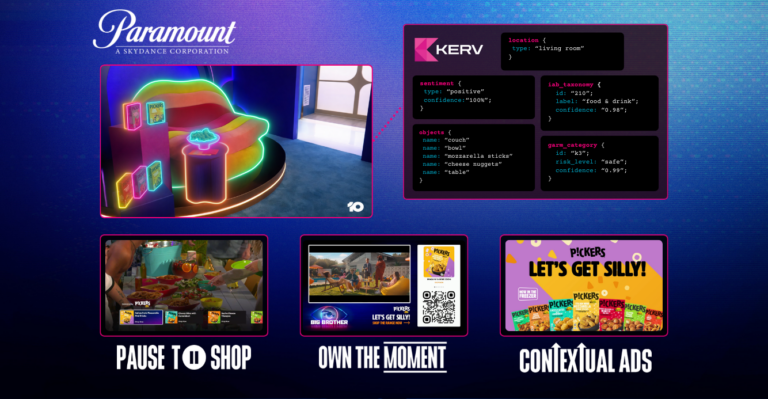
BUILDING A SHOPPABLE, ATTENTION-READY CTV OFFER: THE BIG BROTHER CONTEXTUAL CASE
26. 3. 2026In 2025, Paramount Australia, in partnership with FreeWheel and egta, hosted a webinar outlining a forward-looking…
GLOBO CREATES HOME SCREEN PROMINENCE FOR FREE-TO-AIR TV ON SMART TVS
26. 2. 2026Globo, Brazil’s largest commercial TV group, is rolling out DTV+, a next-generation free-to-air TV standard designed…