
THEME OF THE MONTH: SUSTAINABILITY

Sustainability topic have been bandied about more and more often lately. The growing interest in the brand ecological behaviour is confirmed by many research studies. According to Ipsos survey, companies should focus on sustainable management of natural resources (30%), support for environmental projects (18%) or development of modern technologies to reduce environmental impact (18%).


As consumer thinking shifts towards resource efficiency, the approach of brands, companies and the media industry as a whole is also changing. Brands often communicate their view of sustainability in TV advertising.


In ScreenVoice magazine, you can read which brands are examples of good practice on the topic of sustainability.


In the selection of inspirational articles in the “Read about the topic” section, you will find further inspiration from the world of television and total video from around the world.

MORE ARTICLES ABOUT THIS TOPIC


COMPANIES ARE SPENDING HUNDREDS OF THOUSANDS ON MARKETING, BUT THE RETURN ON INVESTMENT IS FALLING

26. 6. 2026

Marketing budgets are edging up while returns are falling, leaving online shops paying more to sustain the same turnover as digital advertising costs rise and competition intensifies. The core problem is no longer a lack of data but too much conflicting platform data, which pushes teams toward "safer" channels and can mask the real drivers of customer acquisition. Roivenue identifies three recurring mistakes: no single source of truth, adding channels before fully understanding existing ones, and measuring conversions or turnover without linking campaigns to actual profit. AI is adding another measurement blind spot, as companies struggle to judge whether traffic from tools such as ChatGPT belongs in the marketing mix or is simply another source of costly distraction.

A TEST OF THE STRENGTH OF CZECH BRANDS: HOW DO THEY FAREWELL WITHOUT A NAME OR LOGO?

25. 6. 2026

Research by ResSolution Group and Media Age found that none of six tested Czech brands achieved more than 50% recognition when logos, names and distinctive symbols were removed, with Pilsner Urquell leading at 45% and Škoda Auto at 39%. The findings suggest that minimalist brand executions can weaken recall and increase competitor confusion, as seen in bottled water where Mattoni was mistaken for a rival by 12% of respondents, matching its correct identification rate. Recognition was generally stronger among respondents under 35, while category relevance influenced results in insurance and gender differences were evident for Pilsner Urquell and Škoda Auto.

FIVE MARKETING TRUTHS: RITSON AND SHARP REACHED A CONSENSUS IN CANNES

23. 6. 2026

At Cannes Lions, Mark Ritson and Byron Sharp made a rare joint appearance to test where two of marketing’s most cited voices could agree, despite a long-standing reputation for public disagreement. They found common ground on mental availability as a core brand task, arguing that marketers must focus less on what a brand means and more on the situations, needs and stimuli that trigger recall at the point of purchase. They also aligned on distinctive brand elements as practical tools for recognition, with a clear warning that internal brand fatigue can push teams to weaken assets consumers still rely on. On mass marketing, both framed the opportunity as a revival of sophisticated reach: building brands by covering the full relevant market while adapting execution to real-world differences.

STUDY: YOUNGER VIEWERS MORE DISTRACTED BUT MORE RECEPTIVE TO ADS

22. 6. 2026

A new study finds the long-term rise in ad acceptance continues, with ad intolerance falling to a record low across all age groups, and that viewers are supportive of AI tools if they are used to improve discoverability and the viewing experience. In particular, Hub Entertainment Research’s semi-annual “TV Advertising: Fact vs. Fiction” study found… Continue reading THEME OF THE MONTH: SUSTAINABILITY

STUDY USA: PROGRAMMATIC CTV PAUSE ADS MORE EFFECTIVE THAN TRADITIONAL SPOTS

18. 6. 2026

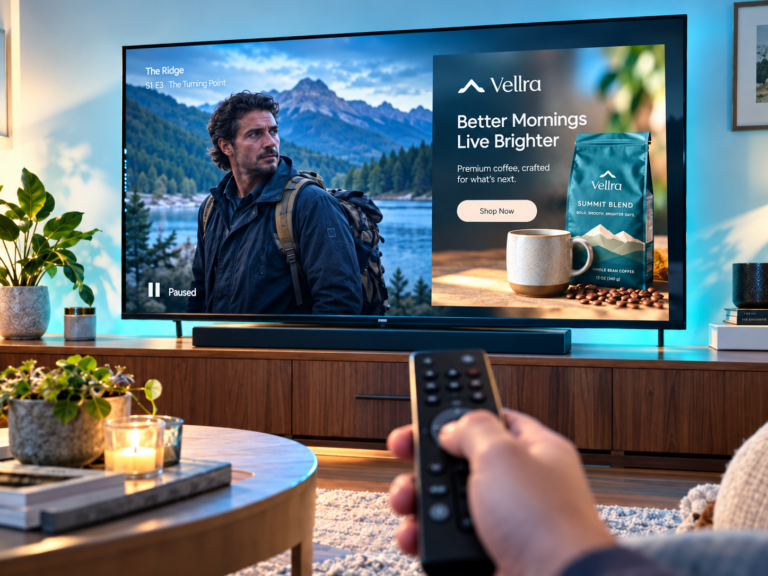
WunderKIND Ads has released a new study analyzing the impact of Pause Ads compared with traditional CTV spots that show Pause Ads delivered nearly two times higher attention than standard 60-second CTV ads. Pause Ads are ads that appear when users pause programming on CTVs. Utilizing TVision attention data, the study analyzed millions of programmatic… Continue reading THEME OF THE MONTH: SUSTAINABILITY

COMMUNICATION SUMMIT: ADVERTISING IS THREATENED BY CREATIVE LAZINESS; WE MUST NOT GIVE UP ON THINKING

15. 6. 2026

Speakers at the Communication Summit warned that while generative AI can accelerate content production, overreliance risks uniform output, weaker critical thinking, and reduced standout value in attention-driven markets. Petra Jankovičová and Radana Čechová argued that AI should support the seven-step creative process rather than replace human responsibility for ideas, stressing that creation and creativity are not the same. WPP Media’s Boňa Samojlova and Marek Bačo added that marketers’ heavy AI use increases the risk of cognitive offloading and even "cognitive surrender," where AI becomes an autopilot instead of a helper. The business takeaway was clear: AI remains a powerful tool only when paired with human judgement, independent thinking, and a strong understanding of people’s motivations and emotions.

WHEN A SMALL BRAND REACHES HALF THE NATION: WHAT DID THE TEST OF THREE CAMPAIGNS FROM THE ICE HOCKEY WORLD CHAMPIONSHIPS REVEAL?

10. 6. 2026

Behavio tested three campaigns aired during the 2026 Ice Hockey World Championship, where at least one match reached 47% of Czechs and 97% of viewers watched at home, creating a rare mass-attention environment for advertisers. The findings underline that reach alone is not enough: brands benefit most when viewers can quickly and correctly link the creative to the advertiser. In the test, HET delivered the strongest overall branding performance, lifting awareness by 24 percentage points and achieving 74% correct brand identification, while Stavmat posted the largest absolute awareness gain at 26 points but ranked behind on broader effectiveness.

THE WORLD CUP WILL CAPTURE YOUNGER CONSUMERS’ ATTENTION AND BUDGETS

8. 6. 2026

Brands across retail, restaurants, and beer are using the 2026 FIFA World Cup to drive awareness and spending, from Target’s host-city tour and Adidas’ Nordstrom activations to limited-time menus and major beverage campaigns. The audience skews younger and more diverse, with 40% of Gen Zers and 39% of millennials planning to watch, while nearly 89% of viewers expect to make a related purchase with an average spend of $74. That positions the tournament as a meaningful commercial moment, even as softer travel demand and high costs temper broader economic expectations.

FORUM MEDIA WILL BRING IN EXPERTS IN MORE THAN JUST DIGITAL MARKETING

4. 6. 2026

Forum Media 2026 will take place on 10 November at Prague’s O2 Universum, bringing together leaders from marketing, media and strategic communications to examine how brands, agencies and audiences are changing in an AI- and platform-driven market. Key speakers include Joah Santos of Dove Real Beauty, who will address community-led brand building and the intersection of creativity and AI, and Michael Farmer, who argues the traditional agency economic model has already stopped working under price pressure, automation and platform dominance. The programme also highlights reputation risk, platform power and digital manipulation through sessions from Mark Borkowski, Nick Couldry and Vilma Luoma-aho, giving marketers and agency leaders a practical view of the forces reshaping trust, authenticity and communications strategy.

FAST GOES MAINSTREAM AS EUROPEAN VIEWERS EMBRACE FREE STREAMING, RAKUTEN TV SAYS

3. 6. 2026

Rakuten TV’s The FAST Advantage report indicates FAST has moved into the European mainstream, with 73.7% of viewers using FAST daily or several times a week and 80.1% treating it as either a primary TV option or an alternative to paid streaming. For advertisers and media owners, viewer acceptance of ad-supported environments is strengthening: more than 82% of respondents accept advertising in FAST, while home-screen and pause-screen placements are expanding available inventory beyond traditional breaks. The study also positions FAST as both a discovery and monetisation channel, with 45.9% of viewers using it to assess which subscriptions are worth paying for, nearly 30% using it to cut subscription spending, and 93.7% primarily watching on the main TV screen.

FERMATO IS HEADING TO TELEVISION. IN ITS FIRST MAJOR BRAND CAMPAIGN, IT IS FOCUSING ON ITS OWN LANGUAGE AND A SUMMER ATMOSPHERE

2. 6. 2026

Czech brand FerMato is making its TV debut with its largest brand campaign to date, centered on its flagship fermented dressings and led by the best-selling Klasika variant. Running from June across Prima Group channels, the campaign is designed to strengthen long-term brand building and consumer awareness, with additional waves planned through summer and again in October and November. The creative uses recurring wordplay around the suffix “to,” a summer barbecue setting, and the on-screen presence of founder Radim Stráník to build a distinctive, recognizable brand language.

DON’T WAIT UNTIL YOU NEED IT TO BUILD YOUR BRAND. FOOTSHOP HAS SHARED DETAILS OF ITS CORPORATE CRISIS

1. 6. 2026

Footshop told Brand Restart that years of prioritising performance marketing left the business far less known than management assumed: a Behavio survey found awareness at 20%, not the roughly 50% expected. Even after record sales and expansion across EU markets, the company entered 2024 with less than 1% of its marketing budget allocated to brand activity, exposing heavy dependence on paid advertising. Footshop has since sharply increased brand investment, and says awareness has already risen by nine percentage points in under a year while brand activity is helping lower new-customer acquisition costs.