

This year’s Easter will not make a significant dent in Czech households’ budgets – just as last year, they plan to spend 2,000 CZK on all the preparations for the holiday, including food, carolling, refreshments and decorations. At least, that is what the median figure for planned spending indicates. Year-on-year, however, the average planned expenditure has fallen by 350 CZK to a total of 2,600 CZK. This means that fewer Czech households are planning to spend large sums this year, which usually push up the statistical average. At the same time, a full 65 per cent of households – 10 per cent more than last year – intend to spend a maximum of 500 CZK more this Easter than last year.
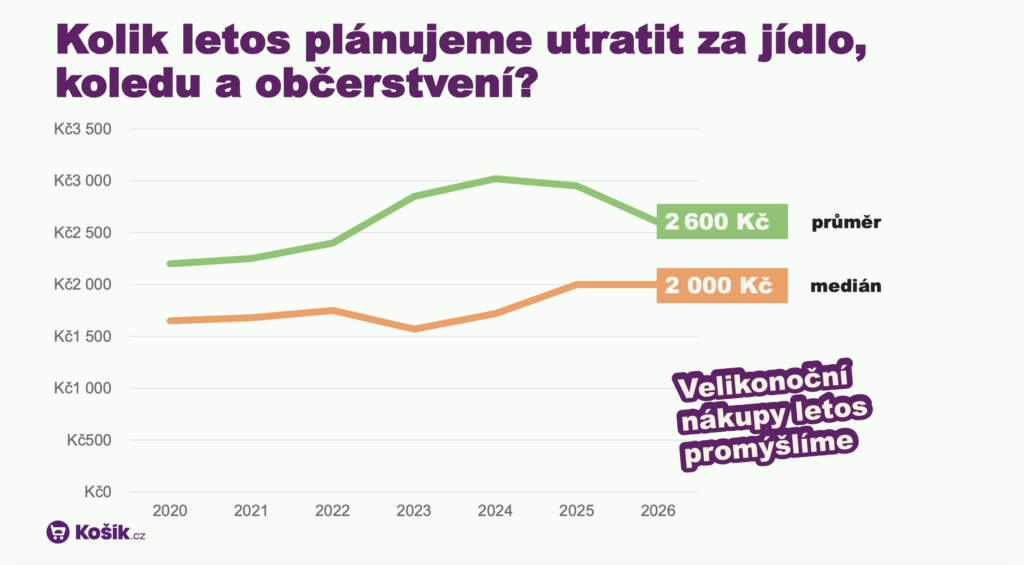
“After several years of rising consumer prices, people have learnt to plan their shopping much more carefully and are less impulsive when doing so. They are not just concerned with special offers and price, but also with the overall contents of their shopping basket, so as not to buy goods they do not need or will not have time to use up. This applies particularly to families with children, who play a key role in Easter shopping,” explains Jan Navrátil, commercial director of the online supermarket Košík.cz, adding another possible reason for the decline in planned spending over Easter: “The long Easter weekend often marks the start of the barbecue season, which naturally influences the composition and amount of planned spending. This year, Easter falls relatively early in the spring, when conditions may not yet be ideal for barbecuing. If the weather forecast is positive, we can expect people to reconsider their plans, which will increase actual Easter spending.”
The traditional Easter whip is on the wane
Although sales of baking ingredients, as well as ready-made products and eggs, show that interest in traditions remains, it is nowhere near as strong as it used to be. Two-thirds of those surveyed observe at least some tradition, but as the survey results show, these need not be exclusively Czech customs. 6 per cent of respondents have even created their own traditions and celebrate Easter according to them.
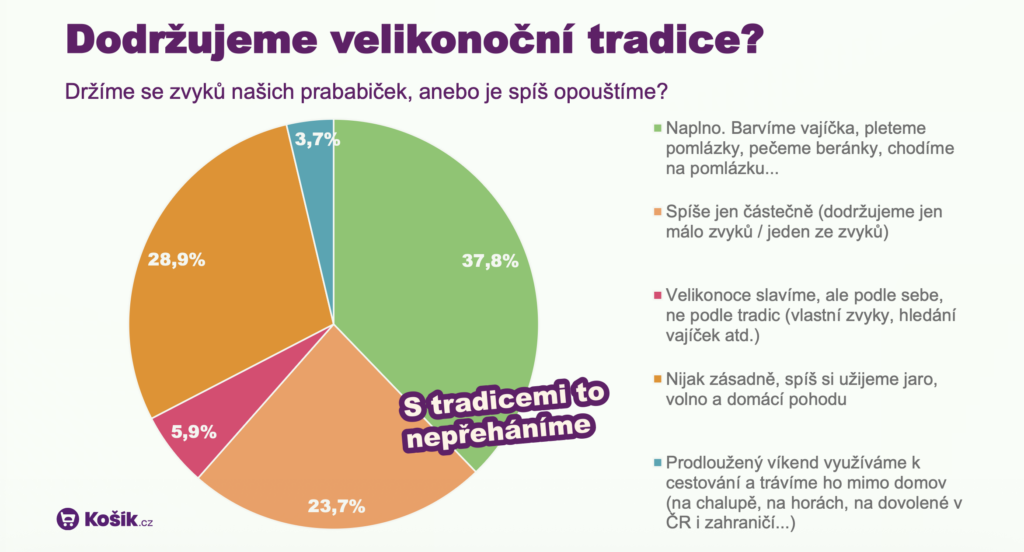
“In the Czech Republic, the custom of the Easter Bunny and the hunt for the eggs he has hidden is gradually taking root. According to our findings, almost a fifth of those surveyed practise this. A role in this is played by a general re-evaluation of the Easter whipping tradition in the Czech Republic, particularly amongst the younger generation of parents. They often abandon the traditional whipping altogether or want both boys and girls to receive the whipping fairly,” says Navrátil.
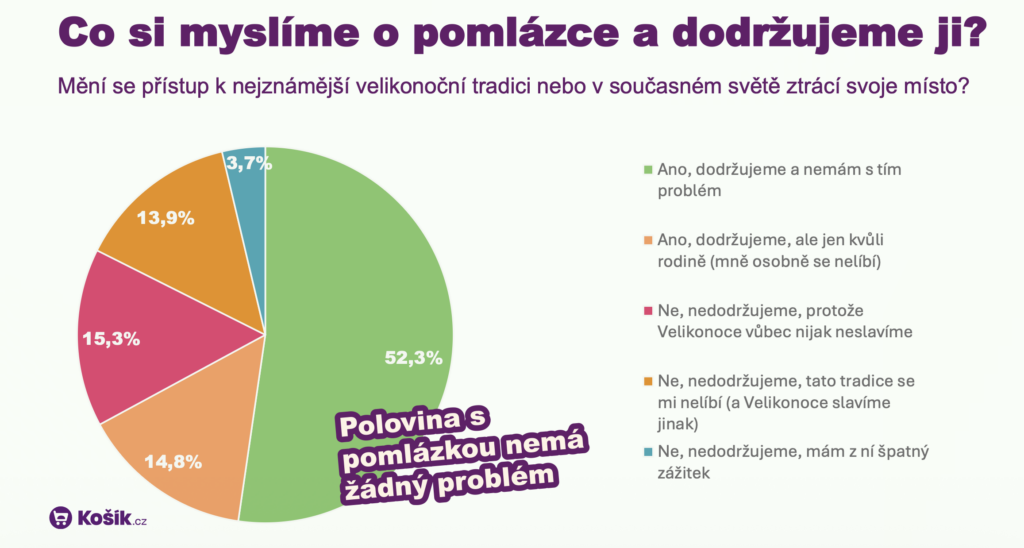
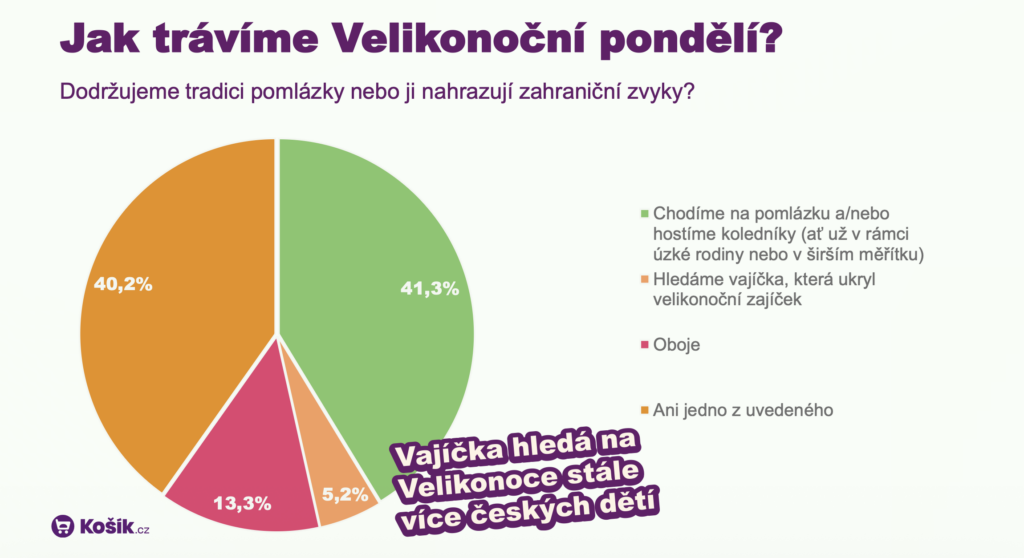
How do Czechs view the Easter whipping tradition? 54 per cent observe it, of whom 13 per cent combine it with an Easter egg hunt, whilst 5 per cent focus solely on the egg hunt. Fifty-two per cent of respondents have no issue with the Easter whip, but the rest have reservations. Fifteen per cent of those surveyed observe it only for the sake of their family and community, despite their reluctance, and 4 per cent avoid it due to negative experiences in the past.
Czechs are relaxing; they’re not worrying about a big clean or massive preparations
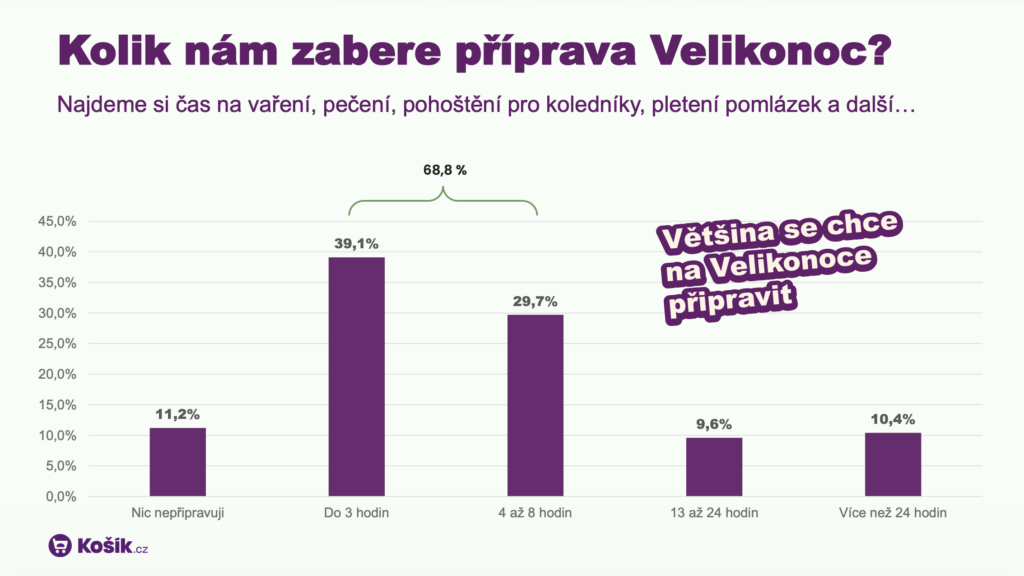
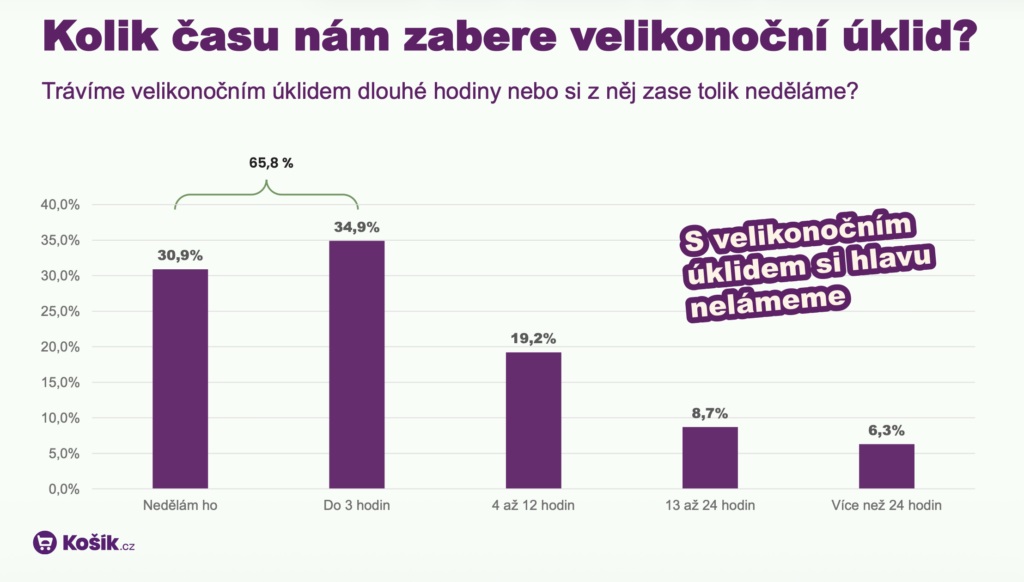
Easter has long ranked as the second most popular Czech holiday in a survey compiled by Košík customers. People mainly expect peace and tranquillity from it, whether at home, in the countryside, or on short holidays or trips over the long weekend. Questions regarding Easter cleaning revealed that almost 35 per cent of respondents do not spend more than three hours on it, and a further 31 per cent do not even plan any special Easter cleaning. A full 40 per cent manage all other preparations, such as baking, preparing refreshments, dyeing eggs and more, within three hours.
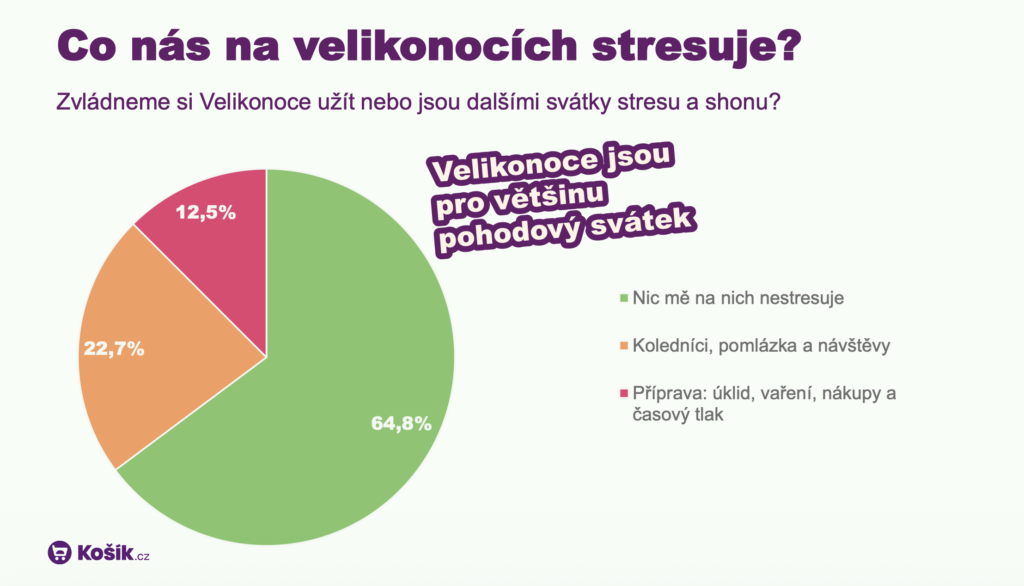
“We were pleasantly surprised that two-thirds of our customers, when asked what stresses them most about Easter, replied ‘nothing’. This simply underlines that Easter is somewhat the opposite of Christmas. For us, it isn’t a hectic period, but rather a time when we want to slow down and simplify everything as much as possible. We’ve seen this reflected in shopping behaviour in recent years, with our customers increasingly opting for ready-made products like lamb cakes or stollen instead of baking themselves. It’s no longer taboo to have a ready-made Easter whip delivered with your shopping. Hand-woven whips from a family business in Dobříš were a huge hit on Košík,” adds Navrátil.
The days of cage eggs are numbered
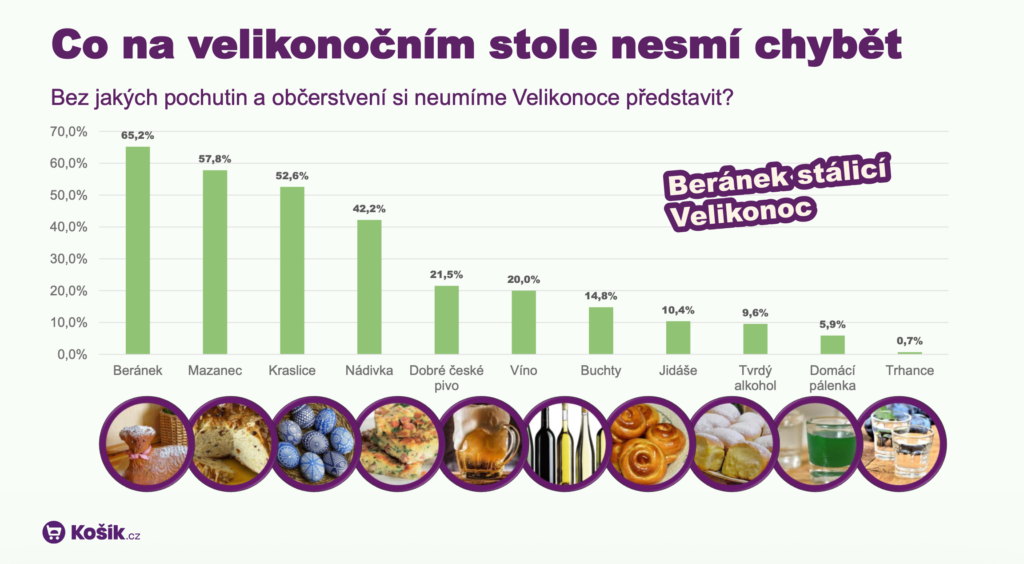
Although attitudes towards Easter and how it is celebrated are gradually changing, some traditions endure. This applies particularly to food. Over 65 per cent of Czech households cannot imagine Easter without an Easter lamb, 57 per cent plan to serve mazanec on their table, and 42 per cent will treat themselves to Easter stuffing. Uncertainty surrounding outdoor barbecues, given the early April date and cooler weather, is also affecting alcohol purchases. 21.5 per cent of respondents plan to enjoy beer, which is 6 per cent less than last year. Conversely, spirits have seen a year-on-year increase of 3 per cent in Czechs’ plans, reaching 9.6 per cent. Wine consumption remains consistent, with a fifth of households planning to serve it.
Eggs are, of course, the symbol of Easter and the most sought-after item. More than half of households are planning to paint and decorate Easter eggs again this year, and eggs are also an essential part of Easter cooking and baking. At the same time, an increasing number of households are choosing free-range eggs, partly in light of the impending ban on cage farming.
Košík was the first supermarket to stop selling cage eggs, back in 2019. This had no impact on customer demand. “Czechs are showing that they are no strangers to ethical hen farming, and we have been seeing a long-term increase in demand for free-range and organic eggs,” concludes Navrátil.
Source: mam.cz