

Children in the Czech Republic are regularly exposed to screens from infancy. A new survey by the non-profit organisation Zvedni hlavu, supported by the O2 Foundation, shows that digital technology isa common part of children’s lives from birth. However, this is often without clear rules, with unsuitable content and without parental supervision. That is why Zvedni hlavu and the O2 Foundation have joined forces to provide solutions for families – the Ten Commandments of Healthy Parenting, podcasts with experts, educational articles, a free webinar for parents and much more. The survey, conducted for these organisations by the Stem agency, involved more than a thousand parents of children aged 0–5 from across the country.
Survey results
- 55% of children under one year of age already watch screens regularly.
- 41% of children aged 1–2 spend more than an hour a day in front of screens, and one in five spend more than two hours.
- 68% of pre-schoolers spend more than an hour a day in front of screens. 42% spend more than two hours.
- 37% of the youngest children watch screens on their own.
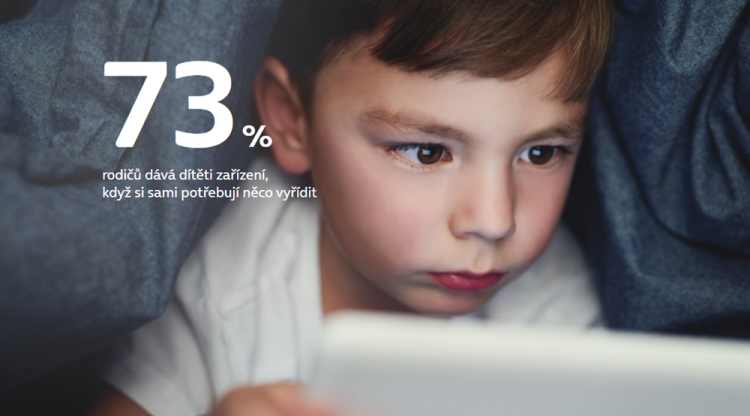
- 40% of children watch screens whilst eating. 36% of parents use screens as a way to calm their child down, whilst 73% use them when they need to get something done themselves.
- 25% of children under 5 regularly watch short videos such as YouTube Shorts, TikTok or Instagram Reels.
 Source: O2
The survey also confirms that as children get older, the time spent in front of screens increases significantly. More than half of children under one year old already watch screens regularly. 41% of toddlers aged 1 to 2 years spend more than an hour a day in front of a screen, and 20% even more than two hours. More than two-thirds of pre-school children watch screens for longer than an hour a day, and almost half for more than two hours.
Context is also crucial, and above all, content. This should be age-appropriate and ideally free from excessive stimuli. However, this is at odds with reality, as the survey found that a quarter of children watch short videos such as YouTube Shorts, TikTok or Instagram Reels.
Up to 37% of children under five watch digital content without an adult present. “Although parents are generally aware that their presence whilst their children are using screens plays an important role, in practice parents often use digital devices as a quick and practical solution. A total of 73% of parents admit that they sometimes hand their child a phone or tablet or switch on the television when they need peace and quiet to work or some time to themselves. Screens are sometimes a solution even during meals or in situations where parents want to calm their child down,” says Jitka Uhrová, senior analyst at Stem.
The survey also shows that although parents are aware of their role in the digital world, setting clear rules is not easy for them.
- 61% of parents admit that they have not set a daily screen time limit for their child or are unable to stick to it.
- 57% of parents know that they are role models for their children when it comes to using digital technologies.
- 36% of parents admit that they are unable to change their own digital habits.
According to the non-profit organisation Zvedni hlavu, the aim is not to ban digital technology for children, but to help them find a healthy balance and build healthy habits from an early age.
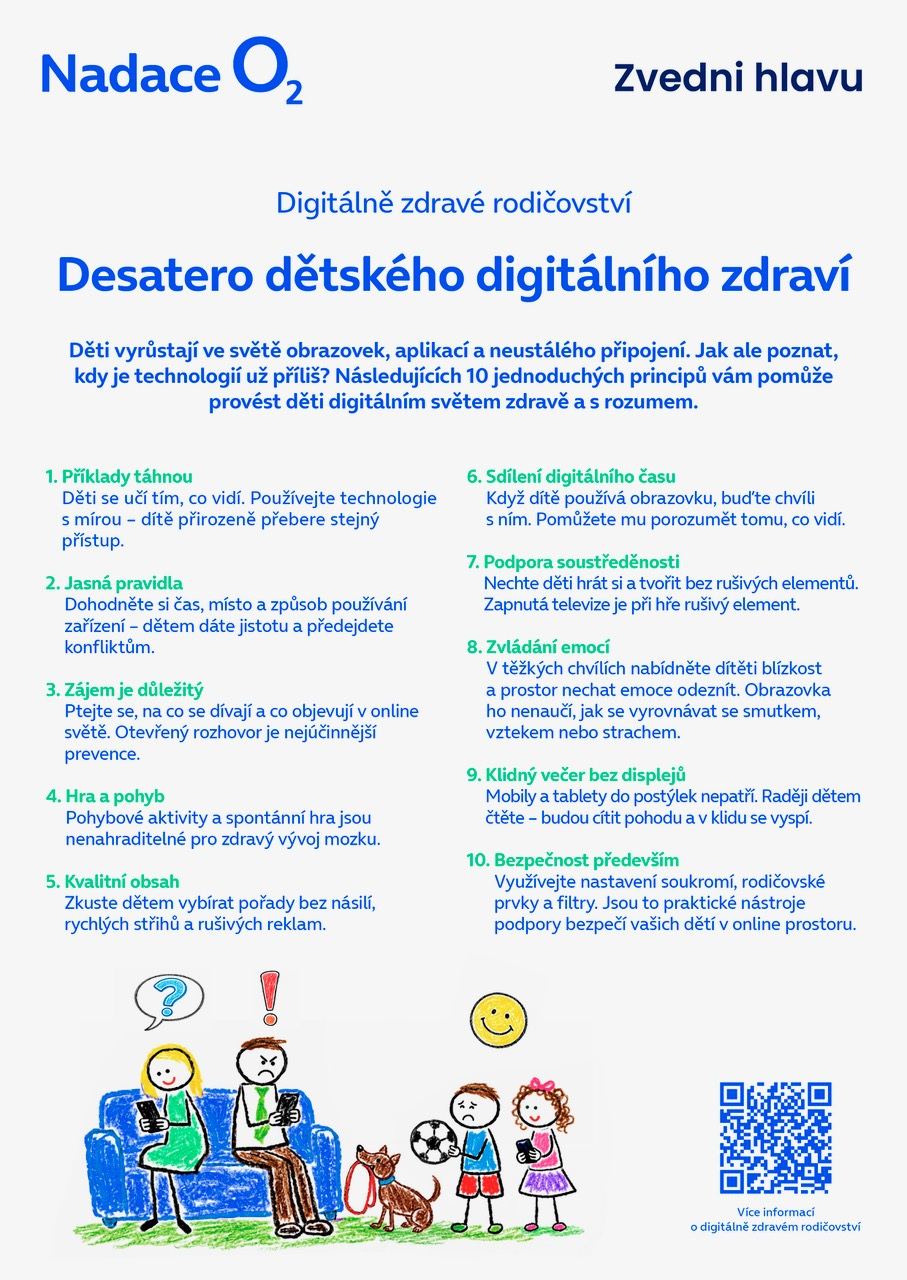 Ten Commandments of Children’s Digital Health; Source: O2
Possible solutions
The Zvedni hlavu organisation and the O2 Foundation therefore offer tools and resources to help navigate the digital world of children and establish healthy digital habits within the family.
Parents can make use of, for example:
- podcasts with experts
- The Ten Commandments of Children’s Digital Health
- educational articles on the O2 Smart School website
- quizzes and videos with O2 Guru
- inspiration for parents in the Moje O2 app
- 40% discount on the Paddington Bear audiobook in the O2 Library
All these tools, further information on the survey and specialist materials are available on the o2chytraskola.cz or zvednihlavu.cz websites.
Both organisations are also inviting parents to a free webinar on digital parenting, which will take place on 8 April 2026 from 5.00 pm to 6.30 pm. Registration is open via this link.
Source: mediaguru.cz