


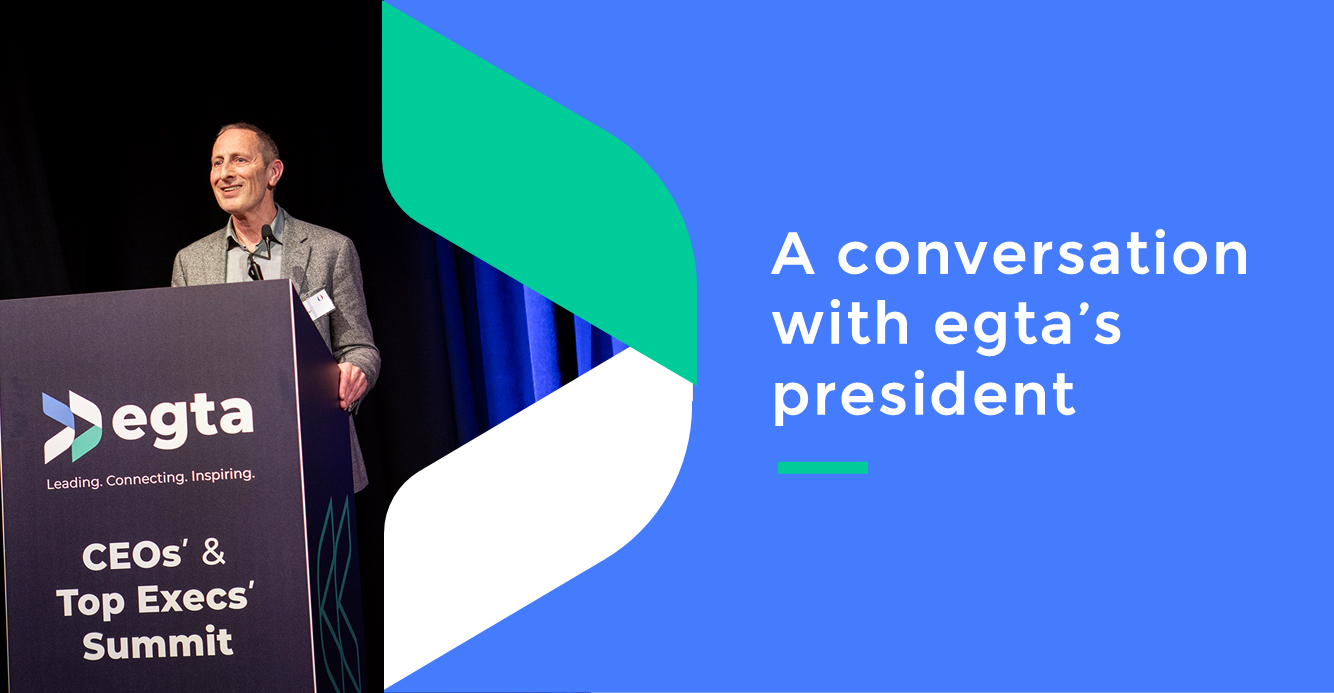
Laurent Bliaut, Deputy General Director at TF1 Publicité, recently began his tenure as the President of egta, succeeding Walter Zinggl, CEO of IP Austria, to whom we extend our gratitude for his dedicated service. In an interview with our TV Research Manager, Halli Oddsson, Laurent generously shared his thoughts and vision for the near future, discussing the challenges and opportunities faced by multiplatform TV and audio businesses today.
As you take on your second term as egta President, what are your key ambitions for the association, particularly in advocating for multiplatform TV and audio businesses in a media landscape that is continuously evolving?
One of the primary roles of egta in the coming months and years will be to ensure that all our members are implementing cross-platform measurement solutions in their respective markets, taking into consideration the new egta Industry Charter. We must present a unified message to clients. There are significant pressures, particularly from organizations like the WFA and ISBA, to equate GRPs with digital impressions. This can only be viable if the standards for digital impressions are the same as for TV GRPs. This is a pressing issue across major markets. There are as many opportunities as there are threats. If we don’t succeed in building comparable KPIs, we risk significant challenges to our revenue streams. Platforms like YouTube, with their unlimited inventory and 2-second viewing metric, could pose a serious threat. We must be steadfast in defending the quality of our TV measurement and KPIs for our clients. This is very important.
In a recent survey we conducted ahead of last June’s annual CEOs & Top Executives’ Summit, member companies’ top executives cited the decline in linear viewing and the shifting media consumption habits of younger generations as their top challenges. Do you agree that this is the most critical issue facing our industry today, and how should members strategically prioritize to address these challenges?
This is indeed a significant issue, but the real challenge lies in whether we can achieve growth through our streaming platforms. Yes, linear TV is declining, particularly among younger demographics, and this trend will continue. But interestingly, the issue is not with the content itself. The same content performs differently on linear TV compared to streaming platforms. For example, on TF1+, the average viewer is 10-15 years younger than on TF1 for the same program. The challenge, therefore, is related to the devices and methods of consumption and not content.
This is why we launched our streaming service TF1+ at the beginning of the year, and other broadcasters have as well. Previously, we only offered a seven-day replay window, but the new expectation by viewers is the ability to consume entire seasons of series at once. This shift is not just about content but about adapting to new consumption habits. ITV, M6, and others have done the same, offering content on their BVOD platforms without time constraints. Viewers should be able to consume content whenever they want, whether it is four seasons of a show or just one episode. There are challenges, particularly around intellectual property rights, but we are working through them. It seems easy, but it is not.
We also need to deliver content that is exciting for young people—reality shows, game shows, and vertical formats for example. Again, the issue is not the content, cause we broadcasters have a very strong know-how in this field; it is about adapting our platforms to match new consumption habits. For example, we have seen a great success with special editions of popular shows like Dancing with the Stars on TF1+ only, featuring unique casts and YouTube stars. We must transform our BVOD platforms and turn them into something more than replay platforms and equally we must amplify our broadcast brands and adapt them to be successful on digital.
This challenge is more about adapting to new consumption patterns than a lack of great content. However, this ties back to the previous point—if we do not secure the right KPIs, we will face significant issues. For instance, ads on TF1+ have a 95% completion rate, which is far superior to what platforms like YouTube or Snapchat can offer.
In the same survey, top executives predicted that streaming revenues on average would increase from 9% in 2024 to 20% of total revenues by 2027, while linear TV is projected to decline from 83% to 70%. Does this align with your expectations for the future of linear TV as a significant revenue driver, despite common beliefs about its rapid decline?
The future of linear TV will vary by country, as media consumption habits differ significantly across regions. It is very important to communicate to advertisers and agencies that the situation in Europe is not comparable to the United States. This is essential as many of our major clients are US-centric and assume that linear TV is declining fast as in the US.
The reports from this year’s US Upfronts show an equal split between free channels, pay channels and streaming. However, in countries like France, where IPTV via telcos is prevalent in over 60% of households, smart TV usage is relatively low, and TV contents still take over 70% of the TV set viewing (vs 50% in the US). Same in Italy, Spain and others, where linear TV consumption remains high. While there will be a decline, it won’t be as rapid or strong as in the US for many structural reasons.
We’ll face the challenge of compensating for this with our digital assets. However, we don’t need to compensate 1:1 for the audience loss. In the digital space, CPMs are higher due to data leveraging and targeting capabilities, so even compensating for half or a third of the audience loss could be enough to grow revenue levels.
Currently, streaming accounts for about 10% of our revenue, which aligns with the industry average. In the next 3-4 years, we aim to increase that to 25%, so these projections in the survey are quite aligned with our expectations.
An overwhelming 97% of TV respondents and 92% of radio respondents believe that by 2030, multiplatform TV and audio will remain crucial components of brands’ communication strategies. What steps should companies take today to ensure they are well-positioned for long-term success in this space?
We must maintain our reach. In France, while viewing time is decreasing, the reach has remained consistent, and it has even increased this year. Viewers are tuning in as frequently as before but for shorter durations. This consistent reach is what clients value most. In a landscape crowded with niche digital offerings and a long tail, the ability to provide quick and extensive reach remains our strength. We have always known how to do that, we still know how to do that, and I strongly believe we will always know how to do that.

If we succeed in maintaining our global reach, including both linear and streaming, we will remain very strong partners for our clients. The ROI for TV is high compared to other media, and it is cost-effective too. We need to maintain our reach and focus on improving the measurement of outcomes rather than just audiences, as this is what clients increasingly demand.
Do you have any final thoughts or key messages you would like to share with egta members as we look ahead?
It is essential that we speak with a unified voice, particularly on audience measurement. We are strong locally, but in the global landscape, we are quite small. Many of our major clients operate from global hubs like New York or London, and we need to present the same storytelling in a non-defensive manner. TV is still big. It is the biggest. What other platforms can deliver 90% reach in one week? We must be proud of ourselves and rethink how we tell our story.
Additionally, we should consider our relationship with players such as Netflix, Disney+, and Amazon. These companies resemble us more than platforms like YouTube. They sell premium content with quality ad insertion. What they sell is nothing better than what we do, it is of equal quality but priced at a premium. We need to think strategically about how we collaborate with these players, as it can benefit everyone.
Source: egtaknowledgehub.com
OTHER CASE STUDIES

CHANNEL 4 SALES TURNS EXISTING TV ADS INTO ENHANCED STREAMING FORMATS
2. 10. 2026Channel 4 Sales launched Enhance in June 2026, the broadcaster’s new suite of CTV streaming ad…

MFE ADVERTISING: SCALING AI-POWERED CONTEXTUAL ADVERTISING ACROSS EUROPE
28. 9. 2026From Spain to Italy, MFE Advertising is using AI and HbbTV to make programme context an…

HOW DPG MEDIA TURNS THE BACKSTAGE OF A PRIME-TIME MUSIC SHOW INTO A RETAIL ENGINE
17. 8. 2026In a category where retailers typically compete on price and visibility, Albert Heijn, the supermarket retailer,…

AN IMMERSIVE CANAL+ BRAND SOLUTIONS COLLABORATION FOR SKIN-CARE BRANDS WITH SENSITIVE STORIES TO TELL
26. 6. 2026CANAL+ BRAND SOLUTIONS and its in-house studio LA FACTORY created “Marquer l’Invisible” for Avène, linking Cicalfate+…

M6 UNLIMITED TESTS AI SPOT CREATION FOR SMALLER TV AND STREAMING ADVERTISERS
22. 5. 2026M6 Unlimited is testing a simpler route into TV and streaming for SMEs and new advertisers…
THE TV ADVERTISING PARADOX, A THINKTV NEW ZEALAND CASE STUDY (2/2)
22. 5. 2026ThinkTV New Zealand built its campaign around the contradiction that linear TV was being called obsolete…

A BIG-SCREEN STUDY FINDS STRONGER ATTENTION ON TV4 PLAY THAN ON YOUTUBE
24. 4. 2026TV4 just launched its third attention study, comparing the viewing experience on its streaming service (TV4…

THE TV ADVERTISING PARADOX, A THINKTV NEW ZEALAND CASE STUDY (1/2)
24. 4. 2026In late 2024, ThinkTV New Zealand, under the leadership of Jacqueline Freeman, GM Communications, undertook a…

AD EMISSIONS MEASUREMENT: LESSONS FROM THE FINNISH MARKET
31. 3. 2026Finland’s commercial TV broadcasters spent the past year developing a carbon emissions measurement framework for linear…
A NEW WAY FOR FRANCETV PUBLICITÉ TO SELL CONTEXTUAL VIDEO ADVERTISING
27. 3. 2026FranceTV Publicité (FTP), the advertising sales house for French public television, has introduced Context.IA into its…
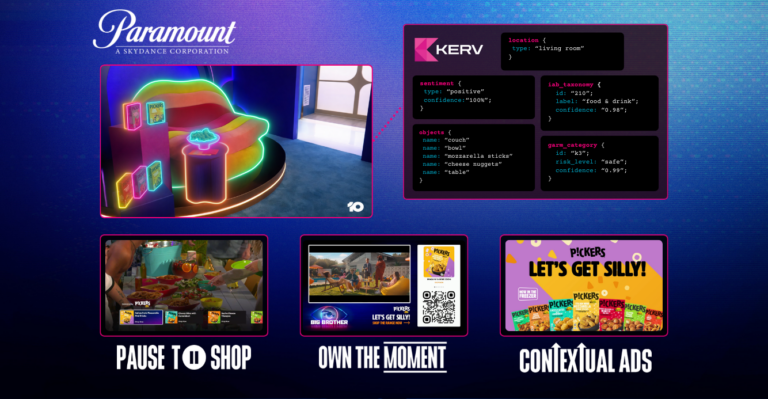
BUILDING A SHOPPABLE, ATTENTION-READY CTV OFFER: THE BIG BROTHER CONTEXTUAL CASE
26. 3. 2026In 2025, Paramount Australia, in partnership with FreeWheel and egta, hosted a webinar outlining a forward-looking…

GLOBO CREATES HOME SCREEN PROMINENCE FOR FREE-TO-AIR TV ON SMART TVS
26. 2. 2026Globo, Brazil’s largest commercial TV group, is rolling out DTV+, a next-generation free-to-air TV standard designed…