
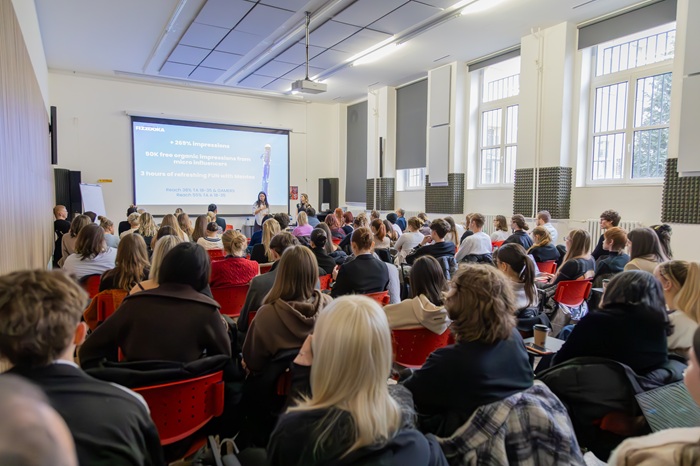
This year's marketing conference at the College of Creative Arts was entitled Generation Z, Marketing and Media: Adapting to the New Reality - and as the school's rector Dana Janovská said, few things are transforming the communications and media landscape today as significantly as this generation. "Generation Z is fundamentally changing the way we think about brands, how we plan media strategies and how we create content." The purpose of the conference was therefore to connect theoretical knowledge with practice and to offer students and professionals alike inspiring talks by academics, researchers and professionals from marketing and media agencies.
Associate Professor Lenka Turnerová, Head of the Department of Marketing Communications and Chair of the Conference Scientific Committee, emphasised that the focus was not only on how young people interact with the media, but also on how the media interact with them. This generation, defined as approximately 1996 to 2010, grew up in an environment where technology is a natural part of everyday life. For many, the mobile phone is closer than television, and social networks are the main space for communication and self-presentation. "At the same time, however, her relationship with the media carries a certain distaste and also distrust of institutions. Generation Z is characterised by the dominance of its own opinion and an emphasis on authenticity. What one sees in the media space is immediately compared with what one considers to be one's own values and attitudes," Turnerová added.
According to Petr Majerik, co-organiser of the event and marketing lecturer at VŠKK, the conference was created with the aim of enabling academics and experts to directly confront their findings with the opinions of members of Generation Z themselves - i.e. students of VŠKK, for whom the event was primarily intended. The students thus got a chance to look at their own generational bubble from a different perspective, while the speakers could immediately verify how their conclusions resonated with the audience, which is also the object of their research.
Are they lazy, or just in need of a purpose and a good partner?
Lucia Spálová from the FMK UCM in Trnava offered a social-psychological perspective on Generation Z and their position in the current labour market. She stressed that its members are facing the worst entry conditions in decades: junior positions are disappearing due to AI and economic slowdown, polycrisis and deteriorating mental health of the young are not improving the situation. The generation gap between employers and young people, who are often perceived as demanding, lazy and fragile, is widening.
She also pointed to the trend of a gradual outflow of students from higher education, with some young people beginning to see a university degree as a relic. Gen Z currently represents 27% of the workforce, and companies need to fundamentally rethink how they approach it. She identified wellbeing, meaningful learning, authenticity, partnership and digital transparency as key elements of employer branding for this generation. She concluded by adding that while some companies may be fed up with "Generation Z," the situation will be reversed: "You won't be looking for a job - we'll have to look for you."
Generation Z in relation to social innovation was discussed by Associate Professor Marie Dohnalová from the Faculty of Humanities at Charles University. She explained that the tertiary sector is a key environment for the emergence of new ideas, community projects and social entrepreneurship. She drew on recent research and trends presented at an international conference in Rotterdam, which show that Generation Z favours value-based entrepreneurship, sustainability, digitalisation, wellbeing, inclusion and diversity, and local development. She gave a number of examples of successful community and social enterprises in the Czech Republic and mentioned other suggestions on how young people could get involved. She urged the importance of education and awareness raising as the social economy is still less entrenched in post-communist countries than in the West. However, Dohnal said that Generation Z is an important agent of future change - and it is their values and initiatives that will be crucial to the development of sustainable, community-based and socially responsible projects.
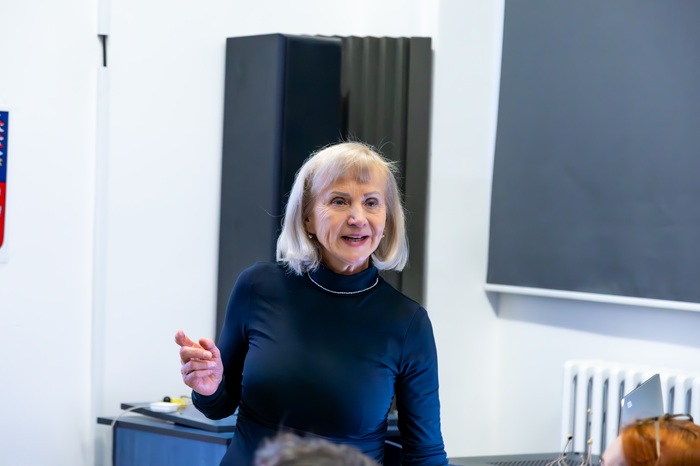 Marie Dohnalová; Source: VŠKK
The distracted generation and Instagram posts about wine
Vladimír Vietoris from the Slovak University of Agriculture in Nitra presented the results of a survey on the preferences and behaviour of Generation Z, in which 120 respondents took part. The testing used neuromarketing methods such as EEG, eye-tracking, GSR and biometric wearables. The research showed that young people react differently than older generations when evaluating products: they have a higher variability of preferences, get tired faster, scan more for visual stimuli, and have a harder time maintaining attention. In the presence of a mobile phone, their attention is even more fragmented and the need to check their mobile phone increases. Vietoris summarized seven key findings:
- Gen Z is not a worse responder - they just need methods tailored to their cognitive style.
- The absence of a cell phone in sight is critical to sustaining attention and data quality.
- Explicit data is insufficient; implicit data is a resource for understanding.
- Shorter testing is better, short blocks yield more accurate results.
- Warm-up is needed - adaptive samples help adjust perception and focus.
- High variability is not a bug, but a natural part of the Gen Z phenotype.
- Gamification works - micro-rewards, progress bars or attractive visuals.
The presentation showed that to engage Generation Z, we need to use new methods, work with their digital attention span and respect their different way of processing information.
Jiří Zelený, another member of the conference organizing committee and a lecturer at the VŠKK, who also moderated the event, presented an analysis of the Wine Fund's Instagram account, in which he examined how the visual characteristics of posts influence user engagement, specifically the number of likes and comments. The results confirmed that it is mainly emotions that work on Instagram: shots of wine events, vineyards, exteriors and domestic situations brought the highest engagement. On the contrary, generic wine photos, winery shots or the presence of a winemaker tended to reduce interactions.
Some elements were contradictory, e.g. they increased comments but decreased likes. The presented model has its limitations (it does not take into account the time of post publication, the algorithm or the use of paid advertising), yet it shows that working properly with visual themes can predict and significantly increase the effectiveness of posts.
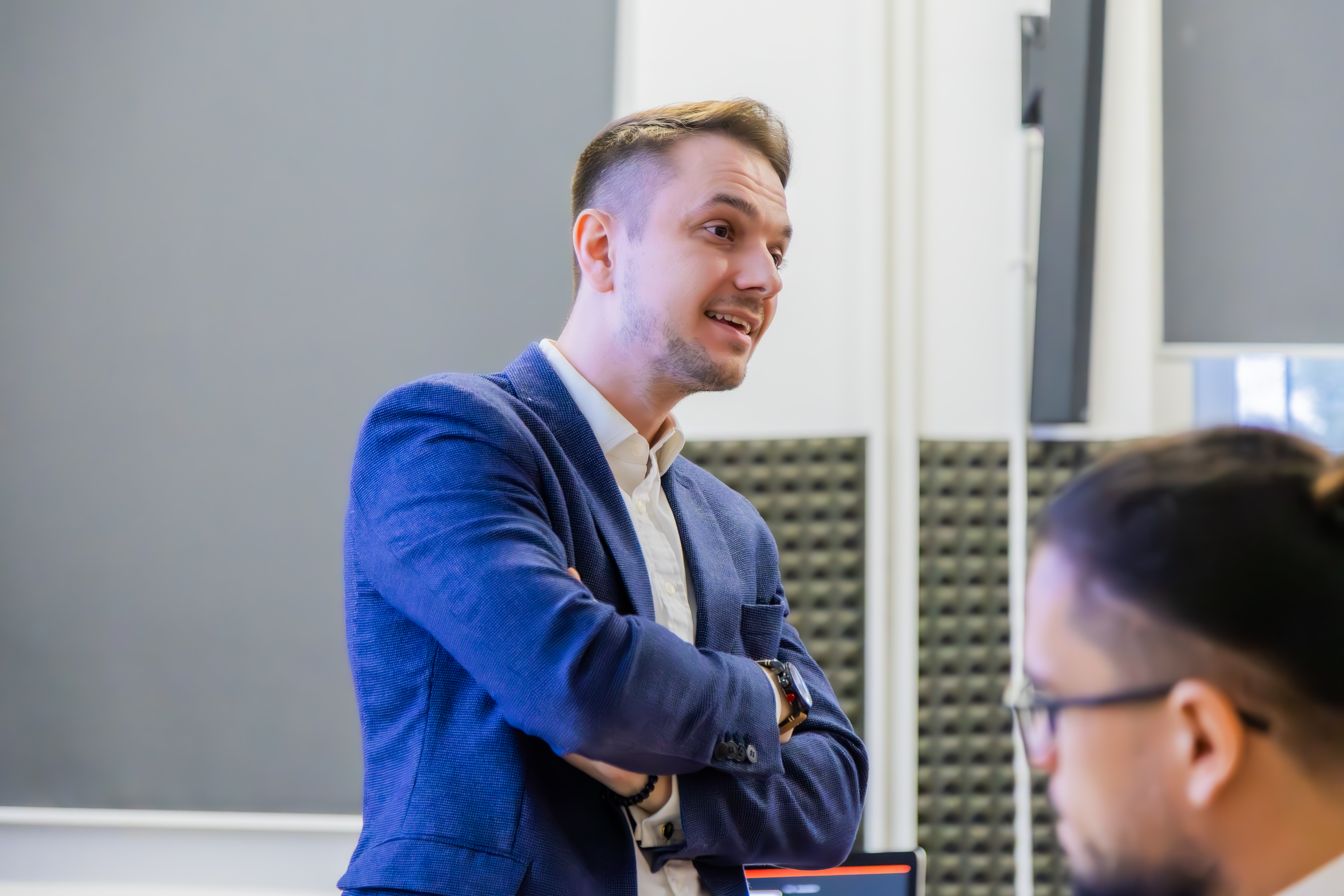 Jiří Zelený; Source: VŠKK
Refreshing the gaming environment
During the coffee break, the room gradually filled with Mentos. The conference partner was responsible for the next block, in which Michaela Krchová and Hana Teplá from the Wavemaker agency presented a case study of a campaign for Mentos (manufactured by Perfetti van Melle). They revealed the behind-the-scenes of the global activation that made the brand visible in the gaming community and directly in the game Fortnite, ultimately winning two global awards at Cannes Lions. The creators took home the same number of awards from the domestic Fenix Awards.
The centerpiece of the campaign was Fizzooka, a special "soda launcher" that uses the viral fizzy reaction of Mentos and Coke for explosive fun. "It was great that it wasn't just a passive incorporation of the brand into the gaming world, which is currently trendy for many brands," said the co-authors of the campaign's comprehensive media strategy. The Czech team succeeded despite seizing the opportunity at the last minute. "We are a small market, but when an idea makes sense, we mustn't be afraid to speak up and fight for our version of the campaign."
The activation worked thanks to the collaboration with Poggers, the interest of influencers (Alkan and Asimister, for example, joined the campaign), our own tournament, authenticity, and the appropriate tone of communication—it was important to avoid "boomer speak" and not use slang from other games.
Fizzooka was the first branded tactical item to appear in Fortnite Creative. The weapon was only available in the game for two weeks, which further increased its uniqueness. The campaign brought +269% impressions, recorded tens of thousands of organic views, reached over 38% of gamers and 55% of people in the same age group (18–35 years) outside the gaming community.
Generation Z now spends more time playing games than watching TV. A survey shows that 47% of people aged 10–50 consider themselves gamers. 16% of respondents at least watch games (streams, esports tournaments). So if a brand wants to be relevant, gaming is no longer a "nice to have" for advertising, but a fully-fledged channel. That's why the WPP media group is certainly not stopping at the aforementioned refreshment in the gaming world. Similarly, the importance of gaming and esports in relation to marketing is not overlooked by VŠKK.
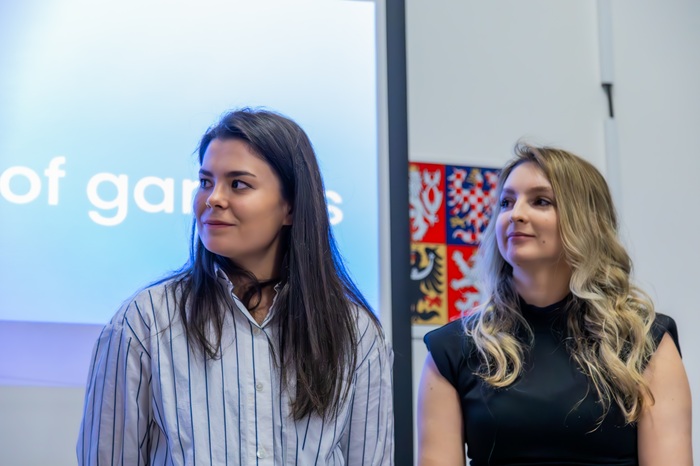 Hana Teplá and Michaela Krchová; Source: VŠKK
Marketing bubbles and disruption of illusions
Petr Tomáš, Consumer Research Skillhead at WPP Media, impressed with his style of presentation, humour and data. In an interactive talk based on his research entitled Media Bubbles, he highlighted how advertisers and marketers often find themselves in a different, "rejuvenating", media and social environment than the general population. This can lead to them often not reflecting the reality of the average Czech, which is somewhat counterproductive when working in marketing.
"Beware of your own perceptions of reality. We slip into that all the time. Always ask what is behind what is presented to you. Look for context and look at the context. One number alone tells you nothing. Often it is enough to use common sense," Tomáš urged those present. "And above all, keep an open mind."
He pointed out, for example, the 45-64 age group, which is often neglected by marketers. Yet these are often people who want to live more - and therefore spend more - after letting their children out of the nest. At the same time, it is good to see the generations in their diversity - some are active and exploring, others want more peace and quiet. The key is to keep thinking critically and looking for context, to observe the social reality of your target group so that your next advertising campaign doesn't make them rather angry.
Learning in the age of AI
Natalia Shumeiko presented the results of her research on how AI is transforming the role of university educators. She showed that every digital transformation in the last decades has fundamentally changed the expectations placed on lecturers, from the advent of computers to e-learning and MOOC courses to immersive technologies. The traditional role of the lecturer as a "source of knowledge" has gradually transformed into that of a facilitator, guide, organizer or mediator between student and technology.
The findings of the research, which largely involved respondents from Ukraine (72.1%), show that the most common ways of integrating AI in teaching are AI simulator, AI tool and AI coach, while the role of AI assistant or mentor is less common. It is true that even with increasing automation, the human educator remains a key figure in teaching: AI helps, but the teacher is the one who gives meaning and context to the information.
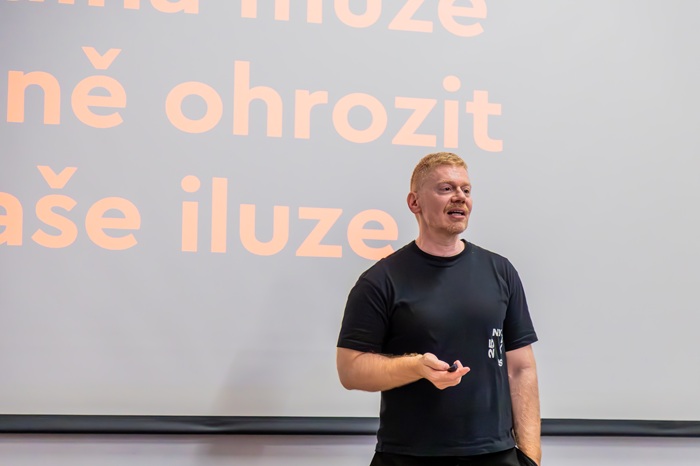 Petr Tomáš; Source: VŠKK
The Green Generation
Although Gen Z is often described as more environmentally conscious and willing to change their behaviour, there are almost no qualitative studies in the Czech environment that have explored this area in more depth. This is why Margarita Yelisseyeva embarked on sociological research for her dissertation, focusing on how the Czech Generation Z constructs and defines sustainability and sustainable lifestyles.
Yelisseyeva selected six active personal profiles that are dedicated to sustainability. In her analysis, she looks at four levels in particular:
- How definitions of sustainability are shaped on social media.
- How people legitimize their behavior (language and value markers).
- What practices are stabilized as "sustainable" through repetition.
- Where the boundaries of what is and is not considered sustainable are created.
Her research so far shows that influencers are not authorities, but rather one actor in the process of co-creation of meanings. Their narratives are often modified, supplemented or challenged by those watching. "Generation Z people are their own trendsetters, they are not passive recipients," she added. She reminded that if we want to reach Generation Z in a sensitive and understandable way, we need to understand the meanings they attach to concepts such as sustainability, behaviour change or ethical consumption. Analysing narratives, she said, will allow us to understand not only what young people do, but also the social processes that shape these practices.
Learning through play
Adam Slovák from the University of Constantine the Philosopher in Nitra talked about how video games - specifically the Assassin's Creed series - can be used in teaching history. He began by describing the development of teaching aids and their division into several categories, which led him to the question of what role multimedia and digital environments play in the process of enculturation and education today. According to research, the inclusion of innovative digital tools in the classroom has generally had a positive impact, as video games can increase motivation, support different learning styles and help with explaining the content when used effectively. He mentioned that training teachers themselves and developing their digital competences is also key.
He chose the game Assassin's Creed as a model example because it combines a historical setting, real locations and characters - despite being a commercial title that also works with fiction. The game therefore serves more as an illustration of an era. Some of the students present then added that they also had experience of using games in the classroom from titles such as Minecraft or Kingdom Come.
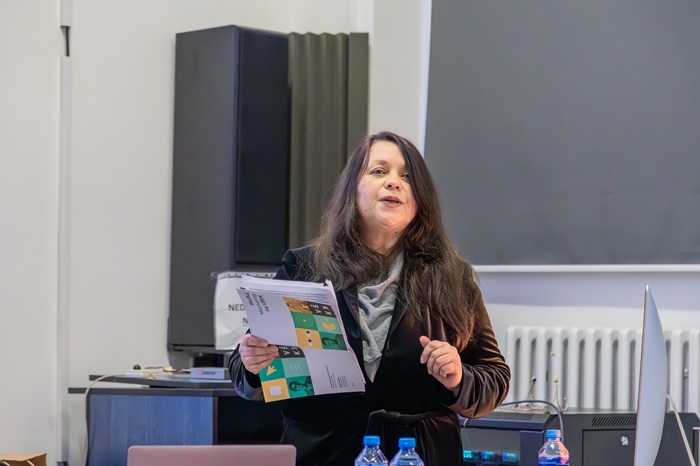 Natalia Shumeiko; Source: VŠKK
Young people on the move
In the last presentation, Samuel Bartoš, a representative of Czech Inn Hotels, presented a view of Generation Z through the lens of tourism. This generation spends an average of CZK 240,000 on travel and takes around five trips a year. They draw inspiration mainly from social networks and focus on experiences rather than luxury. Although they appreciate the sustainable approach of hotels, value for money and cleanliness are still the deciding factors when choosing accommodation.
Up to 73% of Generation Z choose to book through OTA platforms (e.g. Booking), which means lower margins for hotels due to high commissions. Generation Z also expects the utmost in convenience and technology - fast free Wi-Fi, online check-in and an overall seamless digital process are commonplace. The presentation showed that if hotels want to appeal to Generation Z, they should combine accessibility, authentic experiences, "insta-friendly" design and technology services that reflect the way this generation travels and thinks.
A relentless interest in marketing
If you missed the conference but are interested in the aforementioned data, don't despair. Selected papers will become part of a collective monograph that will be available in print and electronic formats.
Publication is expected in the first half of next year.
"The Department of Marketing plans to hold similar conferences on various topical issues on a regular basis. It is, among other things, a good way of exchanging opinions and enriching studies with new suggestions and information," added Petr Majerik, confirming the interest in studying marketing at VŠKK. For the third year now, the greatest interest has been in Fashion Marketing, where we have clearly hit the market demand. And the new MBA program has also taken off successfully, with more than 15 students in its first year."
Tereza Bartošková, editor, former student of VŠKK
Source: mediaguru.cz