
THEME OF THE MONTH: TV MAKES BRANDS FAMOUS

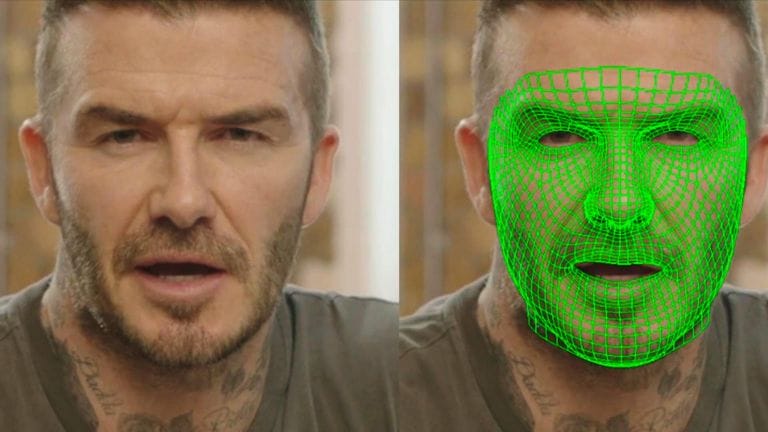
Nothing creates fame like TV. Just as it’s shows turn people into stars, TV advertising turns brands into household names. There are a number of reasons for this… TV’s scale and reach are unbeatable, and you can’t become famous if no one has heard of you. Its scale and reach means that brands on TV are making a very public promise, which, as Rory Sutherland has pointed out, is powerful: “Public promises carry more weight,” he says, “hence why the words ‘as seen on TV’ are more convincing than ‘as seen on Facebook’”.

TV also creates fame because of its signalling power. In advertising it’s not just what you say, it’s where you say it that counts, and TV is proven to be the medium that drives the strongest fitness, social, popularity, and success signals, and to outperform other media at suggesting brand quality, self-confidence, and strength.

And the fact that TV is a shared experience also contributes to its fame-making power. Watching TV and its adverts in company creates opportunities for personal recommendations, generates conversation, increases memory, and intensifies emotions.

A TV spot effectively helps with the memorability of the promoted product or service. A successful TV commercial can cause the product itself to become a celebrity of sorts. What’s more, imagine the effect of advertising a lesser-known brand. The growth of the ‘brand awareness’ parameter thanks to a TV campaign is not just a naive idea. Television has proven to make a brand famous. In SCREENVOICE MAGAZINE we look at which celebrities have appeared in Czech commercials. And there were not a few of them.

MORE ARTICLES ABOUT THIS TOPIC


THE EFFIE AWARDS KICK OFF, ADD A NEW CATEGORY FOR B2B AND REVISE THE RULES FOR DIGITAL ENTRIES

30. 6. 2026

The Effie Awards Czech Republic has opened entries for its 29th year, adding a new B2B Products and Services category for campaigns aimed at corporate clients and specialist audiences. AKA has also revised the Digital Marketing and Social Media rules so entries must show a standalone digital strategy, a distinct digital solution, and evidence of the digital component’s impact, with judging focused on metrics such as CPA, ROAS, PNO, conversion rates, and incremental or causal effects. Entries opened on 30 June, the early bird period runs until 20 July, finalists will be announced on 10 November, and the awards ceremony is scheduled for 25 November 2026.

CANNES LIONS WRAP-UP: PART TWO – FROM EFFECTIVENESS TO GROWTH, FROM VOLUME TO TRUST

28. 6. 2026

Cannes Lions Wrap-Up Live highlighted a core industry tension: marketers are using AI more for efficiency than for creative effectiveness or growth, with CEO Forum responses at 57% for efficiency versus 43% for growth and Contagious/WFA research showing only around a third use AI for creative effectiveness. Panelists argued that AI does not replace marketing fundamentals, warning that better briefs and stronger creative judgment still depend on mastering the basics. Another major takeaway was the "two-audience problem": brands now need content that works for both people and the models, agents, and systems that interpret information on their behalf. For media and brand leaders, the implication is clear: machine-readable consistency, not reach alone, is becoming critical to trust, resonance, and long-term brand impact.

COMPANIES ARE SPENDING HUNDREDS OF THOUSANDS ON MARKETING, BUT THE RETURN ON INVESTMENT IS FALLING

26. 6. 2026

Marketing budgets are edging up while returns are falling, leaving online shops paying more to sustain the same turnover as digital advertising costs rise and competition intensifies. The core problem is no longer a lack of data but too much conflicting platform data, which pushes teams toward "safer" channels and can mask the real drivers of customer acquisition. Roivenue identifies three recurring mistakes: no single source of truth, adding channels before fully understanding existing ones, and measuring conversions or turnover without linking campaigns to actual profit. AI is adding another measurement blind spot, as companies struggle to judge whether traffic from tools such as ChatGPT belongs in the marketing mix or is simply another source of costly distraction.

FIVE MARKETING TRUTHS: RITSON AND SHARP REACHED A CONSENSUS IN CANNES

23. 6. 2026

At Cannes Lions, Mark Ritson and Byron Sharp made a rare joint appearance to test where two of marketing’s most cited voices could agree, despite a long-standing reputation for public disagreement. They found common ground on mental availability as a core brand task, arguing that marketers must focus less on what a brand means and more on the situations, needs and stimuli that trigger recall at the point of purchase. They also aligned on distinctive brand elements as practical tools for recognition, with a clear warning that internal brand fatigue can push teams to weaken assets consumers still rely on. On mass marketing, both framed the opportunity as a revival of sophisticated reach: building brands by covering the full relevant market while adapting execution to real-world differences.

STUDY USA: PROGRAMMATIC CTV PAUSE ADS MORE EFFECTIVE THAN TRADITIONAL SPOTS

18. 6. 2026

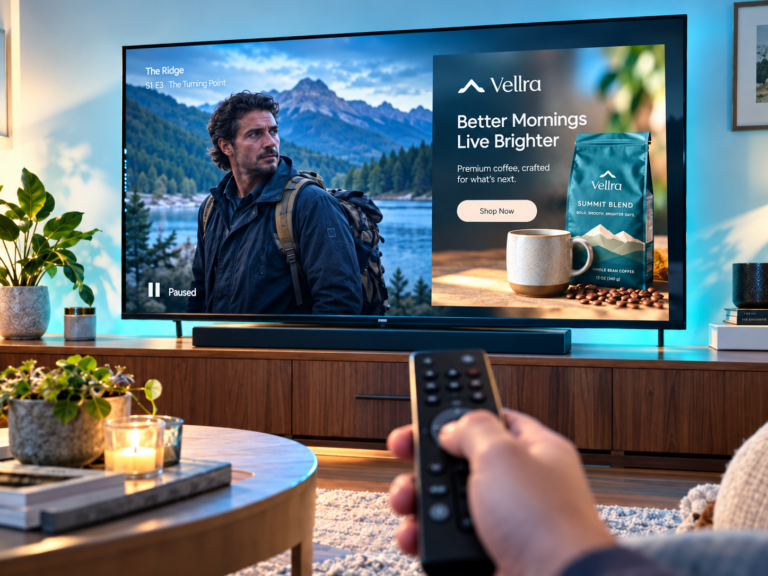
WunderKIND Ads says a TVision-backed analysis of millions of programmatic CTV impressions found Pause Ads delivered nearly twice the attention of standard 60-second CTV spots. The study covered 13 verticals and hundreds of premium publishers across platforms including Dish, Philo, and Plex, with Pause Ads outperforming traditional spots in every category analyzed. Automotive posted the strongest result at 34.2 seconds of Attention Time versus 12.2 seconds for standard CTV video, underscoring the format’s relevance for marketers seeking higher-attention, less interruptive CTV inventory.

APPLE SPENDS THE MOST, BUT OTHERS ARE GRABBING THE LIMELIGHT. WHAT DETERMINES A VIEWER’S VALUE?

31. 5. 2026

Apple spends about $20 billion for each 1% of TV airtime share, while YouTube and Fox spend roughly $1 billion, underscoring that higher content investment does not automatically deliver greater audience attention. For advertisers, the more useful benchmark is how effectively a platform converts spending into viewing time and attention, not simply how much content it produces. Streaming platforms are also redefining customer value: viewers on ad-supported tiers who watch more can generate revenue comparable to or above ad-free subscribers, a shift reflected in Netflix’s expanding advertising focus and its goal of narrowing the gap between the two segments.

THE TV ADVERTISING PARADOX, A THINKTV NEW ZEALAND CASE STUDY (2/2)

22. 5. 2026

ThinkTV New Zealand built its campaign around the contradiction that linear TV was being called obsolete while still delivering scale, attention, and brand outcomes, using evidence-led messaging aimed primarily at CMOs and CFOs rather than broadcasters speaking for themselves. The centerpiece was an 80-page standalone edition of NZ Marketing magazine, with 4,000 copies distributed to marketers, agencies, and key decision-makers, supported by eight weeks of out-of-home, four months of TV, and a dedicated website. The campaign’s core visual distilled the issue into a single question: TV reach is stable, so why is investment falling? LinkedIn then amplified the debate, with marketers publicly challenging agency recommendations and growing reliance on YouTube.

TV NOW AND NEXT: A FIXED POINT AMID THE TRANSFORMATION OF MEDIA

27. 4. 2026

The world of video viewing has undergone a significant transformation over the past decade. But it is becoming clear that Total TV, which includes traditional broadcasting and streaming services, remains a dominant and stable element of the media landscape.

THE TV ADVERTISING PARADOX, A THINKTV NEW ZEALAND CASE STUDY (1/2)

24. 4. 2026

In late 2024, ThinkTV New Zealand, under the leadership of Jacqueline Freeman, GM Communications, undertook a full market review to understand how television was being perceived, valued, and used across the New Zealand marketing ecosystem. This was a broad diagnostic rather than a simple pulse check. It drew on perspectives from CMOs, CFOs, insights people,… Continue reading THEME OF THE MONTH: TV MAKES BRANDS FAMOUS

OMNICONNECT: WITHOUT THE RIGHT METRICS, YOU CAN’T MANAGE MARKETING TODAY

30. 3. 2026

This year’s OmniConnect conference demonstrated that well-defined metrics are key to marketing management, brand growth and return on investment. Alongside global insights, local case studies were also presented, confirming the growing role of data, AI and attention management in modern communication. This year’s OmniConnect conference, the fourth in the series, was themed‘Measure to manage’and focused… Continue reading THEME OF THE MONTH: TV MAKES BRANDS FAMOUS

ATTENTION IS NOT THE GOAL; IT IS A BRIDGE TO CAMPAIGN EFFECTIVENESS

30. 3. 2026

Advertising needs to return to a focus on effectiveness rather than chasing cheap impressions and clicks. Attention can play a key role as a bridge between reach and results. However, using it effectively lies in planning, not optimisation. This was highlighted by Malcolm Devoy of PHD at the OmniConnect conference. One of the main themes… Continue reading THEME OF THE MONTH: TV MAKES BRANDS FAMOUS

STUDY: EUROPE REMAINS LOYAL TO TELEVISION, WITH VIDEO VIEWING DOMINATED BY THE BIG SCREEN IN THE LIVING ROOM

30. 3. 2026

RTL AdAlliance has released the latest edition of its Living Room Study, which this year includes two new markets: China and Hungary. The study clearly shows that television continues to play a key role in Europe even in the age of streaming services.