


In this first egtabite of the year, we go to Switzerland, where Goldbach Media and the Electronic Media Interest Group (IGEM) recently conducted a study in cooperation with WEMF AG für Werbemedienforschung in which they compared the media usage of marketing and media professionals (‘ad people’) with that of the general population. The purpose was to present ad people with real figures showing whether their assumptions concerning general media usage differ from actual usage by the general population and how ad people use media differently.
Similarly to those markets where such studies were also carried out, the comparison revealed that ad people’s estimates are off by an average of 10 percentage points, as they use newer media, such as streaming services, social media and messenger services, to a much greater extent than the general population.

Ad people incorrectly estimate media usage
Over 650 individuals took part in the online survey, carried out in the autumn of 2021. The respondents were asked questions about their media usage habits as well as their assumptions about media usage in general. The questions about electronic media were taken from the IGEM Digimonitor questionnaire to provide a viable basis for comparing the responses with the survey of the general population on media usage. For print media usage, the MA Strategy was chosen as the comparison study.

Whilst the greatest difference between estimation and effective usage was found in the print segment, the extent of the underestimate by ad people was 18 percentage points for TV, or 1.1 million users out of the 8.7 million population in Switzerland. 94% of both groups use TV at least occasionally. However, the frequency of use among the general population (65%) is much greater than among ad people (42%). Ad people, on the other hand, use more time-shifted TV (85% use it at least occasionally) than the general population (72%).

Precisely the opposite was true for newer forms of media, in particular social media platforms. The professionals overestimated effective usage of TikTok by 19 percentage points, Instagram by 15 and LinkedIn by 9. The survey shows that ad people use media platforms intensively and are much more likely to use the platforms than the general public, especially Facebook, Instagram and LinkedIn.
In short, the survey revealed that media usage among ad people, in some cases, differs considerably from that of the general population. Ad people use more media on average and while both groups exhibit quite heavy usage of traditional media (print, TV and radio), ad people use newer media (streaming services, social media, messenger service, etc.) to a much greater extend. The key insight from the study is that ad people incorrectly estimate media usage among the key population by an average of 10 percentage points, underestimating traditional media and overestimating newer media. The results, Goldbach says, once again highlight why it is worthwhile researching media usage and using the data as a basis for marketing decisions and media planning.
OTHER CASE STUDIES

HOW DPG MEDIA TURNS THE BACKSTAGE OF A PRIME-TIME MUSIC SHOW INTO A RETAIL ENGINE
17. 8. 2026In a category where retailers typically compete on price and visibility, Albert Heijn, the supermarket retailer,…

AN IMMERSIVE CANAL+ BRAND SOLUTIONS COLLABORATION FOR SKIN-CARE BRANDS WITH SENSITIVE STORIES TO TELL
26. 6. 2026CANAL+ BRAND SOLUTIONS and its in-house studio LA FACTORY created “Marquer l’Invisible” for Avène, linking Cicalfate+…

M6 UNLIMITED TESTS AI SPOT CREATION FOR SMALLER TV AND STREAMING ADVERTISERS
22. 5. 2026M6 Unlimited is testing a simpler route into TV and streaming for SMEs and new advertisers…
THE TV ADVERTISING PARADOX, A THINKTV NEW ZEALAND CASE STUDY (2/2)
22. 5. 2026ThinkTV New Zealand built its campaign around the contradiction that linear TV was being called obsolete…

A BIG-SCREEN STUDY FINDS STRONGER ATTENTION ON TV4 PLAY THAN ON YOUTUBE
24. 4. 2026TV4 just launched its third attention study, comparing the viewing experience on its streaming service (TV4…
THE TV ADVERTISING PARADOX, A THINKTV NEW ZEALAND CASE STUDY (1/2)
24. 4. 2026In late 2024, ThinkTV New Zealand, under the leadership of Jacqueline Freeman, GM Communications, undertook a…

AD EMISSIONS MEASUREMENT: LESSONS FROM THE FINNISH MARKET
31. 3. 2026Finland’s commercial TV broadcasters spent the past year developing a carbon emissions measurement framework for linear…
A NEW WAY FOR FRANCETV PUBLICITÉ TO SELL CONTEXTUAL VIDEO ADVERTISING
27. 3. 2026FranceTV Publicité (FTP), the advertising sales house for French public television, has introduced Context.IA into its…
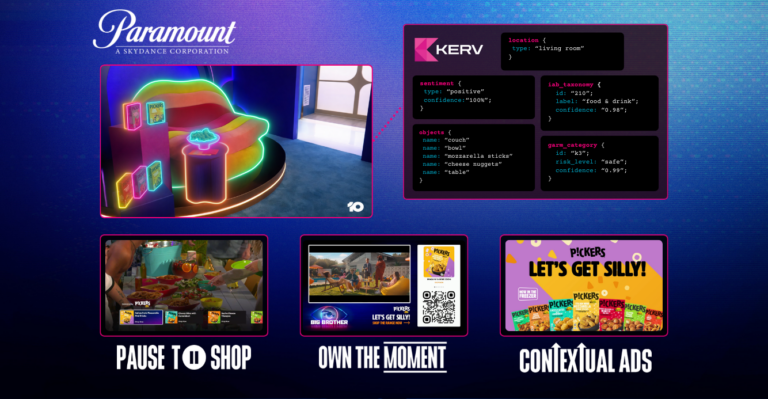
BUILDING A SHOPPABLE, ATTENTION-READY CTV OFFER: THE BIG BROTHER CONTEXTUAL CASE
26. 3. 2026In 2025, Paramount Australia, in partnership with FreeWheel and egta, hosted a webinar outlining a forward-looking…

GLOBO CREATES HOME SCREEN PROMINENCE FOR FREE-TO-AIR TV ON SMART TVS
26. 2. 2026Globo, Brazil’s largest commercial TV group, is rolling out DTV+, a next-generation free-to-air TV standard designed…

THE VISUAL TRANSFER EFFECT: HOW SOUND BUILDS BRANDS
24. 2. 2026In collaboration with neuro-marketing agency Unravel, Talpa Media has produced the scientific proof that audio does…

RMB TURNS QR CODE VOTING INTO A SHARED VIEWING MOMENT THAT STRENGTHS BRAND IMAGE FOR SPRITE AND DELI CHOC
24. 2. 2026Campaign objectives The chocolate snack Deli Choc and soft drink Sprite brands worked with RMB to…