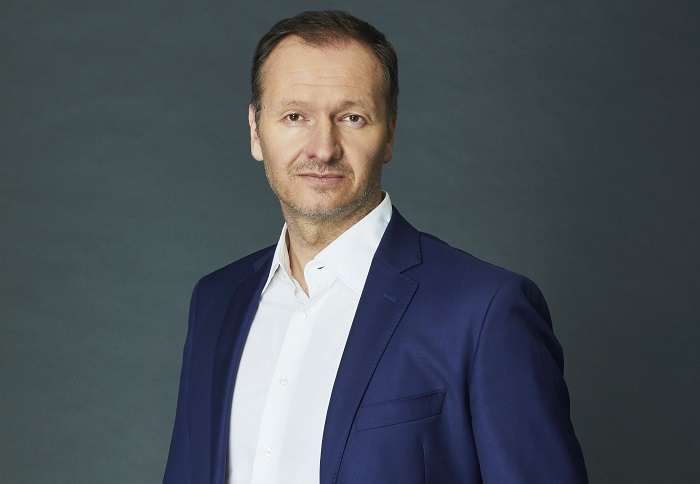
Štěpán Wolde, Óčko, AKTV

WOLDE: TOTAL VIDEO WINS, LIVE TV HAS THE LARGEST SHARE

19. 1. 2021 There is no division between online and broadcast TV video; platforms support each other and the so-called total video wins today, says Štěpán Wolde.


WHY GETTING ON TV IS YOUR BEST MARKETING BET FOR 2021

17. 1. 2021 How’s your TV watch time been? Don’t sugarcoat it - you know it’s been more than usual. With nothing to go out and do and all the reasons in the world to stay home, our TVs have kept us more engaged than ever. As entrepreneurs are constantly looking for opportunities in the midst of confusion and crazy times, some have been taking full advantage of the surge in TV watch hours.


VIDEO ADVERTISING 2021-2024

14. 1. 2021 The video ad world will change more in the next three years than it has in the past 60. What was built originally as a brand-building channel is quickly evolving into one of the most important customer acquisition and performance channels available to marketers.


TV DELIVERED COMPARABLE GRPS LAST YEAR

13. 1. 2021 Although the pandemic has affected the volume of TV advertising GRPs namely in spring, in total, TV delivered GRPs comparable to the previous year.


ADDRESSABLE TV ADVERTISING: ENHANCING BRAND BUILDING WITH THE POWER OF RELEVANCE

12. 1. 2021 With 2021 around the corner, marketers and advertisers will be reviewing their budget and mix of spend with increased scrutiny. It is a time for, albeit busy, reflection. TV and SVOD services have seen a surge in screen time throughout the various lockdowns and are looking for ways to continue to engage viewers. However, TV advertising typically involves a big investment in creative and the impact of the campaign can often take time to measure. So where does TV advertising fit into 2021 planning?


UNILEVER DEEMS TV ‘VERY COST EFFECTIVE’ ALONGSIDE ADVANCED CAPABILITIES

17. 12. 2020 Television is a highly cost effective media for large advertisers, Unilever’s global media operations director has said, with new developments in advanced TV further increasing the value of the channel.


TRADITIONAL TV ADVERTISING IS GROWING – UNLIKE NEWSPAPERS

29. 11. 2020 A mistake is often made by the Silicon Valley “insiders” when they lump all traditional media into one big (failing) bucket. Newspaper advertising in print has been decimated, but TV advertising has actually held up quite well, even during the pandemic. While we are all watching a lot of Netflix (NFLX -0.6%), advertisers know that millions of consumers are watching traditional broadcast and cable TV every hour of every day.


RECORD TV RATING IN OCTOBER, TERRESTRIAL RECEPTION PREVAILS

22. 11. 2020 In terms of TV viewing, October 2020 has been the strongest of all months of October since the start of people meter measuring in 1997.


The World TV Day

WORLD TELEVISION DAY CELEBRATES A TRUTH THAT HOLDS AROUND THE GLOBE: TV MAKES A DIFFERENCE

21. 11. 2020 TV companies around the world celebrate World Television Day on 21 November to remind us that TV makes a difference in people’s lives. As part of the annual United Nations initiative, a 30 second-spot will be broadcast on-air and shared online worldwide. The clip will be adapted and translated into many languages. Putting the spotlight on society For its 24th edition, World Television Day celebrates a truth that holds around the globe: TV makes a difference! Our medium has made and will continue to make a difference in society by putting the spotlight on racial and social injustice, hate speech, the pressing climate issues and the support TV has provided to people and businesses throughout the continuing COVID crisis. “While circumstances kept us apart this year, TV has brought us together. TV is and always has been a social glue. As viewing rocketed, broadcasters the world over reacted to the unique circumstances nimbly and with great creativity to ensure that TV was there for us all as a source of trusted information, comforting distraction, and much-needed escapism,” asserts Lindsey Clay, President of the Global TV Group and CEO of Thinkbox. “This pandemic demonstrates like never before the role of television to support society and democracy. Throughout these difficult months, TV is there to care. Care for the provision of editorially responsible trusted news. Care for the distribution of entertainment to bring light in times of darkness. Care for preserving variety and cultural diversity in the media landscape. All in all, TV is and will continue to be a true beacon of resistance against the Coronavirus”, proclaims Guillaume de Posch, President of the Association of Commercial Television in Europe. “The past year, TV has continued to uphold its long tradition of addressing the critical issues in our global community. It brings our attention to social injustice, sheds a neutral light on society’s mishaps, helps relieve the strain of an unprecedented era giving us a hopeful outlook on the future. World TV Day is an opportunity for us all to pay tribute to the many professionals who make the magic happen both on screen and from behind the scene. We invite everyone to once again celebrate our medium around the world,” says Laurent Bliaut, President of egta and Deputy General Director, Marketing and R&D, TF1 Publicité “At the time of COVID-19, Television has never been so present and important. Broadcasters have a dual responsibility to inform and to connect people by sharing positive and verified stories about building back better and greener. Thank you to the TV industry for making a difference,” says Caroline Petit, Deputy Director United Nations Regional Information Centre for Europe (UNRIC).


What is new? Family at home watching TV.

ASA DATA REVEALS UNPRECEDENTED LOCKDOWN BOOST TO TV AD EXPOSURE

9. 10. 2020 A lockdown fuelled television boom has brought an unprecedented boost to TV ad exposure according to the Advertising Standards Authority (ASA). The regulators figures – sourced from the Broadcasters Audience Research Board (BARB) – reflect the rapid evolution of advertising and advertisers to respond to our needs and wants in an era of public health messaging.


AKTV konference 2018

RITSON: DON’T STOP CAMPAIGNS IN RECESSION, YOU WILL INCREASE MARKET SHARE

23. 9. 2020 It is advisable to retain communication activity, especially in a recession, as it is important for a brand’s market share. This is a message conveyed to marketers by Mark Ritson.


ADVERTISERS TAKE MAJOR STEP TOWARDS ‘HOLY GRAIL’ OF CROSS-MEDIA MEASUREMENT

17. 9. 2020 A new framework aimed at giving advertisers a far greater understanding of their ads’ reach and frequency across all media is to be road-tested in the US and UK, the World Federation of Advertisers (WFA) has said.


THE GLOBAL PROOF OF TV’S POWER AND POPULARITY

5. 8. 2020 While our way of life in the UK seems miles away from the sunny shores of Spain, the vibrancy of Colombia or Santa’s Northern Lights in Finland, how the world watches its TV is remarkably similar. Despite local difference in video offerings and tech capabilities, the bottom line is that the world loves TV.


IN UNCERTAIN TIMES BE TV CERTAIN

21. 7. 2020 So far 2020 (not only in Australia) has brought uncertainty upon us. Bushfires, a pandemic, and then a recession. As marketers we do the best we can with the information we have available, making choices to deliver growth for our brands.


EUROPEAN BROADCASTERS TARGETING THE YOUNG WITH VOD

20. 7. 2020 European broadcasters are no longer playing catch up on first run video on demand content.


VIDEO ADVERTISING IMPACT STUDY – KEY FINDINGS

1. 7. 2020 What are the fundamental mechanics of TV and video advertising? How they works? Lets summarize it: How video works The Media Equivalence Study provides evidence of the power of video across all channels – especially when it comes to advertising recall indicators. Video advertising has a stronger impact on television than on YouTube and Facebook. Two consecutive contacts within a short time period double unaided advertising recall. This applies to TV, YouTube and Facebook. Moreover, online video platforms benefit from the combination with TV. Two TV contacts have the highest impact across all indicators. Mixed contacts with TV have stronger impacts than two contacts on YouTube or Facebook. How video is perceived Advertising achieves the highest visual attention in lean-back mode. In lean-forward mode, users are less likely to pay attention to it and more frequently click or scroll away. TV watching takes place in a relaxed atmosphere. Advertising is part of the TV experience. Content and advertising achieve similar levels of activation and emotion. This facilitates advertising effectiveness. While using editorial content in leanforward mode, high levels of activation and emotionality are attained. With advertising, however, both these qualities fall off abruptly, which has an adverse effect on its processing. The level of activation also fluctuates strongly during content use. How video is seen The Deep Insights Study confirms the stable activation of viewers during TV usage. Many people use TV as a motivator when dealing with tiresome obligations, to watch big TV events with excitement, and as a reward and a way to relax in lean-back mode after their work is done. In these moods, those surveyed accepted TV advertising to a great extent. Advertising flows along with the program and is a learned and integral part of the TV experience. YouTube users are looking for everyday help or emotional relief. They want to find a quick explanation of how something works (tutorials) or they want to briefly escape their current situation, for instance by watching a funny video. They are looking for a cognitive or emotional shortcut. When viewers are taking a shortcut, advertising forces them to take a detour. In these usage states, YouTube users consider advertising to be disruptive. This reinforces the findings of the InHome Video Study, which showed an abrupt loss of activation as soon as advertising started. How video sells The experiment confirms the strong impact of video advertising. Both online video and TV have a considerable influence on recall. However, television has stronger branding effects. Both media increase the sales of the advertised products. Yet, the impact of television advertising is many times higher. This particularly applies to the launch product which was seeking large and diverse audiences.


PEOPLEMETER CELEBRATES: BOXES HAVE BEEN MEASURING WHAT CZECHS ARE LOOKING AT FOR ALMOST 25 YEARS!

23. 6. 2020 The measurement of TV viewership using peoplemeters is celebrating 23 years in the Czech Republic. Thanks to a small device connected to the TV, viewers can tell TV stations what programmes they want to watch.


GEN Z ACQUIRES A TV HABIT

19. 6. 2020 Gen Z is typically less engaged with traditional media, but COVID-19 is drawing a younger audience to TV and is likely to change their media consumption habits permanently.