
Most-read topics:
all GroupM VOD creativity efficiency aktv TV Nova TV Prima linear television attention AI QR
CHRISTMAS SPECIAL: THE BEST IN CHRISTMAS ADS OR THE MAGICAL ELIXIR OF FESTIVE EMOTIONS
27. 11. 2023 | 6 min read The Christmas atmosphere is unique and irresistible, deeply tied to powerful emotions. People are eager to open their hearts - and wallets -while searching for the most beautiful gifts for their loved ones. Companies that strike an emotional chord through their Christmas campaigns have wide-open doors to viewers and thus, potential customers. Our Christmas series of articles will explore various highlights and “bests” of Christmas TV ads.

HBBTV HAS A FUTURE. ITS BENEFITS ARE APPRECIATED BY VIEWERS AND ADVERTISERS ALIKE
27. 11. 2023 | 7 min read More than 20 years have passed since the birth of HbbTV. This technology combining broadcast TV and internet services has opened up a new world for viewers and advertisers, one that continues to evolve and improve. The interactivity that hybrid broadcasting technology puts in the hands of people in front of TV screens has elevated the possibilities of TV advertising to a higher level.

ANGLO-AMERICAN TRADITION WITH GLOBAL ADVERTISING REACH OR HALLOWEEN IS ROUND THE CORNER
31. 10. 2023 | 13 min read Preparations for Halloween are at their peak. And not just in the United States where this holiday is at home. Before trick-or-treaters hit the streets, the spooky season is making its presence known in the marketing world. Every year, companies race to see who can come up with the most original campaign. Halloween has been a traditional marketing domain for years, which makes it more and more difficult for brands every year. It is therefore appropriate to recall what has already been here in the past and worked well enough to build on. While you probably won’t shudder at most of these commercials, you would certainly be shaken by the sheer amount of brilliant creativity associated with this holiday! General Mills‘ Monster Cereals (1971-1987) Halloween is an essential part of American pop culture. In our country, it is more of an adopted tradition related to the marketing of specific brands and in this context, to the advancing globalisation. In the USA we encounter a number of icons that are quite closely linked to this spooky holiday, and it is therefore not surprising that they have appeared repeatedly in TV commercials since time immemorial. Monster Cereals are breakfast cereals that are not normally sold anymore. But they always appear on store shelves during the Halloween season, and for good reason. There are several lines, and each has its own mascot. These are animated parodies of well-known horror characters. For example, Count Chocula can be none other than the eponymous Count Dracula, while the stitched-together giant Franken-Berry is a fruity paraphrase of the famous monster Dr. Frankenstein. The Boo-Berry monster reminds many of Casper the ghost or any other inhabitants of the ectoplasmic world. In short, there are a whole host of them and for many decades Monster Cereals have been intrinsically linked to Halloween celebrations. And since there have been many more of them over the years, you can still count on cereals with Count Chocula, Franken-Berry or Boo-Berry to be reliably sold out on the eve of the Day of the Dead.
LAW OR ETHICS? ADVERTISING BENEFITS FROM BOTH FORMS OF REGULATION SEAMLESSLY BUILDING ON EACH OTHER
5. 10. 2023 | 16 min read Many marketers come to a crossroads in their professional career where they have to evaluate whether their creative idea is suitable for public presentation or whether it is unnecessarily teetering on the edge of ethics and good taste. This is a decision on which the future of the promoted brand may depend, so it is 100% advisable to think twice. Fortunately, there are imaginary directives that roughly outline what is allowed and what is not. Generally speaking, this is the concept of ethical marketing, but it needs to be evaluated in some way both by states and by business and industry players. The Czech republic is no exception to this and advertising is thus limited by boundaries originating in public and private space. Let’s learn a lesson from the violation of the code of ethical advertising, taking a look at some of the spots that have been banned from the airwaves by the advertising council for various reasons. And let everyone get an idea of the concept of advertising that is already teetering on the imaginary edge. ARE WE LIVING IN THE ERA OF ETHICAL MARKETING? In the past, the issue of morality and ethics has led to the emergence of an industry with a specific focus - the so-called ethical marketing. The main idea is based on the simple premise that reputation is one of the basic intangible assets available to companies. Accordingly, great demands are placed on marketers, as they must bear in mind not only the protection of their own brand but also that of consumers, specific categories such as children or ethnic minorities, as well as society as a whole. Simply put, they take responsibility for ensuring that the brand they represent communicates honestly, accurately and with respect for human individuality and dignity.

THE GRAND FINALE OF THE ROUND-THE-WORLD TV ADVERTISING JOURNEY: WORLD RECORDS AND CURIOSITIES
14. 9. 2023 | 8 min read Our summer trip around the world in search of TV advertising is over. Let’s take a look at the ads that have earned a spot in the Guinness World Records or are so peculiar that they have crossed not only country borders but also the earth’s borders. Yes, you guessed right, we will take a look into space. THE FIRST TV AD IN THE WORLD WITH A CZECH FOOTPRINT We have already written about the world’s first television advertisement for Bulova watches, which aired on 1 July 1941 on WBNT, in an article about TV advertising in the USA. However, you may not know that Czechia, or rather a Czech native, has a share in this first spot. In 1875, during the golden era of industrial development in America, a Czech immigrant Josef Bulova (born in Louny) opened a jewellery shop in the centre of New York. Soon after, he began to produce his own watches with his name on the dial. And it was at that moment that the history of a global brand started. Bulova’s watches not only made it to the moon but were also the first product ever to be featured in a television ad.
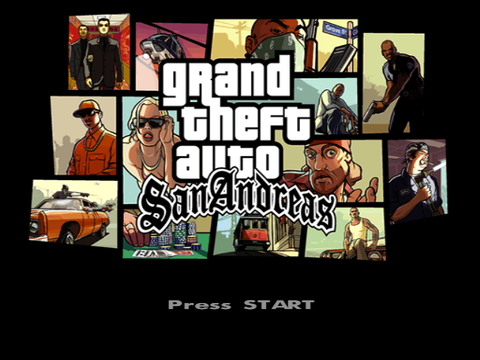
STARRING A BANDICOOT, A PLUMBER, A DECEASED FOOTBALLER OR AN ANONYMOUS HERO. VIDEO GAMES AND TELEVISION ADVERTISING HAVE EXISTED HAND IN HAND FOR YEARS
7. 9. 2023 | 17 min read It’s time to flip the calendar to September. This means both the children returning to school and settling into a standard work setup after a perhaps more relaxed holiday regime. But at the same time, the main video game season traditionally kicks off - and 2023 promises to be the most packed since the pre-covid years. That means we will be seeing a hefty dose of marketing presentation, too. When video games are concerned, it goes without saying that originality, freshness, and creativity are what matters most in related campaigns and ads. This is not just theory but practice, which many studies have confirmed for decades. What games have been preceded by a launch of such magnitude that brands in other industries can only quietly envy them? Take a look at a selection of the top TV ads from this specific industry. MORTAL KOMBAT – MORTAL MONDAY (1992) Talking about video game history in the context of games does not make much sense in the age of remasters and remakes. On 14 September (a date specially chosen to reflect the release date of the original MK), we will see the remake of Mortal Kombat, the game that helped define the popular fighting arcade genre in the 1990s and gave birth to a franchise that, alongside Tekken, which was based on similar principles, continues to set the course for this type of games. No one doubts that the anticipated remake will be as fatal as the original 1992 game. The original marketing is to some extent followed by the one from 2023, but back then the developers from Midway Games did without the star cast of Dave Bautista in the lead role. The original ad depicts a battle frenzy in the streets on a normal Monday. Thanks to this presentation, the Mortal Kombat battle cry has caught on and was enshrined forever in the video game hall of fame. But what is important is that the entire presentation feels triumphant - even though at the time, no one yet knew how substantial and influential MK would become. But this lack of self-awareness also reflects to some extent the identity of the game itself, including many of its protagonists. And it is a foundation from which the series has not budged an inch to date.

TV ADVERTISING IN THE PHILIPPINES: CATCHY SONGS, HUMOUR AND STORIES REFLECTING THE LIVES OF ISLANDERS
6. 9. 2023 | 8 min read The Philippine advertising scene is as diverse as the 7,641 islands that make up the archipelago. There are more than 80 different - still living - languages and dialects. The market is a mix of diverse cultures influenced by traditional and western practices, making advertising in the Philippines a truly unique adventure. Welcome to the colourful realm of television advertising in the Philippines. A BIT OF HISTORY Television was introduced in the Philippines by Judge Antonio Quirino, younger brother of former President Elpidio Quirino, on 23 October 1953. Imported television advertisements were used until 1960. The first local television advert aired in 1960 was for Tide washing powder. In 1966, when Philippine television switched from black-and-white to colour, the first colour television ad also appeared, with the first advertiser being Colgate-Palmolive.

TV ADVERTISING IN BRAZIL: SEDUCTIVE FEMALE BODIES, DIVINE PELÉ, AND CARNIVAL IN A HIGHLY CREATIVE PACKAGE
29. 8. 2023 | 10 min read Brazilians are creative, sensual, musical and are known for their good mood. No wonder their love of life and cheerful nature are mirrored in their advertisements. They are a reflection of the local people, their behaviour and their lives.

MIRACLES HAPPEN WHEN YOU BELIEVE IN YOURSELF. THAT GOES DOUBLE FOR BARBIE FOR OVER HALF A CENTURY
24. 8. 2023 | 16 min read The summer of 2023 is marked by "pink madness". Thanks to a hugely successful blockbuster movie, Barbie doll is making a comeback with all the pomp and circumstance. But the movie is not just a fairy tale with a message for adults. From the first to the last minute, Barbie is filled with references to the real history of the Barbie product line and its creators at the multinational toy corporation Mattel. A closer look at the mark Barbie has left in the world of marketing and television advertising for more than 60 years makes it clear that Barbie is a pop culture phenomenon that is also an integral part of the mainly American cultural identity. What makes the story of Barbie marketing so unique and worthy of emulation?

SWEDISH TV ADVERTISING: THE LONGEST ADVERTISING SERIES AND A FOCUS ON GENDER EQUALITY AND CHILD PROTECTION
20. 8. 2023 | 10 min read Where can you find an alcohol ad that discourages drinking? In sweden, of course! This country is just perfectly doing things its own way. Viewers had to wait a long time for tv advertising. But the swedes have quickly caught up and their ads are among the world’s best. The beginnings of TV broadcasting in Sweden and delayed TV advertising The birth of television broadcasting in Sweden dates back to 1956, when the first television station TV1 was established. In 1966, the first testing colour broadcasts were run, and in 1970 regular colour broadcasting was launched. For a long time, there was only one television channel. TV2 was launched in December 1969, and only a few months later broadcasting in colour started. The full-screen commercial TV4 was launched in 1992.

TELEVISION ADVERTISING IN MALAYSIA: A SIMPLE PRESENTATION BUT A POWERFUL, EMOTIONAL STORY
15. 8. 2023 | 11 min read Malaysia, with its multicultural environment and ethnic diversity, is a uniquely cosmopolitan country that manages to bring together diverse communities through shared forms of art and culture. All Malaysians place great emphasis on the values associated with the Malaysian lifestyle and therefore celebrate all festivals exuberantly. For example, the Hari Raya holiday could easily be compared with the American Super Bowl in terms of television advertising. Those who do not advertise during Hari Raya seem to be invisible. History of television broadcasting in Malaysia The television industry is a multi-billion-dollar business in Malaysia. Television has long been one of the most important media there. Malaysian television broadcasting was first launched on 28 December 1963. It was a single, black-and-white network known as Rangkaian Pertama (Channel One in English). Six years later, at the end of 1969, Rangkaian Dua (Channel Two in English) was launched, providing information, entertainment, and education.

PRINCE HARRY, JAMES BOND, AND PADDINGTON BEAR. THEY WERE ALL LUCKY ENOUGH TO APPEAR IN TV SPOTS ALONGSIDE ELIZABETH II
10. 8. 2023 | 15 min read When the British queen Elizabeth II died last autumn, it affected the whole world. Both those who loved the queen and those who see the British monarchy as a relic of the 19th century. To some extent, this is due to the fact that the queen and her family are not only political actors but also (and perhaps above all) part of global pop culture. Elizabeth II was also aware of this specific role during her lifetime, and she did not hesitate to engage in several marketing activities to promote events that were important to Great Britain. However, marketing and the british royal family are not exactly concepts that necessarily go hand in hand. If you are a traditional manufacturing or distribution company, you are probably not going to get the official royal stamp in your presentation. But there are options - official ones and less so. But you must always remember that you are teetering on the edge, with only one thing setting the basic direction - strict rules. RULES, RULES, AND MORE RULES First of all, it is good to remember that even a simple mention of any member of the royal family or a significant event is not a commonplace for marketers. Of course, many of them would like to add a touch of formality to their product, and references to the ruling family or symbols of the British monarchy are more suited to this than anything else. But as has been said, it is not that simple - no member of the royal family can be mentioned or shown in any marketing campaign without prior approval. The only exceptions to this are incidental mentions that are not directly related to the product being advertised and mentions in books, articles, films or other sources associated with that person. But even this is not a 100% rule.

TV ADVERTISING IN NEW ZEALAND: EMPHASIS ON NATIONAL IDENTITY AND PROMOTION OF MAORI CULTURE
9. 8. 2023 | 12 min read Would you like English or Maori? In a country with the Maori name Aotearoa, which means “land of the long white cloud”, you can choose. New Zealand’s ads focus on national identity, are heartfelt and reflect the kiwis, Their character, and their unique world.

TV ADVERTISING IN INDIA: BOLLYWOOD CELEBRITIES EARN MORE FROM ADVERTISING THAN FROM FILMING
3. 8. 2023 | 9 min read The world’s second largest TV market. A country where advertising is based on celebrities, who are looked up to as deities. Where the most common language is English, but many population groups don’t speak it. Where, despite the prevalence of vegetarians and sanctity of the cow, the McDonald’s brand has caught on. A country where the chosen ones live in modern western-style residencies, brimming with luxury, but those born in the “wrong” caste survive in shacks in abject poverty. This is India, a land of contrasts. Let’s see what specifics define Indian advertising. IN THE BEGINNING, THERE WAS CLOTHING The very first black and white television advertisement in India was aired on January 1, 1976 (some sources say 1978) and it was for Gwalior Suitings garments. Unfortunately, the footage is not available. However, this is not true of the first colour advertisement. The colour spot, which lasted a full 100 seconds, is highly reminiscent of a Bond parody. It concentrates everything you might think of in connection with an action movie (in this case, an ad) - knife throwing, leopard, python, swords, shooting, murder, kidnapping, helicopter, sensuality, suspense, speedboat. It would probably make Agent 007's own chin drop:

TV ADVERTISING IN JAPAN: ECCENTRIC SPOTS FULL OF CELEBRITIES, ANIME AND FANTASY – COLOURFUL, CRAZY, FUN – AND COMPLETELY DIFFERENT
27. 7. 2023 | 9 min read Japanese TV commercials are so quirky they are a world unto themselves. And they’re so famous that they’ve even been parodied in the Simpsons series. But as well as being noisy and colorful, they also offer a glimpse into the Japanese soul. They reflect traditional Japanese culture and a deep respect for consumers.
SPORT AND SOCIAL ISSUES: TV ADVERTISING IN GERMANY TAKES A MORE SERIOUS TURN
24. 7. 2023 | 10 min read Not only discipline and organization, but also a specific humor, a love of sport and, above all, an intrinsic need to solve social problems. All of this is reflected in the German ads, which react very sensitively and emotionally to the current difficult situation and interpersonal relationships.

THE “MAPPING THE IMPACT” STUDY REVEALED A SIGNIFICANT LINK BETWEEN CONTEXT, CREATIVE ELEMENTS AND THE EFFECT OF TV ADVERTISING
14. 7. 2023 | 8 min read German company Screenforce has recently revealed the results of its new study “Mapping the Impact”. The research looked at whether the situation the viewer is currently in and the elements used in an ad spot can have an impact on the effect of a TV ad. The study came to a clear conclusion: there are large differences in the perception of advertising during different phases of the day, which offers advertisers and media agencies the chance to optimally design and plan ads using appropriate creative elements and thus achieve a higher impact and memorability with tv viewers.

THE DRIEST HUMOR, THE MOST TOUCHING STORIES AND THE BEST CHRISTMAS COMMERCIALS. THAT’S TV ADVERTISING IN THE UK
12. 7. 2023 | 9 min read UK TV spots are winning awards around the worlds. And rightfully so. British creatives are pouring out some interesting ideas and are able to play both the poignant and the humorous notes. This is evidenced by the large number of awards that British brands took home from this year’s Cannes Lions 2023 International Festival of Creativity.