
Most-read topics:
all GroupM VOD creativity efficiency aktv TV Nova TV Prima linear television attention AI QR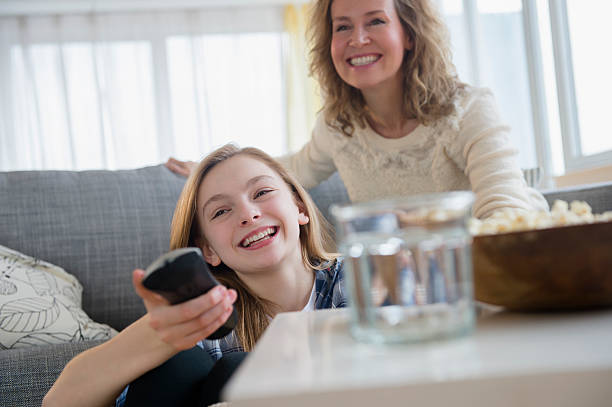
TELEVISION IS STILL NUMBER ONE. EVEN TODAY’S INTERNET SAVVY CHILDREN PREFER TV
9. 4. 2018 | 2 min read Even though children mostly moved from the television screen to a computer monitor or smartphone, television is still number one for them. Research shows that even today’s children still prefer TV over other types of media. Lifestyle Survey of Children conducted by the Association of Television Organisations (ATO) shows that television is still a number one daily (or almost daily) media activity for almost three-quarters of Czech children aged 4-14 years. The frequency of children’s TV consumption even surpasses their watching Internet content or playing games. 71% of children watch live television broadcasts on a regular basis. Another 13% of children turn on the TV at least once a week. Number two media activity for children is watching videos on YouTube and similar sites. 30% of children watch them daily or almost daily and 38% of children watch them at least once a week. It is similar to listening to music, songs and radio. However, compared to watching television, more children do these activities on a daily basis (37%). One-quarter of children claim that they listen to music once a week. This activity is followed by reading books, magazines and comics, either daily (26% of children) or once a week (35% of children). Playing Games and Time Spent in Front of TV The fifth most common media activity for children is playing electronic games. One-third of children spend their time playing games daily and a little more than one-fifth of children play games at least once a week. As to the time, children usually spend on the media per day, the youngest children, aged four to six years, spend most of their time watching TV. Older children, on the other hand, prefer watching online videos or playing electronic games. According to the ATO Lifestyle Survey of Children, compared to younger children, older children also usually sleep less during the day, spend less time with their parents and more time at school. They have more free time, especially at weekends, and therefore spend more time using electronic devices (computers, notebooks, smartphones or tablets). The research was conducted last year and 531 children participated in it. Source: iDNES.cz

PROFIT ABILITY: THE BUSINESS CASE FOR ADVERTISING
22. 3. 2018 | 17 min read ‘Profit Ability’ has, for the first time, quantified the total profit generated by different forms of advertising in the UK, to show what they deliver to the bottom line. It set out to examine and benchmark all media’s profit-generating performance, with a particular emphasis on uncovering TV advertising’s effects. In brief What emerges is a compelling case for re-thinking how advertising investmZobrazit příspěvekent should be approached and hard evidence of what businesses can trust to deliver growth. Following a profit-damaging drift to short-termism in marketing, ‘Profit Ability’ swings the spotlight back on to creating shareholder value. It provides industry benchmarks, based on empirical evidence across a substantial range of advertisers, for what businesses can expect advertising to deliver. It shows that advertising – TV in particular – should be used as a powerful investment for growth.

WE WATCH MORE TV AND IN BETTER QUALITY
15. 3. 2018 | 2 min read 95% of Czech households currently own a television. Moreover, the time we spend in front of the TV is constantly growing. Czech people aged 15 years or more watch TV for 3 hours and 45 minutes a day on average, which is 31 minutes more than ten years ago. They also watch TV broadcasts in better quality: almost two thirds of households watch TV in HD quality. Households are more often turning into smart households as people own increasingly more notebooks, smartphones and tablets and commonly use them to consume TV video content. The data regarding the use of technology in Czech households come from the Continual Survey 2017, which was conducted by Nielsen Admosphere for the Association of Television Organisations. The survey is an integral part of the Project of Crossplatform Electronic Measurement and Content Consumption in the Czech Republic. The survey was conducted in 2017 and 27,506 respondents aged 15 years or more from 19,038 households participated in it.

ADVERTISING ON TV GETS MORE ATTENTION THAN ON YT OR FB
6. 2. 2018 | 2 min read This is based on research that has found a correlation between the attention paid to advertising and its impact on the sale of goods.
TELEVISION ADS OUTPERFORM YOUTUBE AND FACEBOOK ADS
6. 2. 2018 | 2 min read This is the result of a research that focused on the interconnection between the attention that people pay to advertisements and the influence it has on the sales of goods. According to the research conducted by Australian professor Karen Nelson-Field, television ads command more attention than YouTube or Facebook ads. The professor introduced her research at a meeting organized by the Association of Commercial Television (AKTV) in Prague. The research showed that 58% of people actively watched an average ad second on the television screen, while only 31% of people did so on YouTube and only 4% on Facebook. "Facebook is a rather passive platform, the primary focus being on friends, not advertising. But passive consumers of ads are also somehow significant," she said. Karen Nelson-Field also mentioned that attention is a key factor influencing product selection and that it directly impacts sales. "There is a strong interdependence between the attention paid to advertising and the volume of sales. The probability of people making a purchase when exposed to a certain ad increased by 17% when compared to people who have not seen the ad," she said. Therefore, each video has a positive effect on the sale of goods. The comparison of the above-mentioned platforms (TV, YouTube and Facebook) yet again demonstrates that advertising on the television screen achieved the best results. Based on the research, the attention paid to ads is highly correlated to screen coverage (the percentage of a screen occupied by an ad) on any platform. Television advertisements, at 100% screen coverage, provide three times more screen coverage than YouTube and ten times more screen coverage than Facebook. Ad visibility is thus directly proportional to attention that people pay to ads, which in turn impacts sales. The research claims that ad visibility is more important than the time people spend watching a particular ad.

WHY TV REMAINS THE WORLD’S MOST EFFECTIVE ADVERTISING
20. 11. 2017 | 11 min read On the occasion of World Television Day, TV broadcasters and trade bodies from around the world have joined together for the first time to release global figures demonstrating TV’s resilience and strength as an advertising medium, with the recently formed Global TV Group a new unified voice for TV.