
Most-read topics:
all GroupM VOD creativity efficiency aktv TV Nova TV Prima linear television attention AI QR
THE AD THAT GETS YOU ON THE ROAD IS THE RIGHT ONE. THE PRIMARY REQUIREMENT IS ORIGINALITY
6. 8. 2024 | 9 min read It is not easy to create an advertisement that gets people up from their chairs, makes them head to the nearest travel agency and book a trip, or keeps them glued to their laptops where they spend hours looking for accommodation and trips in the advertised destination. The ability to stand out amongst a plethora of adverts teeming with stunning shots of dreamy landscapes, showcasing fantastic sights, and offering enticing adventures requires the utmost creativity and originality.

FILM ANNIVERSARY: ADVERTISERS TAKING INSPIRATION FROM THE MATRIX WILL DODGE BULLETS AS WELL
5. 8. 2024 | 6 min read Keanu Reeves dodging bullets is just one of the scenes that have inspired many creatives in the film and media industry. The Matrix is a phenomenon that can’t be easily topped. So, it is no wonder that ideas from the film and its protagonists have appeared in television ads. 5 August marks the anniversary of the Czech premiere of the first part of this fantastic sci-fi tetralogy, which captivated the masses around the world. Let’s take a look at a few TV ads based on The Matrix.

PREPARATIONS ARE DRAWING TO A CLOSE. THE SUMMER OLYMPIC GAMES ARE ALWAYS A CHALLENGE NOT ONLY FOR THE ATHLETES BUT ALSO FOR THE MARKETING DEPARTMENTS OF THE PARTNERS
19. 7. 2024 | 13 min read We are just days away from the start of the most spectacular sporting event of this year. The 2024 Summer Olympics in Paris are just around the corner and preparations are reaching their peak on all fronts. Fans are already studying the schedule, searching for the streaming platforms that will offer them the best coverage of each event. The athletes go into the finals after often more than a year of intensive preparation. Organisers are making the final touches and reassuring the public that they have done their utmost in terms of security to ensure the smooth running of the Games. And what about the Olympic team partners? Their marketing departments are racing to see who can put together the most creative campaign full of hope, motivation, and positive sportsmanship with the help of national heroes. The same applies to the Czech Olympic Committee and its most important sponsors. How have they managed this discipline during the past Olympics and what have they prepared for us this year? Czech Olympic Committee - Living London like John Cleese (2012) Traditionally, the Czech Olympic Committee, as the main carrier of the Olympic message in the country, airs its TV advertisements in the run-up to the Olympics. In 2012, it managed to engage a truly exclusive partner – British actor John Cleese, best known as a former member of the legendary comedy group Monty Python, and neurotic hotel manager Basil Fawlty from the Britcom Fawlty Towers. The campaign featured several spots in which Cleese takes the role of the viewer’s guide to Olympic and traditional London. Of course, he provides basic information on red phone booths, the five o’clock tea tradition, and a basic English language lesson. The COC has launched a total of ten spots featuring John Cleese, and interestingly, the actor has made one condition for his participation – that he will be actively involved in the scripting of all the adverts. The result is a unique campaign with an international star actor who excels in the art of dry British humour, which would be difficult to imitate by an exclusively Czech creative team. Czech fans couldn’t have asked for a better invitation to London.

FILM FESTIVAL TRAILERS TAKE A LOT OF SKILL. WHAT MAKES THE RECIPE FROM KARLOVY VARY GLOBALLY UNIQUE?
27. 6. 2024 | 12 min read Anyone who has ever visited Karlovy Vary for the International Film Festival knows the routine. After choosing from hundreds of films and standing in an endless queue for tickets, you settle comfortably in the cinema room at Pupp or Thermal, perhaps listening to a debate with a visiting filmmaker, and looking forward to an experience that usually breaks out of the confines of the classic film mainstream. At this point, however, KVIFF will serve you an extra course – yes, you are right, it is the traditional festival trailer. And the Karlovy Vary one is quite unique from a global perspective. What exactly makes it so special and what is the practice abroad?

WHEN FAITH PRECEDES CREATIVITY: FIVE EXAMPLES OF WORLD RELIGIONS MEETING MARKETING
21. 6. 2024 | 13 min read 21 June is not only the first day of summer, it is also International Yoga Day. Yoga is seen as a priceless gift of ancient Indian tradition, embodying the unity of mind and body and the harmony between man and nature. Yoga is not only a physical exercise but also a discovery of a sense of oneness of oneself, the world, and nature. Yoga is part of an ancient practice that has its roots in Hinduism, but it is often not only Hinduism that is making its way into the modern world of advertising thanks to today’s trendy movement. In today’s article, we will therefore look at whether two diametrically opposed concepts, religion and marketing, might accidentally meet.

LIVE SPORTS BROADCASTS ATTRACT MILLIONS OF VIEWERS WORLDWIDE. THE GLOBAL POPULARITY OF ICE HOCKEY PRESENTS AN AMAZING ADVERTISING OPPORTUNITY
23. 5. 2024 | 8 min read Advertising on sports TV channels or at key events allows companies to hand their brand to a huge number of viewers on a silver platter. In addition, advertisers can be sure that ad spots will be seen by viewers who are enthusiastic and engaged with the content, reducing the likelihood of skipping or ignoring ads. Social identity Sports fans are highly engaged viewers – and this is especially true for live broadcasts. But when it comes to major sporting events, even those who normally don’t enjoy sports can’t take their eyes off the screen. During a major sporting event, such as the current World Ice Hockey Championship, the whole nation becomes a sports fan. Watching sport in large numbers creates a sense of community – and this group experience tends to be a unique experience that fulfils a deep-seated human need for belonging.

FROM SMOKE SIGNALS AND PIGEONS TO AI AND FREE STREAMING. TELECOMMUNICATIONS HAVE SHAPED THE WORLD AND SOCIETY SINCE TIME IMMEMORIAL
17. 5. 2024 | 15 min read 17 May is the date dedicated annually to World Telecommunication and Information Society Day under the auspices of the International Telecommunication Union. You may ask why something like this should be celebrated at all, but the answer is obvious. The world today is the way it is because of telecommunications, which of course has its downsides, but the positives far outweigh the negatives. You still don’t believe it? Then remember how far telecommunications have come over the ages. But you have to start many hundreds of years before Christ...

CZECHS HAVE ICE HOCKEY IN THEIR DNA. MILLIONS OF PEOPLE WATCH THE GAMES, ADVERTISERS ARE REAPING THE BENEFITS
16. 5. 2024 | 7 min read The moments when the heart of the Czech nation beats to the rhythm of the chants of the fans in the stands and the eyes cannot tear themselves away from the puck sliding down the ice are extremely emotional and unforgettable. The cries of “Goal!” rock the windowpanes in towns and villages, especially when it is the World Championship. Czechs have simply had ice hockey in their DNA since the beginning of the last century. Anyone who doesn’t have the opportunity to attend the games live is usually glued to the TV screen. It is no wonder that on every major hockey occasion, such as the ongoing World Championship, loads of hockey-themed advertisements pop up.
WHEN TRADITION AND INNOVATION GO HAND IN HAND. TEA CULTURE MARKETING HAS LONG RELIED ON BOTH TRADITIONAL ANCHORING AND POP CULTURE OVERLAP
6. 5. 2024 | 12 min read It is time to dust off your fanciest tea sets - International Tea Day is fast approaching and on 21 May 2024, the world will celebrate the cultural legacy of one of history’s greatest inventions. Tea culture varies from region to region around the world, as do preferred varieties and folk traditions. But whatever your favourite variation, the tea industry counts you in. Nowadays, it is really easy to get lost in the flood of loose, bagged, and iced teas, each with its own unique flavour and story. It is just as easy to get lost in the marketing campaigns designed to promote them, which would be a shame as there are some real gems to be found among them.

MAY THE FORCE BE WITH ADVERTISERS OR STAR WARS IN TV ADVERTISING
4. 5. 2024 | 9 min read International Star Wars Day, which is celebrated on 4 May, is irrefutable evidence of the worldwide enthusiasm, or craze, for the iconic Star Wars series. It is therefore quite understandable that the Star Wars theme was seized upon by marketers soon after its first cinema release. They unerringly sniffed out a great business opportunity. And as you can see, the popularity of the Star Wars theme in TV commercials has not waned even after more than four decades.
EASTER HUNT FOR THE BEST AD? IT PAYS MARKETERS TO RESPECT TRADITION – IDEALLY WITH AN INNOVATIVE PLOT TWIST
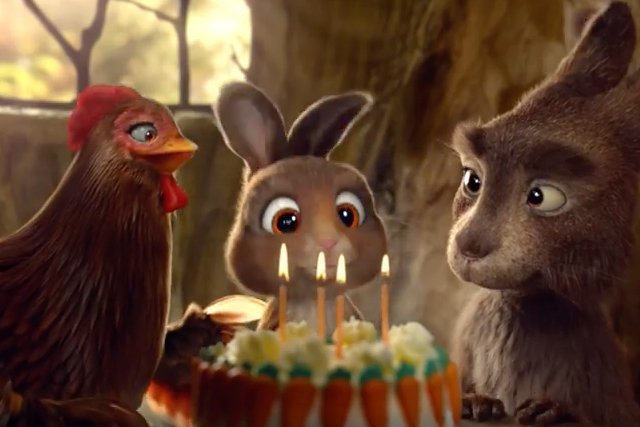
1. 4. 2024 | 12 min read Although Easter is primarily a Christian holiday, it is infallibly a huge event in the world of marketing and television advertising. In particular, retail chains, food companies and candy makers of all kinds cannot miss it. Every year they come up with a fresh batch of campaigns brimming with eggs, bunnies and every other possible symbol of the spring holidays. If you haven’t had a big dose of sweets yet, watch out! Today, you will be reading mostly about lots of chocolate. Cadbury - Clucking Bunny (1983-???) Easter is associated with traditions and the same is true of its imprint in television advertising. One such tradition was established by Cadbury almost forty years ago when the British company introduced its Easter Bunny on TV screens. The bunny brings the legendary Creme Eggs, one of the iconic products of the global chocolatier, into stores year after year. The original advert’s content was relatively simple - basically just a couple of shots of the bunny making strange noises followed by a basket full of Creme Eggs. But the most important is what came after that. Cadbury decided to build on the inconspicuous advert. In the years that followed, the firm came with the message that all other animals desperately wanted to be like the Cadbury bunny but couldn’t. The real masterstroke came later when the company decided to run a viewer poll each Easter where customers could vote on which animal would be the Easter Bunny for that year. Last year, it was a cat from Boise, Idaho, USA; this year, voters chose a raccoon. For Cadbury it means that their marketing idea still survives after many decades, getting the variations that the consumer wants and making the launch of the new spot a major Easter event.

THE FRIENDLIEST DAY OF THE YEAR IS HERE. GUINNESS BREWERY ON ST. PATRICK’S DAY PROVES TIME AND TIME AGAIN THAT EVERYONE HAS AT LEAST A DROP OF GREEN BLOOD IN THEM
17. 3. 2024 | 14 min read Your favourite pub may soon be turning green too, as 17 March is fast approaching and with it comes the exuberant celebrations of the friendliest holiday of the year, St Patrick's Day. Every year it's a big event in the marketing world too - and while typically Irish brands obviously dominate with their campaigns, it's certainly not an occasion they've usurped for themselves. In fact, a certain sense of 'Irishness' has long been defined not just by nationality, but more importantly by a specific mindset and belief in certain shared values. Yet there is one brand to which we owe the popularisation of this idea - and that is why it is impossible to celebrate St Patrick's Day without the name of one of the world's oldest breweries being mentioned at least once.

AUTHORS OF EVERYDAY LIFE. ARE THE “ANONYMOUS” CREATORS OF TV ADS GETTING THE RECOGNITION THEY DESERVE?
28. 2. 2024 | 15 min read The word "author" automatically creates a kind of aura of uniqueness around itself. However, this romantic notion is not so relevant today - an author is not just some guru who creates a work of art that future generations will learn about through textbooks. Today, virtually anyone can be an author. This is especially evident in the world of television advertising, where big names are the desired but rarer exception. Of course, the so-called auteurs offer a databank of examples of good practice, and it is appropriate to return to them, but it is not appropriate to think that the creative team of an advertising agency performs a diametrically different activity. So what is it really like with authorship and auteurism in TV advertising? How do you turn an ad into a work of authorship? In terms of craft authorship, television advertising is a discipline similar to film or television series. It differs, of course, in the subject matter and the purpose for which it is created, but the creator must go through a de facto comparable process. As a result, a television advertisement communicates its main message in the same way as any other work. And, logically, there are three main channels of communication.

AI AS A STRATEGIC WEAPON IN MARKETING AND ADVERTISING
9. 1. 2024 | 11 min read In the last year, we have seen a boom in AI capabilities and its widespread integration into practice. This opens up new perspectives for marketers, and those who jump on the AI train early will get a significant head start. This is because AI not only enables better targeting, content optimisation, more efficient processes and the analysis of huge volumes of data to identify trends and customer behaviour, but it can also enrich the actual creative process and inspire creatives. This is evidenced by the fact that many brands are already using AI to create their TV ads.

WILL 2024 BE A REVOLUTIONARY YEAR FOR MEDIA: THE DOMINANCE OF CTV, AN EARTHQUAKE IN THE MIX OF ADVERTISERS, THE THREAT OF STREAMING SERVICES AND THE DAWN OF AI’S ADVERTISING POTENTIAL
5. 1. 2024 | 12 min read The world has welcomed the year 2024 with great expectations. Without exaggeration, this year seems to have potential to be truly revolutionary in the TV broadcasting environment. At the outset, some may wonder what role artificial intelligence will play in this as it is one of the trends, although seemingly not the most important one yet. CTV is what is expected to bring the real surprise for TV marketing in 2024. What global media trends might surprise us next year? CTV becomes the centre of the marketing revolution Clearly, 2024 will be another big year for connected TV (CTV), a term that usually refers to a wide range of internet-connected smart TVs. The popularity of this phenomenon is growing massively – in the US, the number of households with CTV surpassed the number of households with conventional terrestrial TV for the first time in history last year. Data from eMarketer shows that 87% of US households use CTV, with streaming platform Netflix leading the way with more than 65 million subscribers in the US alone. Obviously, other devices such as game consoles (PlayStation, Xbox, Nintendo Switch and others) and Blu-ray players also play a role.
COCA-COLA CHERISHES ITS SANTA CLAUS. HOW DID ONE OF THE MOST INFLUENTIAL MARKETING “ALLIANCES” IN HISTORY TAKE SHAPE?
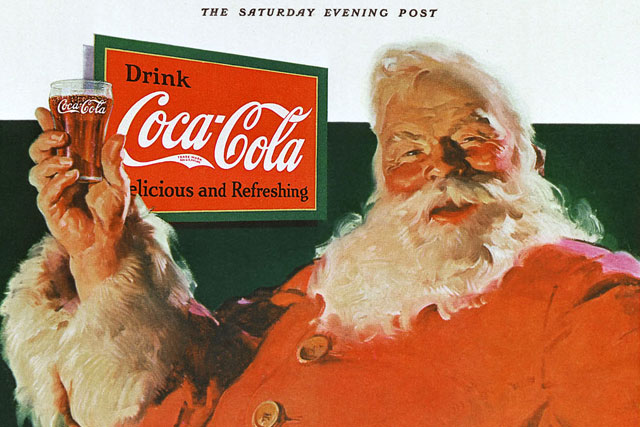
11. 12. 2023 | 15 min read Although Christmas in the Czech republic is mainly associated with the Christ child, it is not possible to ignore the global popularity of the american Father Christmas, Santa Claus. And in fact, if we take into account the historical context of shaping the image of this character, we are much closer to Santa in our culture than we are often willing to admit. But the legend of Santa Claus is first and foremost a real modern Christmas story in which the marketing of a global soft drinks company played a huge role. And although it is often said that Santa exists because of Coca-Cola, this is not entirely true. But the combination of these two unlikely allies has become so ingrained in the social consciousness over many decades that it is very hard to think of one without the other. But it hasn’t always been this way...

CHRISTMAS BY “UNUSUAL” HEROES. HOW HAS CHRISTMAS ADVERTISING MOVED FROM NOSTALGIA TO MODERNITY?
8. 12. 2023 | 16 min read Christmas advertising has changed over the years. To some extent, it could be argued that the dominance of Santa Claus and other traditional Christmas characters has ended. They have been replaced by somewhat unusual heroes who, on the contrary, we do not a priori associate with the festive season. However, they do not only bring a festive atmosphere but also complex stories in which tradition as well as important messages that are fully in line with the trends of today play a role. It is not necessarily a stolen Christmas - on the contrary, it is an annual gift of distinctive creativity. CHRISTMAS BY CHEERFUL VEGETABLES One of such “unusual heroes” is the most frequently mentioned mascot of this year’s Christmas season, which is in the spirit of the comeback of the character known as Kevin the Carrot. The character has been closely associated with the British-Irish retail chain Aldi since 2016, and given that Kevin is essentially an animated carrot, this is a very telling example of how the Christmas advertising market is shifting from the familiar and traditional to the more experimental.

ANGLO-AMERICAN TRADITION WITH GLOBAL ADVERTISING REACH OR HALLOWEEN IS ROUND THE CORNER
31. 10. 2023 | 13 min read Preparations for Halloween are at their peak. And not just in the United States where this holiday is at home. Before trick-or-treaters hit the streets, the spooky season is making its presence known in the marketing world. Every year, companies race to see who can come up with the most original campaign. Halloween has been a traditional marketing domain for years, which makes it more and more difficult for brands every year. It is therefore appropriate to recall what has already been here in the past and worked well enough to build on. While you probably won’t shudder at most of these commercials, you would certainly be shaken by the sheer amount of brilliant creativity associated with this holiday! General Mills‘ Monster Cereals (1971-1987) Halloween is an essential part of American pop culture. In our country, it is more of an adopted tradition related to the marketing of specific brands and in this context, to the advancing globalisation. In the USA we encounter a number of icons that are quite closely linked to this spooky holiday, and it is therefore not surprising that they have appeared repeatedly in TV commercials since time immemorial. Monster Cereals are breakfast cereals that are not normally sold anymore. But they always appear on store shelves during the Halloween season, and for good reason. There are several lines, and each has its own mascot. These are animated parodies of well-known horror characters. For example, Count Chocula can be none other than the eponymous Count Dracula, while the stitched-together giant Franken-Berry is a fruity paraphrase of the famous monster Dr. Frankenstein. The Boo-Berry monster reminds many of Casper the ghost or any other inhabitants of the ectoplasmic world. In short, there are a whole host of them and for many decades Monster Cereals have been intrinsically linked to Halloween celebrations. And since there have been many more of them over the years, you can still count on cereals with Count Chocula, Franken-Berry or Boo-Berry to be reliably sold out on the eve of the Day of the Dead.