
Most-read topics:
all GroupM VOD creativity efficiency aktv TV Nova TV Prima linear television attention AI QR
THE DEVIL WEARS PRADA 2: THE RETURN OF A BOX-OFFICE HIT SPARKS A WAVE OF ADVERTISING
30. 4. 2026 | 8 min read A beautiful woman, a strict boss and a look behind the scenes at a fashion magazine. The cult story from the world of haute couture is returning to cinema screens after many years, building on the legacy of the original hit The Devil Wears Prada, which defined not only how the fashion world is portrayed on film but also how luxury brands reach audiences. With the return of the iconic characters, film, fashion and marketing have once again come together to form one powerful whole. The result is a wave of advertising campaigns built on fashion aesthetics, micro-stories from the original film and the star power of the actors associated with this phenomenon.

WHO PAYS FOR YOUR FAVOURITE STORY? A HUNDRED YEARS OF ADVERTISING THAT QUIETLY BECAME PART OF THE CONTENT
22. 4. 2026 | 13 min read At first glance, it may look like an old advertising relic from the age of radio and black-and-white television. But the Brought To You By model, in which the sponsor is an acknowledged part of the content, has in fact never completely disappeared. On the contrary, it has simply evolved along with the media, audiences and the business logic of the entertainment industry. The story of BTYB is therefore not only the history of a single advertising format but also the history of the tension between creativity, commerce and the question of who actually pays for the stories we so love to watch.

LEE CRONIN’S THE MUMMY IS COMING TO CINEMAS: ANCIENT EGYPTIAN MYTHOLOGY ALSO APPEARS IN TV ADVERTISING
16. 4. 2026 | 8 min read It does not always have to be a furious mummy rising from a sarcophagus or a swarm of flesh-eating scarabs. Sometimes a hint of an ancient mystery is enough — a curse hidden in the sand, and the silhouette of a pyramid or a sphinx on the horizon. The symbolism of ancient Egypt has attracted filmmakers for decades, and it works just as reliably in advertising. Pharaohs, mummies, and forgotten tombs can create an atmosphere of adventure within seconds and send chills down the viewer’s spine. It is therefore no surprise that these motifs repeatedly appear in television campaigns for brands seeking to captivate audiences with a story thousands of years old — especially when a brand-new film on the subject is heading to cinemas.

POKÉMON CELEBRATES AN ANNIVERSARY AND CONQUERS THE GLOBE: THE WORLD’S MOST SUCCESSFUL FRANCHISE TURNS 30
7. 4. 2026 | 11 min read The Pokémon franchise has entered its thirtieth year, and the anniversary celebrations are nothing short of grand. They include new products, collaborations with fashion brands, special themed stores, exhibitions, and limited-edition collectables. Some items sell out within seconds, confirming that interest in the brand remains exceptionally strong. Advertising is now often targeted at millennials—those who grew up with Pokémon in the 1990s and who today have the means to spend on collectables or premium editions of familiar products.

WATER: THE ESSENCE OF LIFE AND A REWARDING THEME FOR TV ADVERTISING
22. 3. 2026 | 8 min read How many times a day do we turn on the tap without paying much attention to the water flowing from it… Water is something we take completely for granted. Yet all it takes is slowing down a little and realising just how essential it is to our lives. And that is precisely what World Water Day reminds us of every year. Unlike ordinary consumers, creative professionals are well aware of the importance of water and its powerful symbolism, which is why they so often draw on it in advertising. So today, on the occasion of World Water Day, we will take a look at water in television advertising—whether as a promoted product or as a motif that helps create atmosphere and underline the advertising message.

BLACKPINK, BTS AND THE ART OF SELLING ANYTHING. HOW IDOLS BECAME A GLOBAL ADVERTISING PHENOMENON
17. 3. 2026 | 16 min read BLACKPINK released their new EP Deadline on 27 February 2026. It is their first group project since the 2022 album Born Pink and also the first outcome of renewed group activity following a four year solo hiatus. The comeback of a group that ranks among the most commercially leveraged acts in the history of K pop provides an ideal opportunity for deeper reflection: why are Korean pop idols such irresistibly powerful advertising tools, and how has their relationship with television advertising evolved from a local phenomenon into a global strategy adopted by multinational corporations?

LEONARDO DICAPRIO IS FILMING IN PRAGUE. THE FILM IDOL BEGAN HIS CAREER IN TV ADVERTISING
16. 3. 2026 | 6 min read A global star has arrived in the Czech Republic! Leonardo DiCaprio, one of today’s biggest Hollywood stars, is here because of a new film by Martin Scorsese, which has been filming in Prague and its surroundings since the end of February. Fans of the Titanic hero have a chance to catch a glimpse of the famous actor somewhere and are eagerly anticipating the new film. Few people today, however, recall that the actor, who carefully guards both his film and public image, began his career with small roles in commercial advertisements. What is DiCaprio’s relationship with commercial advertising, and why is his participation in it more the exception than the rule?

NEW SCREAM HITS THEATERS AS AUDIENCES BUZZ WITH ANTICIPATION. BRANDS TAP INTO THE POPULARITY OF HORROR IN ADVERTISING CAMPAIGNS
2. 3. 2026 | 5 min read Three years have passed since the release of Scream 6, and the seventh instalment is now racing into theatres. The trailer for the new film premiered during this year’s Super Bowl, leaving fans of the franchise eager for more. The sixth film was a major commercial success, grossing over $168 million worldwide and becoming the highest-grossing entry in the series on the North American market. It also received positive reviews from both audiences and critics. Horror films are generally popular with viewers, so anticipation is high for the next addition to the franchise. But terror doesn’t come only from movies. Sometimes, audiences let out frightened screams while watching TV ads, too. And let’s be honest, some of them are truly worth it.

WHEN ADS DON’T STOP THE RACE: HOW BRANDS CARVE OUT A PLACE IN WINTER SPORTS STORYLINES?
22. 2. 2026 | 11 min read Winter sports events are more than just ad space for brands – they are fully formed worlds with a distinct atmosphere, visual identity, and an audience that knows exactly why it is watching. That’s why campaigns work best when they don’t try to overpower the action but instead build on it. From the nighttime energy of the Winter X Games to the alpine precision of the World Cup, to the calm intensity of the biathlon range, it’s clear that when a creative concept respects the event’s pace, aesthetics, and values, advertising stops being an interruption. It becomes a continuation of the experience. Progressive prime-time revolution Anyone who considers themselves a fan of modern winter sports like snowboarding or freeskiing undoubtedly knows the Winter X Games. Held every year – usually in January – in Aspen, Colorado, they serve as a key showcase of the very best in Big Air, Slopestyle, SuperPipe, and many other disciplines. A significant portion of the programme takes place in the evening and at night, meaning the event is designed from the start for television prime time. The schedule is carefully planned well in advance to fit ABC and ESPN broadcast slots while also accommodating streaming on ESPN platforms. This setup aligns with the established aesthetics of the event and explains the enormous interest from advertisers wanting to be visible at an event of this scale.

TV ADVERTISING WITH A TASTE OF ITALY: BRANDS LIKE FERRERO, APEROL, FIAT AND GUCCI CONQUERED THE WORLD
16. 2. 2026 | 7 min read It’s gloomy outside, and even in Italy, where the XXV Winter Olympic Games are underway, the weather isn’t looking much better. Still, Italy has its unmistakable, unique atmosphere, one that resonates emotionally and can be conveyed from the screen into our homes through TV ads that feel warm, gently slow down time, and celebrate not just the product but the lifestyle around it. But what about Italians? What is the history of Italian advertising, what makes it distinctive, and which Italian brands have conquered the world through TV ads?

TAXI DRIVER TURNS FIFTY, BUT THE TAXI BUSINESS IS MUCH OLDER: TAXIS AND DE NIRO IN TV ADVERTISING
9. 2. 2026 | 7 min read The film Taxi Driver, which premiered on 8 February 1976, is celebrating a milestone and remains one of the most influential works in film history. The producers didn’t have to spend a fortune to make it. With a budget of $1.3 million, the film, directed by Martin Scorsese, was shot mostly on the real streets of New York. The atmosphere was authentic too – the grime, adult theatres, and neon signs weren’t set pieces, but the reality of the 1970s. The main actors also added to the realism. Today, let’s take a look at taxi-themed ads and spots featuring Robert De Niro, who famously played the lead role in Taxi Driver.

IT WAS MEANT TO BE A SHOWCASE OF TECHNOLOGY, BUT NOSTALGIA STOLE THE SHOW: WHAT DOES SUPER BOWL LX REVEAL ABOUT THE STATE OF MARKETING?
8. 2. 2026 | 10 min read Super Bowl LX is behind us. The evening at Levi’s Stadium in Santa Clara was once again more than just a sporting event—it turned into a media platform watched by over 124.9 million viewers in the U.S., peaking at 137.8 million during the second quarter, making it the second most-watched broadcast in American television history. This level of concentrated attention also underpins an astronomical advertising business. A 30-second slot cost around $8 million on average, with some premium placements exceeding $10 million, while total investment per commercial often ranged between $15 and $25 million. This year’s edition delivered the expected dominance of artificial intelligence and tech brands, but also a surprisingly strong return to emotion, nostalgia, and clearly defined values. What truly resonated in these ads—and what inspiration can be drawn from them—is illustrated in the following examples. Lay’s: Last Harvest One of this year’s most remarkable commercials felt, dramaturgically speaking, almost out of place at the Super Bowl. The chip brand Lay’s presented a short indie-style film about an aging farmer facing his final harvest. His daughter is taking over the farm, making it a story of generational transition. Even if it may not seem so at first glance, this was a very bold spot. Snack brands at the Super Bowl typically opt for humorous, celebrity-driven presentations. Here, however, we see an authentic story centred on emotion and a narrative of “real ingredients for real people.” Especially in a year dominated by highly hyped tech showcases, Lay’s offered a moment for genuine reflection and introspection. From the perspective of the evening’s overall structure, it was something of an anomaly—one that, nevertheless, received very positive reviews.

NICOLE KIDMAN, KEIRA KNIGHTLEY AND OTHER STARS IN TV ADS: BEAUTY AND CHARACTER DRIVING SALES
28. 1. 2026 | 8 min read Who wouldn’t daydream when a beautiful woman—who’s also a celebrated actress—appears in a commercial? For a moment, men succumb to the illusion that driving the car featured in the ad with a diva will grant them the charisma to attract any beautiful woman. Meanwhile, women aspire to match the allure of these screen icons, making them eager to buy the promoted product, whether it’s a perfume or a handbag.
DESTINATION: INTERNATIONAL PRESTIGE. ADS OF MAJOR AIRLINES THAT WENT GLOBAL
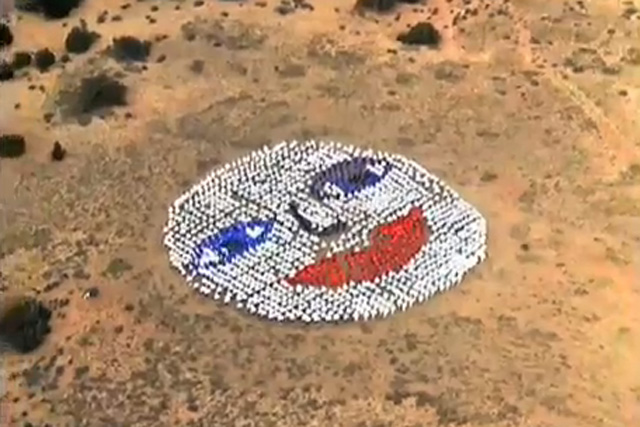
30. 11. 2025 | 13 min read Christmas is approaching. That means millions of people around the world will be on the move, returning home for the holidays to celebrate with their families. It may be the clearest reminder of how we take air travel for granted in the 21st century and how essential a role it plays in our lives. That is also why we should not forget that 7 December marks International Civil Aviation Day, a testament to the importance of global connectivity. It is the ideal opportunity to take a look at the mark airlines have left in the history of television advertising. The following five campaigns confirm that the identity of airlines reaches far beyond the duties of ordinary carriers. Time and again, they have proven capable of creating commercials that are formative, transformative, and often unforgettable. Home can be anywhere By 1989, planes were slowly becoming a common means of transport even for the global middle class. It was only logical that airlines began adapting their marketing communications accordingly. One truly groundbreaking example came from British Airways, which had just emerged from several years of extensive and demanding privatisation and restructuring under the leadership of Colin Marshall. The company now wanted to position itself as a genuinely global player and was not afraid to use the label “The World’s Favourite Airline.” It could afford to do so thanks to a unique television commercial known simply as The Face.

WHEN AN ALTERNATIVE CEASES TO BE AN ALTERNATIVE. WHY PLANT-BASED MARKETING SHOULD INSPIRE THE REST OF THE MARKET
3. 11. 2025 | 12 min read World Vegan Day is now behind us — and today it serves as a reminder not only of growing interest in sustainability, but also of a transformation in the language of advertising itself. Plant-based brands have shown that communication does not need to be built on guilt or activism. It is far more effective to talk about taste, habit, and choice. Campaigns that only recently targeted a narrow group of the already convinced have become fully fledged examples of modern brand communication. What they have in common is simplicity, a positive tone, and the ability to translate an ethical issue into an everyday context. Plant-based products no longer represent an alternative, but a new way of thinking about marketing itself. An alternative becomes a vision of the future In 2020, the American company Beyond Meat decided to completely overhaul its existing marketing strategy. The goal was to promote plant-based meat as a product suitable for mainstream consumers. This also involved a shift away from a narrative based on moralising (“you must”) toward one emphasising choice (“what if”). The result was the company’s first-ever nationwide television commercial, “What If We All Go Beyond?”, which aired in the United States on 3 August 2020 on Spectrum SportsNet during a game between the Los Angeles Lakers and the Utah Jazz.
SNOOP DOGG TURNS 53 — AND STILL PROVES AUTHENTICITY IS THE BEST MARKETING
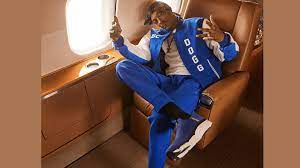
20. 10. 2025 | 12 min read On 20 October, Snoop Dogg celebrated his 53rd birthday — calmly, humorously, and with the effortless detachment that has become his trademark. The rapper who helped define the sound of West Coast gangsta rap in the 1990s has become a living brand and a cultural institution. His voice, style, and irony long ago crossed the boundaries of music, transforming him into a figure who can sell sneakers, food delivery, or an entire philosophy of life with equal ease. For marketers, Snoop Dogg is the perfect example of authenticity in practice. In every campaign, he preserves his own rhythm, language, and humour — he never pretends to be something he is not. And that is precisely why his commercials still feel alive even years later: they are not ads about Snoop, but ads that speak in his voice. Cool Comfort Snoop’s public image has always been tied to a generous dose of unrestrained hedonism. Over time, the rapper became the voice of pleasure, comfort, and laid-back perspective — a persona that has been used in more than one advertising campaign. In these campaigns, Snoop usually appears as the viewer’s guide and as an ambassador for products guaranteed to make life more enjoyable. A textbook example of this stylisation is undoubtedly the Did Somebody Say campaign for the food delivery service Just Eat (known in other countries as Menulog or Grubhub). It is a model example of how high-quality food-delivery marketing should be done.

HORROR ENTERTAINING CONSUMERS: TV ADS INSPIRED BY DRACULA
18. 10. 2025 | 8 min read Halloween, the beloved season full of ghosts and ghouls, is just around the corner. Who doesn’t know Dracula, for example? Marketers are well aware of the global fame of the legendary vampire, and they’ve been using his iconic image and vampire symbolism to boost sales for decades — and for good reason. His image is instantly recognisable and universally understood. Now, with the release of the new film Dracula: A Love Tale, the vampire theme is back in the spotlight. It brings suspense, exaggeration, and humour to campaigns, and has the power to appeal to audiences of all ages. For advertisers, it’s a great opportunity to stand out and leave a lasting impression on viewers.

PERSONAL FINANCE DOESN’T HAVE TO BE BORING. TV ADS REPEATEDLY DEBUNK THIS MYTH
8. 9. 2025 | 10 min read Who says financial literacy is boring? It may seem like an unexciting topic – numbers, savings, budgets – but despite that, it has become one of the liveliest genres in television advertising. Sometimes it takes a serious tone, other times it relies on humour or emotion, but it always aims at one thing: to show that money isn’t a distant world of experts but an everyday reality for all of us. These stories demonstrate that advertising can do more than sell – it can teach us to reflect on values, responsibility, and the future. And the marketing of global financial institutions has been proving this for decades.