

Category: CASE STUDIES
cooperation with 
The Association of Commercial Television is a member of egta and The Global TV Group. The partnership with egta provides exclusive access to the unique egta knowledge hub library. This enables AKTV to publish selected case studies from the world of television and media translated into Czech on its website ScreenVoice.cz. The studies deal with current topics such as the latest advertising technologies and formats, audience measurement or examples of innovative advertising strategies.
The egta knowledge hub database., from whose extensive library of research, case studies and podcasts AKTV draws, is a rich source of news on the latest trends, challenges and best practices in the media environment. It is an inspiration to the broader advertising community and bears a significant share of its success.
Stay up-to-date and stay ahead of the curve in today's ever-evolving, ever-changing world of media, advertising, television and total video.
Medium / Platform
Sector
Topics

HOW DPG MEDIA TURNS THE BACKSTAGE OF A PRIME-TIME MUSIC SHOW INTO A RETAIL ENGINE
17. 8. 2026 In a category where retailers typically compete on price and visibility, Albert Heijn, the supermarket retailer, chose a different path. Together with DPG Media, the brand moved beyond traditional sponsorship to become an essential part of the story of the prime-time music show Lift You Up on VTM.
AN IMMERSIVE CANAL+ BRAND SOLUTIONS COLLABORATION FOR SKIN-CARE BRANDS WITH SENSITIVE STORIES TO TELL
26. 6. 2026 LA FACTORY, the creative studio of CANAL+ BRAND SOLUTIONS, produced “Marquer l’Invisible” (roughly, “Making the Invisible Visible”) as an immersive documentary-style piece for the skincare brand Avène.

M6 UNLIMITED TESTS AI SPOT CREATION FOR SMALLER TV AND STREAMING ADVERTISERS
22. 5. 2026 M6 Unlimited is building a simpler route into TV and streaming advertising for smaller and newer advertisers. Its offer combines a dedicated SME buying path through its future ad manager, lower entry budgets, support across strategy, creative production and measurement.
THE TV ADVERTISING PARADOX, A THINKTV NEW ZEALAND CASE STUDY (2/2)
22. 5. 2026 The strategic response: the TV advertising paradox.

A BIG-SCREEN STUDY FINDS STRONGER ATTENTION ON TV4 PLAY THAN ON YOUTUBE
24. 4. 2026 TV4 just launched its third attention study, comparing the viewing experience on its streaming service (TV4 Play) with YouTube’s big screen experience at home. It confirms once again the assumption that the streaming environment provided by a qualitative TV network (BVOD) delivers a much bigger attention than UGC platforms, such as YouTube. An at-home test with regular users of both services The comparison took place in December 2025, with research partner COG Research, and was built to test the attention of viewers who already used both TV4 Play and YouTube on a big screen. To take part, they had to use both services at least two to three times a week, for around 20 to 30 minutes per session. The viewing took place in participants’ homes, not in a test room. Attention was measured with an eye-tracking device (iVue glasses), as viewers chose current programmes or videos they were interested in and were told to behave as they normally would. The comparison also kept the screen conditions close: both platforms were viewed in full-screen mode and with longer video formats.

THE TV ADVERTISING PARADOX, A THINKTV NEW ZEALAND CASE STUDY (1/2)
24. 4. 2026 In late 2024, ThinkTV New Zealand, under the leadership of Jacqueline Freeman, GM Communications, undertook a full market review to understand how television was being perceived, valued, and used across the New Zealand marketing ecosystem. This was a broad diagnostic rather than a simple pulse check. It drew on perspectives from CMOs, CFOs, insights people, media agencies, creatives, and people working at the front line within television itself. The objective was not to validate assumptions already sitting in the market. It was to uncover what had changed, where belief had shifted, and why.

AD EMISSIONS MEASUREMENT: LESSONS FROM THE FINNISH MARKET
31. 3. 2026 Finland’s commercial TV broadcasters spent the past year developing a carbon emissions measurement framework for linear TV advertising, starting with no local methodology and ending with a validated model owned by an industry body. For markets facing the same challenge, the experience offers a useful reference point. Start narrow, then scale The project focused exclusively on linear TV rather than attempting a cross-channel solution from the outset. This kept the scope manageable and delivered results sooner.
A NEW WAY FOR FRANCETV PUBLICITÉ TO SELL CONTEXTUAL VIDEO ADVERTISING
27. 3. 2026 FranceTV Publicité (FTP), the advertising sales house for French public television, has introduced Context.IA into its digital video offer. The solution uses programme context to decide when an ad should appear, instead of relying only on fixed scheduling. That makes Context.IA a new commercial tool inside FranceTV Publicité’s own video inventory. Context.IA links programme cues to ad delivery Context.IA uses a multimodal AI model to analyse image, text, audio and video within broadcast content. It identifies editorial cues and connects them to ad switching, so a campaign can appear when those cues are detected. The mechanism is simple to describe: define the cue, connect it to the creative, and deliver the ad when the condition is met.
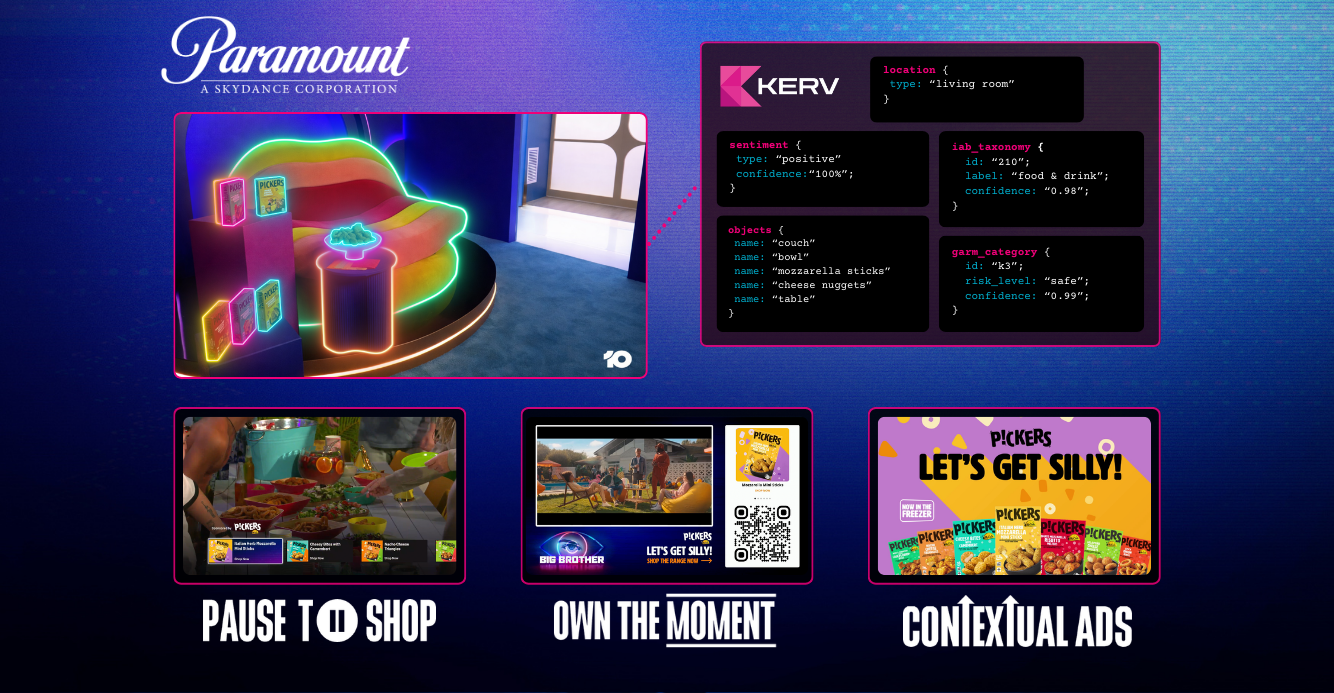
BUILDING A SHOPPABLE, ATTENTION-READY CTV OFFER: THE BIG BROTHER CONTEXTUAL CASE
26. 3. 2026 In 2025, Paramount Australia, in partnership with FreeWheel and egta, hosted a webinar outlining a forward-looking view of the evolving advertising market. One key topic explored the industry’s shift to pull-based discovery, experience-driven engagement, and frictionless content-commerce integration. Paramount Australia’s Contextual Advertising Suite directly responds to these trends, reinforcing the company’s leadership in premium CTV innovation through real-time, contextually immersive ad experiences, that meet audiences in the moment.

GLOBO CREATES HOME SCREEN PROMINENCE FOR FREE-TO-AIR TV ON SMART TVS
26. 2. 2026 Globo, Brazil’s largest commercial TV group, is rolling out DTV+, a next-generation free-to-air TV standard designed for connected TVs. It brings broadcast channels into the TV operating system, with app-like navigation, login and interactive layers placed directly on top of live programming.

THE VISUAL TRANSFER EFFECT: HOW SOUND BUILDS BRANDS
24. 2. 2026 In collaboration with neuro-marketing agency Unravel, Talpa Media has produced the scientific proof that audio does not just complement TV. It actively reactivates it, reconstructing visual brand memories in the consumer’s mind through sound. The findings carry significant implications for how audio is planned, sold, and valued within the wider media mix. Context Talpa Media is one of the Netherlands’ largest media companies, operating a broad portfolio of TV, radio, and digital platforms. That multiplatform reach puts them at the centre of a question: what actually happens in the brain when consumers encounter TV and audio advertising together? Specifically, Talpa aimed to explore whether prior exposure to a TV commercial changes how the brain processes a matching audio ad, and whether that effect can be measured without relying on conscious recall. Research Forty participants were fitted with EEG caps to capture real-time brain activity and exposed to commercial breaks from 14 brands. The study used a two-group design:

RMB TURNS QR CODE VOTING INTO A SHARED VIEWING MOMENT THAT STRENGTHS BRAND IMAGE FOR SPRITE AND DELI CHOC
24. 2. 2026 Campaign objectives The chocolate snack Deli Choc and soft drink Sprite brands worked with RMB to reach younger audiences by becoming part of Belgian hip-hop show “PLAYGROUND”, supporting new rap talent through a live QR vote and cross-platform content. This helps the brands appear as enablers of the format rather than separate ads.

CANADIAN SUPERSTAR ANDREW PHUNG HELPS VIA RAIL CHALLENGE CAR CONVENIENCE ASSUMPTIONS WITH LONG-FORM STORYTELLING ACROSS CBC’S TV ECOSYSTEM
24. 2. 2026 Campaign objectives VIA Rail, the company operating Canada’s national passenger rail service, combined a new product launch with brand building, using long-form content to tackle misconceptions that tend to block conversion in travel: comfort, ease, and whether rail feels like a realistic alternative to driving for intercity trips. The objectives behind this campaign were to increase consideration, turis, and improve overall impression of VIA Rail.
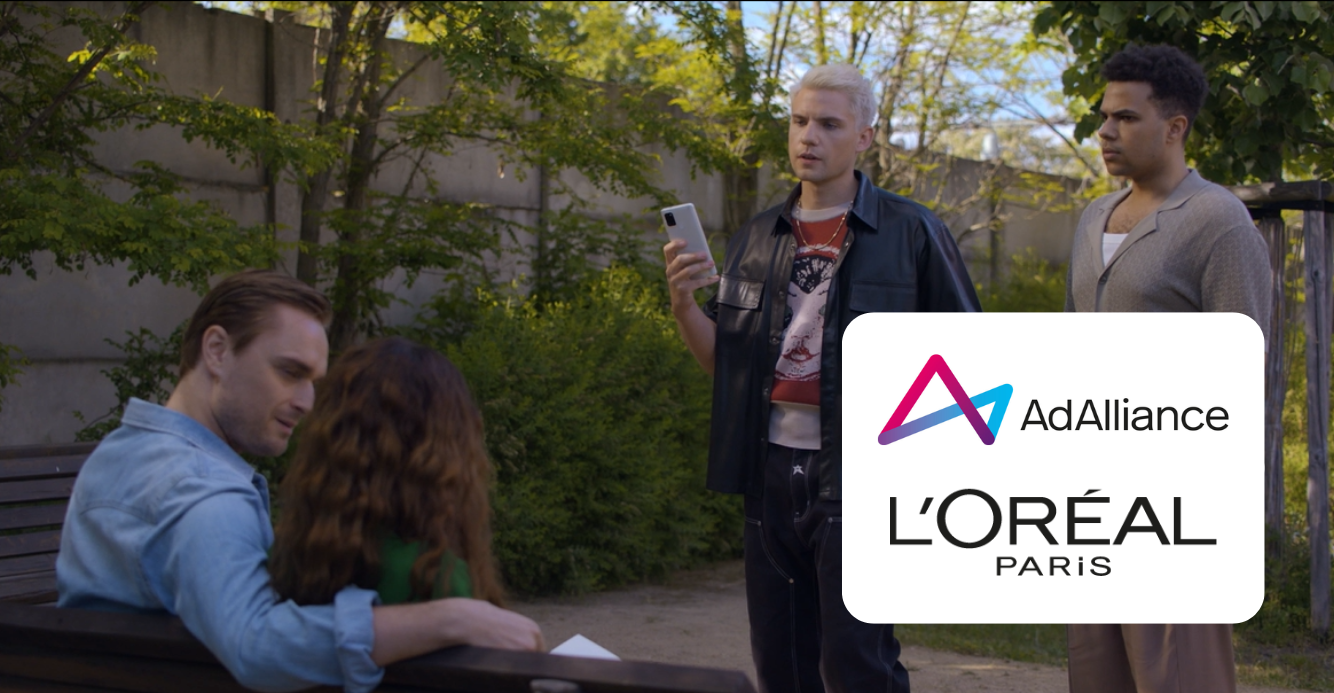
HOW L’ORÉAL PARIS AND RTL MADE STREET HARASSMENT HARD TO IGNORE
24. 2. 2026 Context Sexual harassment in public spaces is one of the most common forms of gender-based violence in the world. Two figures frame the issue: 80% of women have experienced street harassment, but 85% of people say they lack training on how to intervene. Ad Alliance and L’Oréal created a campaign to respond to this problem with a practical idea: show what intervention looks like in a situation viewers recognise, then point them to an online training called “Stand Up”. A program against street harassment that L’Oréal Paris and Right To Be launched in 2020.
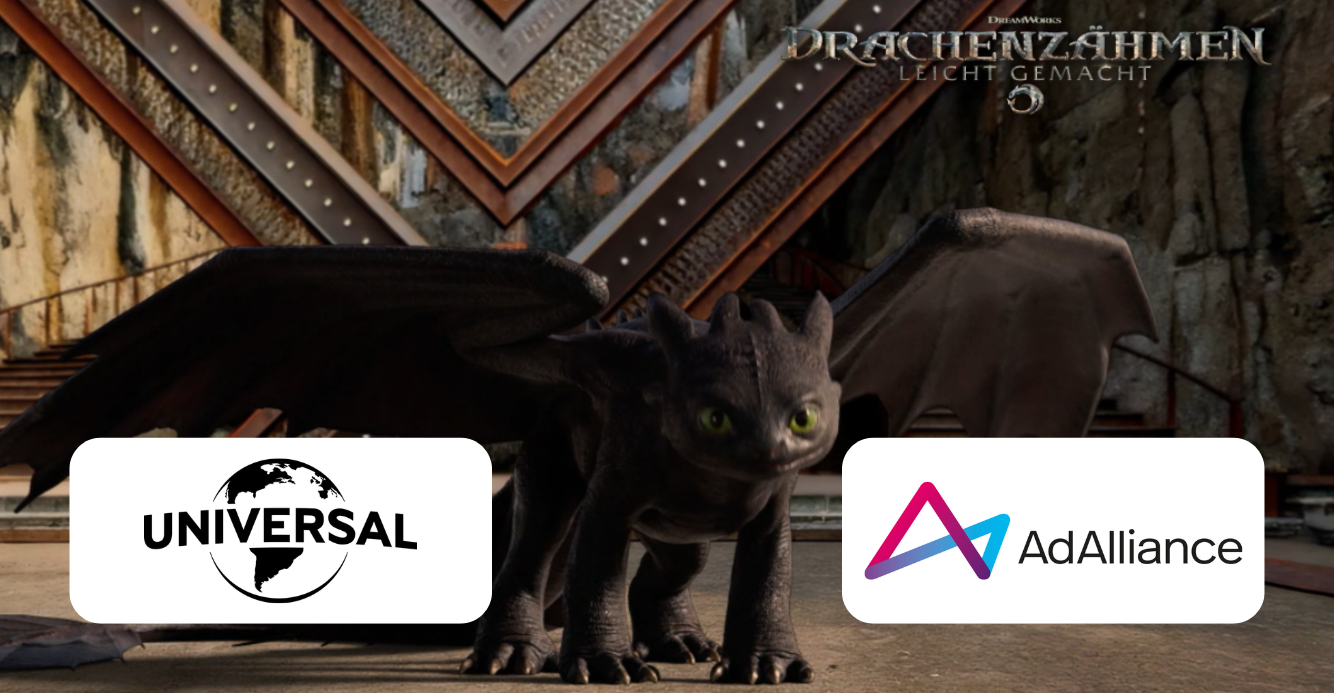
HOW AD ALLIANCE USED VIRTUAL SET GRAPHICS TO RESKIN THE LET’S DANCE STAGE FOR UNIVERSAL PICTURES
24. 2. 2026 Context This campaign promotes a film by changing the look of a well-known TV studio during the ad break, so the show setting becomes part of the idea.