
Most-read topics:
all GroupM VOD creativity efficiency aktv TV Nova TV Prima linear television attention AI QR
TRADITIONAL TV COMPANIES HAVE A LEG UP IN BIG-ADVERTISER CTV BUYS: STUDY
19. 2. 2021 | 4 min read "Our primary impediment to [advertising] growth at this point is the behavior of TV buyers."
UNILEVER DEEMS TV ‘VERY COST EFFECTIVE’ ALONGSIDE ADVANCED CAPABILITIES
17. 12. 2020 | 4 min read Television is a highly cost effective media for large advertisers, Unilever’s global media operations director has said, with new developments in advanced TV further increasing the value of the channel.

TV PERCEPTIONS SHIFTING, BUT VIEWERS TRUST BROADCASTERS MORE THAN STREAMING
29. 9. 2020 | 3 min read A new report has found that most viewers believe their perception of what TV is has shifted over the past five years amid the march of digital, but ads from broadcasters are still more trusted than their streaming equivalents.

THE GLOBAL PROOF OF TV’S POWER AND POPULARITY
5. 8. 2020 | 4 min read While our way of life in the UK seems miles away from the sunny shores of Spain, the vibrancy of Colombia or Santa’s Northern Lights in Finland, how the world watches its TV is remarkably similar. Despite local difference in video offerings and tech capabilities, the bottom line is that the world loves TV.
AN OPEN LETTER TO THE AD COMMUNITY FROM NIELSEN’S BRAD KELLY
27. 7. 2020 | 5 min read Toxic Behaviors in Advertising — and Your Business: What’s Your Threshold?

WHY TV ADVERTISING IS STILL THE DRIVING FORCE BEHIND AUTO SALES
3. 2. 2020 | 5 min read A multi-platform approach is essential in successfully targeting auto buyers. But it's important to remember that, when it comes to reaching those potential buyers, TV advertising still tops the list. If your auto client is considering scaling back on their television media buy, then they're in danger of missing out on the most important aspect of the auto buyer's purchase journey. It's a choice that could end up costing them way more than it saves.

LINDSEY CLAY: 6 TV MYTHS THAT NEED TO BE DEBUNKED
20. 1. 2020 | 7 min read It’s a new decade. Or is it? It depends on how you like your decades. Is the old one finished or is that not until the end of 2020? 'Who cares you pedantic twat, Clay?' you might ask.
FUTURE TV ADVERTISING GLOBAL 2019: THE BIG TAKEAWAYS
6. 1. 2020 | 6 min read Videonet has published detailed accounts about each of the big takeaways from Future TV Advertising Global 2019, and you can see links to those stories at the bottom (click on the original link at the bottom). Here is a summary of our analysis.
TWEETING WHILE VIEWING DOESN’T DIMINISH TV ADVERTISING’S REACH AND OFTEN LEADS TO SHOPPING
4. 4. 2019 | 3 min read People watching "social shows" like "Dancing with the Stars" or "The Bachelor" on television and simultaneously sharing their views on Twitter are more likely to be committed to the program and shop online, according to new research from Indiana University's Kelley School of Business.
TARGETED BYRON SHARP, ANYONE?
1. 4. 2019 | 4 min read Data can now make TV more effective. Even Byron Sharp should welcome more accurate targeting.
TV CAN NOW COMPLETE THE ATTRIBUTION PUZZLE
5. 12. 2018 | 5 min read Once confined to brand and awareness metrics, the world of TV attribution has evolved to measure responses and effectiveness in the same way digital media has for years. Critically, the concept of quantifying offline media's contribution to a business outcome, no matter where the consumer is in their purchase journey, has realigned the industry's approach to assigning value across all channels. For television, the availability of smarter data from devices such as set-top boxes and smart TVs, as well as the advanced application of that data by specialist companies, has shone a light on TV's efficacy in pushing the consumer through the purchase funnel. Whether measuring brand metrics or transactional behavior, marketers can now employ reach and precision tactics through advanced TV to drive mass and personalized messaging and attribute value to those media investments. This has led to more robust techniques to not only ensure that TV is getting its fair share of credit for a conversion, but also validate what we have known instinctively for years: TV drives results. There is no question that TV is the king of building brands. Television has been the platform that marketers have turned to for decades due its mass reach, ability to drive awareness, cultural influence and social (in the macro sense) engagement. Advanced TV now expands those capabilities beyond awareness, down through the funnel, enabling solutions and measurement at the consideration, intent and sales stages.

TV AUDIENCE SEGMENTS, AND WHY ONE SIZE DOESN’T FIT ALL
4. 12. 2018 | 5 min read Networks want to build audience segments to optimize tune-in campaigns, to reach the audience of a specific show or genre online, or to aid scheduling and show planning. These all lend themselves to different segment creation methodologies, as do the size and make-up of a network’s audience, and the number and types of shows they are segmenting.
WHAT THE GROWN-UPS THINK ABOUT TV
3. 12. 2018 | 7 min read Ahead of this week's Future TV Advertising Forum, and with a hefty new GroupM report by his side, Dominic Mills outlines the most important issues now facing the television industry
MARK RITSON: THE MEDIA BATTLE OF THE DECADE WILL BE FOUGHT FOR THE TV SCREEN
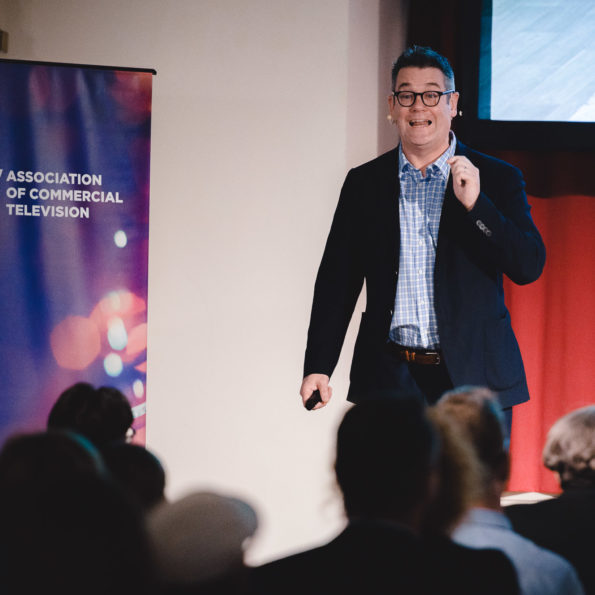
3. 10. 2018 | 5 min read Mark Ritson, the Australian university professor and marketing expert, started his European tour in Prague on Monday. He delivered a presentation to the representatives of clients, media agencies and the TV market. His speech ranks among the most interesting presentations on the local marketing scene in the last few years. Ritson came to Prague at the invitation of the Association of Commercial Television (AKTV), which continues its activities, inviting to Prague renowned representatives of the current marketing industry, predominantly those with a foreign university background. Initially, Mark Ritson provided a summary of the development of ad investments in media types in the recent 50 years using data from Morgan Stanley. He demonstrated that the last decade was significantly affected by the growth in digital media with the milestones being the years 2000 when Google started selling advertisements in its search engine and 2007 when advertisements were posted on Facebook. In Ritson’s opinion, the growth in the digital media had a negative impact namely on print media while radio and outdoor advertising was not affected too much by the onset of Google, Facebook and other digital platforms. That is because radio and OOH are more digital media today. Outdoor carriers are digitalised and more than half of radio broadcasting in the UK is delivered through digital platforms – DAB, applications and the Internet. (Editor’s note: This statement does not apply to the Czech radio where listening through FM still prevails.) As opposed to the above-mentioned media types, TV has not been impacted by the growth in the digital media and has succeeded in increasing ad investments despite the general perception that the days of TV are numbered. “In the media history, there has never been so much nonsense that would be so far from the truth. TV is not dying but the myth is spreading all over the world,” noted Ritson. The fact that big tech companies use TV advertising for communication and increase their investments in TV should be taken as evidence of the TV medium’s effectiveness. Ritson considers TV investments to be a goal pursued by digital players (represented namely by the Google/Facebook duopoly that accounts for 85% of all digital investments as estimated by Group M). “There is just one place that digital may use to grow – TV. It is a battle between digital and TV,” described Ritson. Technology firms will strive to attack TV ad budgets but the ‘battle of the decade’ will be fought for the TV screen according to Ritson. Or more precisely, for the ‘connected TV screen’, which he sees as the key medium. “I am not saying that TV companies are going to win but this is the playfield where the game will be played and that will be fought for. Digital firms will undoubtedly seek to get there,” he forecasts. But he is not talking about the form of TV broadcasting of ten years ago. In order to succeed in the competition, the existing TV companies must change – and go digital. With respect to the size of the Czech market, Ritson mentioned in the subsequent discussion that most probably, it will only be possible to face the global internet giants through cooperation with international TV players or associations. "The last decade was affected by the digital duopoly, completely devastating newspapers and taking most of their money. The next decade will offer a different battle. Digital firms will go after TV." says Mark Ritson. According to Ritson, the existing marketing mindset overestimates the effect of digital media. Although growing in recent years, mobile video is not the critical medium of future in his opinion. “Mobile video is small, we watch it occasionally when we have no access to a large screen,” he described. As indicated by the data of extensive research projects of BARB, ComScore or IPA Touchpoints, more than two thirds (71%) of all videos watched continue to be viewed on TV screens (live TV) and even millennials watch nearly half of video content on TV screens (47%). TV’s impact on advertising video content is expected to be even more significant with the majority of ad spots (90%) being watched on a TV screen. The times we are living in, which are referred to as the post-factual era, are to blame for the facts about media channel effectiveness being overlooked. Some of the guilt is also attributable to how media consumption development is perceived by marketers or agencies that tend to project their own media consumption methods to all consumers. The result is that while the data of Ebiquity’s Re-evaluating Media study demonstrate that traditional channels (TV, radio, newspapers, magazines) have the strongest effect on brand-building (in attributes such as reach, targeting, ROI, etc.), the marketer and agency community overestimates the effect of social media and online video. “It is a conflict between perception and reality,” noted Ritson. In order to achieve the highest communication effect, Mark Ritson recommends to integrate multiple media channels. TV is a medium that can still derive the largest reach from individual media carriers (in the Czech population, TV is watched weekly and monthly by 90% and 96% of people, respectively). Digital media also play an important role; however, Ritson thinks that their importance is exaggerated and investments in them are excessive. In conclusion, he also mentioned Les Binet’s opinion. In the last AKTV meeting in Prague, Binet spoke about the primary effect of reach on brand growth, about the importance of share of voice and the need to work on a long-term brand building. (You can read a summary of Binet’s presentation here). Mark Ritson recommended The Long and the Short of It written by Les Binet and Peter Field as one of the key marketing publications that would have an impact on communication planning in the near future. Source: mediaguru.cz

TV ADVERTISING ISN’T DEAD, IT’S EVOLVING
26. 9. 2018 | 7 min read The back-to-school season this year was also the back-to-TV season for department stores. The top brands in the category spent $247.8 million from July 1 to Aug. 31, according to iSpot. That’s a 9.3% jump over the same period last year.

WHY BIG TECH SPENDS BIG ON TV
9. 8. 2018 | 4 min read If you read the trades regularly, there’s a good chance you’ve read that TV is dying. It’s less likely you read that Google, Netflix, and Amazon collectively spent more than $1B on TV advertising in 2017.1