
Most-read topics:
all GroupM VOD creativity efficiency aktv TV Nova TV Prima linear television attention AI QR
WHEN FASHION SLOWS DOWN: HOW CAN BRANDS COMMUNICATE SUSTAINABILITY WITHOUT OVERUSING WORDS LIKE ‘ECO’ AND ‘GREEN’
25. 7. 2025 | 12 min read Slow fashion is no longer just a manufacturing philosophy – it is becoming a new language of fashion communication. Whereas seasonal trends once dominated advertising, today more and more brands are leaning towards a calmer, more thoughtful narrative. Instead of products, they present stories; instead of sales, they show manufacturing processes. Campaigns feature documentary aesthetics, quiet activism and artistic installations. Sustainability is not just a theme here, but also a form of expression – based on authenticity, a relationship with clothing and respect for time. This is where the inspiration for marketers lies: that less can mean more if a brand decides to speak clearly, honestly and with confidence in the intelligence of its audience. H&M – Conscious Collection (2011) Swedish clothing company H&M is considered one of the leaders in the global fast fashion scene, so it comes as no surprise that, like other companies in a similar position, it faced growing criticism for its negative environmental footprint with the arrival of the new century. The long-term Conscious Collection campaign, first launched in 2011, thus fulfils two key objectives: firstly, it responds to the criticism, and secondly, it seeks to appeal to new generations of customers who think fundamentally differently about sustainability than their predecessors. As part of this campaign, H&M launches a collection made from sustainable materials every year, seeking to demonstrate that even fast fashion can be conscious. Visually, the campaign draws on the aesthetics of high fashion editorials and haute couture: the spots are dominated by detailed shots of textures, slow-motion images of the production process and natural motifs that contrast with the modern cut of the clothing. Over time, the basic collection has been complemented by the premium Conscious Exclusive line, which relies on short fashion films featuring leading international models such as Giedrė Dukauskaitė and Rianne Van Rompaey for its promotion. H&M clothing is commonly perceived as an affordable alternative, and with these campaigns, the company is trying to show that it can offer something more.

PRINCESSES, FROGS AND GENIES IN ADVERTISING: FOREIGN BRANDS LOVE FAIRY TALES
16. 1. 2025 | 7 min read Fairy tales accompany us throughout our lives. In childhood, they carry us away on waves of imagination, in adulthood, we tell fairy tales to our children and grandchildren to simply explain the difference between good and evil and to pass on to them the values of life. In addition, fairy tales are a great element for advertising because they help consumers make an emotional and personal connection with brands. And that’s why fairy tale themes have been found across modern advertising in various forms for a very long time.
FILM ANNIVERSARY: AUDIENCES WANT TO LIVE AS FRIENDS OR THE ADVERTISING POWER OF THE SITCOM
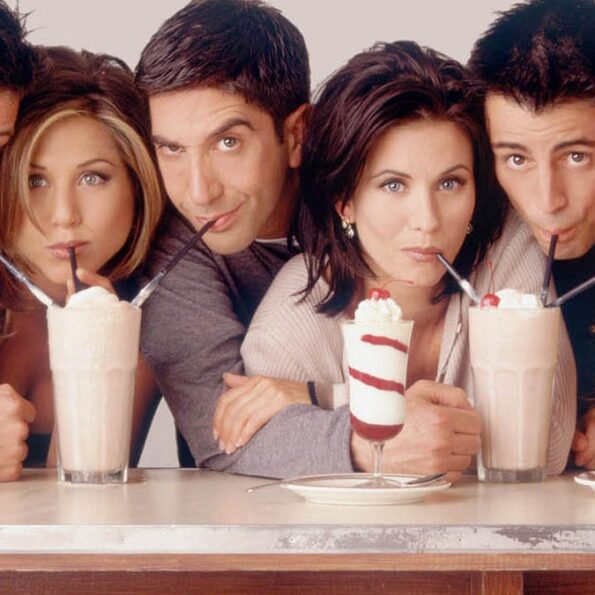
1. 10. 2024 | 8 min read It has been an incredible thirty years. When Friends first appeared on TV screens in September 1994, no one imagined that the sitcom would become a global phenomenon, capturing millions of viewers worldwide and becoming the darling of agencies and brands that use its power to promote their products.
THE GRAND FINALE OF THE ROUND-THE-WORLD TV ADVERTISING JOURNEY: WORLD RECORDS AND CURIOSITIES
14. 9. 2023 | 8 min read Our summer trip around the world in search of TV advertising is over. Let’s take a look at the ads that have earned a spot in the Guinness World Records or are so peculiar that they have crossed not only country borders but also the earth’s borders. Yes, you guessed right, we will take a look into space. THE FIRST TV AD IN THE WORLD WITH A CZECH FOOTPRINT We have already written about the world’s first television advertisement for Bulova watches, which aired on 1 July 1941 on WBNT, in an article about TV advertising in the USA. However, you may not know that Czechia, or rather a Czech native, has a share in this first spot. In 1875, during the golden era of industrial development in America, a Czech immigrant Josef Bulova (born in Louny) opened a jewellery shop in the centre of New York. Soon after, he began to produce his own watches with his name on the dial. And it was at that moment that the history of a global brand started. Bulova’s watches not only made it to the moon but were also the first product ever to be featured in a television ad.