
Most-read topics:
all GroupM VOD creativity efficiency aktv TV Nova TV Prima linear television attention AI QR
TELEVISION CELEBRATES ITS DAY: EVEN IN 2024, IT REMAINS A RELIABLE COMPANION AND GUIDE IN MODERN LIFE
21. 11. 2024 | 13 min read Every year on 21 November, we celebrate World Television Day, which highlights the irreplaceable role of this medium in our lives. While streaming platforms are changing the ways we consume content, traditional television still holds a crucial position. It delivers current information, supports education, preserves cultural heritage, offers moments of entertainment and shared emotions, and serves as a significant marketing platform. How does television continue to shape our society today, and why is it important to remember its significance? TV informs As more primarily fictional content moves to streaming platforms, the significance of news channels and programmes as the dominant content for traditional continuous television broadcasting grows. Television remains one of the main sources of information for the general public, with millions of people worldwide turning to news channels to stay informed about events both at home and globally. Thanks to globalisation and technological advancements, it is now possible to watch events in real time, even on the other side of the world. The news and informational function of television becomes increasingly important, especially during crises and exceptional events, when access to verified information is crucial.

CZECHS AGED 45-64 – THE RICHEST TARGET GROUP YOU MIGHT BE OVERLOOKING
4. 11. 2024 | 5 min read Czech society is ageing unstoppably. The options for staying fit and healthy are continually improving and evolving, but middle age (and retirement) still seems to be mainly associated in marketers’ minds with outdated notions of a “walking-stick-and-scarf” lifestyle.

FROM KENNEDY TO THE CZECH VELVET REVOLUTION: TELEVISION WAS, IS AND WILL BE THE VIEWER’S GUIDE THROUGH MODERN HISTORY
28. 10. 2024 | 13 min read Television has shaped modern history: from the rise of John F. Kennedy in the USA, through the Watergate scandal, and the tragic footage of the Challenger disaster, to the fall of the Berlin Wall and Princess Diana’s funeral procession. It has been both a witness to and a catalyst for change, including in the Czech Republic—it broadcast the 1968 invasion, showed the revolutionary days of 1989, and shaped opinions during the first direct presidential election. Today, in combination with social media, television influences the world more than ever. What has been its historical role so far? The Rise and Fall of JFK: A Career Framed by the Lens John F. Kennedy’s political career unfolded on television screens. This was logical, as Kennedy’s charisma and celebrity status made him seem like a face made for television cameras. In 1960, he won the first televised presidential debate in the USA; this moment likely catapulted him to the top of the state. His opponent, Richard Nixon, looking tired after illness and refusing makeup, appeared less attractive than the fresh, youthful, and prepared Kennedy—an unfortunate strategic mistake. This debate beautifully illustrates the power of television: while Kennedy overwhelmingly won the hearts of television viewers, those who only listened to the debate on the radio were much more inclined towards Nixon. Presentation, to a degree, triumphed over content. Just three years later, on 22 November 1963, television cameras became witnesses to the last chapter of Kennedy’s life, when he became a victim of an assassination in Dallas. The whole of America mourned together with the screens. Along with the young idealistic president, the idea of an idealistic America died. Hope turned to sorrow, then to scepticism.

TV VIEWING AND ITS ROLE COMPARED TO OTHER TOUCHPOINTS
17. 10. 2024 | 5 min read Gigabytes of articles have already been written about the current viewership of classic television. But it doesn’t hurt to look at what is behind the claims of people who indicate in surveys that they watch TV. In a previous article, we examined what “watching TV” means. Only with a clear definition of “watching TV” can we assess the role of classic TV as a touchpoint. TV viewing surveys The question of how often people watch television has been the subject of dozens of studies. The results of these studies are used, among other things, for media planning. Although everyone might seem to know what watching TV means, clarifying the concept and asking viewers about their understanding appears to be a good idea. This is what the GroupM project Media Bubbles is doing. It examines the differences in media habits between the general Czech online population (which includes about 92% of the total population) and people from media and advertising agencies. In addition, the latest survey took a closer look at young consumers under 25. What does it mean to watch TV? Let’s briefly summarise what people mean when they say they watch TV. For 80% of the Czech online population, watching TV is equivalent to watching a live broadcast in real time. Among young people under 25, 72% have the same understanding. However, watching TV includes watching pay VOD services for almost half of the population. A quarter of the population (and 31% of the young under 25) even include YouTube in watching TV. Watching TV – what does that mean?

FILM ANNIVERSARY: AUDIENCES WANT TO LIVE AS FRIENDS OR THE ADVERTISING POWER OF THE SITCOM
1. 10. 2024 | 8 min read It has been an incredible thirty years. When Friends first appeared on TV screens in September 1994, no one imagined that the sitcom would become a global phenomenon, capturing millions of viewers worldwide and becoming the darling of agencies and brands that use its power to promote their products.

THE MARVEL PHENOMENON: COMICS AND TV ADVERTISING IS A GREAT DUO
16. 9. 2024 | 10 min read Marvel is a ticket to a world of superheroes transcending generations and cultures. Characters like Captain America and Spider-Man bring values of courage and tenacity to the advertising landscape. They reinforce not only the story embedded in the campaign but also the brand itself. Creative agencies and advertisers across all sectors – from cars to fast food – are successfully riding a Marvel wave that is not about to dissipate. On the contrary, it grows stronger with every new film launched.

TV VIEWERS. WHO ARE THEY AND HOW DO THEY SPEND THEIR TIME WITH AND WITHOUT TV?
3. 9. 2024 | 7 min read There has long been a debate among media professionals and marketers about what it actually means to watch TV. As there’s nothing worse than conjecture, we asked people. Viewers. And as you might expect, watching TV means something different to everyone, and mostly, it doesn’t mean just one thing.

ART IN ADVERTISING: CZECH BRANDS ARE INSPIRED BY FOREIGN ARTISTS AND CZECH GREATS
21. 8. 2024 | 5 min read Czech viewers are very specific, and when it comes to television advertising, they are quite different from viewers in other countries. But they have one thing in common with foreign audiences: pride in their national greats. That is why creatives – in their efforts to tailor television advertising to the Czech viewer – like to draw from abroad as well as from Czech history.

SOLVENT CZECHS LIKE TO HOLIDAY WITH A TRAVEL AGENCY. SEE WHAT YOU CAN DO TO APPEAL TO THEM IN YOUR TV ADVERTISING!
12. 8. 2024 | 5 min read Around 60% of Czechs go on domestic holidays every year, 45% go abroad. Although holidays are no longer exclusively associated with summer, summer is still the main season. Some people like to arrange everything themselves, others rely entirely on travel agencies, and some make a choice depending on circumstances. The current summer mood led us to the idea of looking at Czechs through the lens of holiday arrangements and we came up with one downright summer finding. Or more accurately, a travel finding.

UNDER THE FIVE OLYMPIC RINGS. GAME-CHANGING TV ADS
9. 8. 2024 | 12 min read The 2024 Summer Olympics in Paris are slowly heading towards the Closing Ceremony. As we already know, the Olympics are not only the pinnacle of professional athletes’ careers but also a very rewarding time for marketers to present their revolutionary ideas. World-renowned brands have always used and continue to use the emotional power of sport at Games time to spread positive values and connect people across continents. Olympic history is full of memorable ads that have not only defined global marketing but have also co-shaped the international Olympic movement. What are some of the most memorable ones? Coca-Cola – Celebrate Humanity (1996) When Atlanta, Georgia, hosted the 1996 Summer Olympics, it was widely expected that one of the largest global companies having its headquarters in the metropolis, Coca-Cola, would be heavily involved in the process. And indeed, the 1996 Olympic Games went down in marketing history as the “Coca-Cola Games”. The Coca-Cola Olympic City where some of the Olympic sports could be watched in virtual reality was clear evidence that the company, one of the oldest Olympic sponsors, was certainly not underestimating this opportunity. The company also launched its Celebrate Humanity campaign to mark the occasion and, predominantly, celebrate humanity and joy. The campaign’s message was presented through emotive stories and visuals that showed the athletes and their paths to success. The individual spots consisted of authentic footage from the Olympic Games, inspirational music and voiceovers, which were combined with images of the athletes and emotional moments from the Games. And, of course, localisation for each national market was an important element. The advertising spots were one of the most important elements of the campaign – they included inspirational quotes from athletes and worked with authentic footage from past Games. As a result, Celebrate Humanity has become an Olympic benchmark for Coca-Cola, and there is perhaps not a single Olympic ad that doesn’t take at least a small nod to this legendary campaign.

SALVADOR DALÍ: NOT ONLY DALÍ’S BIZARRE WORKS BUT ALSO THE GENIUS OF SURREALISM HIMSELF CONTRIBUTED TO ADVERTISING
1. 8. 2024 | 8 min read Salvador Dalí, the master of Surrealism, is world-renowned for his recognisable style, characterised by dreamlike imagery, mind-blowing illusions, and meticulous attention to detail. He can be considered one of the most distinctive and enigmatic artists of the last century. With his works that invite the viewer to come closer and explore the strange harmony of the bizarre and the mundane, Dalí has captivated the world since 1925 when his first work was exhibited in Barcelona. His fresh perception of the world has also influenced the world of advertising and inspired many brands.

PREPARATIONS ARE DRAWING TO A CLOSE. THE SUMMER OLYMPIC GAMES ARE ALWAYS A CHALLENGE NOT ONLY FOR THE ATHLETES BUT ALSO FOR THE MARKETING DEPARTMENTS OF THE PARTNERS
19. 7. 2024 | 13 min read We are just days away from the start of the most spectacular sporting event of this year. The 2024 Summer Olympics in Paris are just around the corner and preparations are reaching their peak on all fronts. Fans are already studying the schedule, searching for the streaming platforms that will offer them the best coverage of each event. The athletes go into the finals after often more than a year of intensive preparation. Organisers are making the final touches and reassuring the public that they have done their utmost in terms of security to ensure the smooth running of the Games. And what about the Olympic team partners? Their marketing departments are racing to see who can put together the most creative campaign full of hope, motivation, and positive sportsmanship with the help of national heroes. The same applies to the Czech Olympic Committee and its most important sponsors. How have they managed this discipline during the past Olympics and what have they prepared for us this year? Czech Olympic Committee - Living London like John Cleese (2012) Traditionally, the Czech Olympic Committee, as the main carrier of the Olympic message in the country, airs its TV advertisements in the run-up to the Olympics. In 2012, it managed to engage a truly exclusive partner – British actor John Cleese, best known as a former member of the legendary comedy group Monty Python, and neurotic hotel manager Basil Fawlty from the Britcom Fawlty Towers. The campaign featured several spots in which Cleese takes the role of the viewer’s guide to Olympic and traditional London. Of course, he provides basic information on red phone booths, the five o’clock tea tradition, and a basic English language lesson. The COC has launched a total of ten spots featuring John Cleese, and interestingly, the actor has made one condition for his participation – that he will be actively involved in the scripting of all the adverts. The result is a unique campaign with an international star actor who excels in the art of dry British humour, which would be difficult to imitate by an exclusively Czech creative team. Czech fans couldn’t have asked for a better invitation to London.

ART IN ADVERTISING: ARTVERTISING HAS A LONG HISTORY AND REPRESENTS A WIN-WIN SITUATION FOR ADVERTISERS AND ARTISTS
11. 7. 2024 | 5 min read Art and advertising are two seemingly separate categories but in fact, they are incredibly close to each other.

FILM FESTIVAL TRAILERS TAKE A LOT OF SKILL. WHAT MAKES THE RECIPE FROM KARLOVY VARY GLOBALLY UNIQUE?
27. 6. 2024 | 12 min read Anyone who has ever visited Karlovy Vary for the International Film Festival knows the routine. After choosing from hundreds of films and standing in an endless queue for tickets, you settle comfortably in the cinema room at Pupp or Thermal, perhaps listening to a debate with a visiting filmmaker, and looking forward to an experience that usually breaks out of the confines of the classic film mainstream. At this point, however, KVIFF will serve you an extra course – yes, you are right, it is the traditional festival trailer. And the Karlovy Vary one is quite unique from a global perspective. What exactly makes it so special and what is the practice abroad?
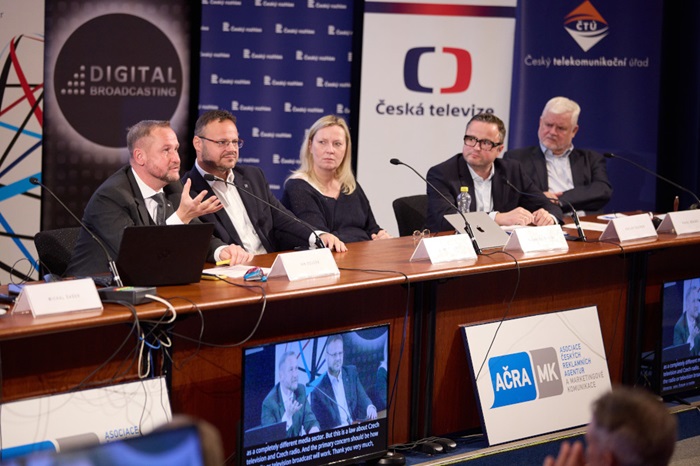
COMMERCIAL MEDIA HAVE RESERVATIONS ABOUT THE BIG MEDIA AMENDMENT
17. 6. 2024 | 5 min read Representatives of the private media sector do not like the new form of the draft media amendment. They see the wording of the accompanying Memorandum, which is supposed to describe more precisely the tasks of public service media, as essential.

CZECHS HAVE ICE HOCKEY IN THEIR DNA. MILLIONS OF PEOPLE WATCH THE GAMES, ADVERTISERS ARE REAPING THE BENEFITS
16. 5. 2024 | 7 min read The moments when the heart of the Czech nation beats to the rhythm of the chants of the fans in the stands and the eyes cannot tear themselves away from the puck sliding down the ice are extremely emotional and unforgettable. The cries of “Goal!” rock the windowpanes in towns and villages, especially when it is the World Championship. Czechs have simply had ice hockey in their DNA since the beginning of the last century. Anyone who doesn’t have the opportunity to attend the games live is usually glued to the TV screen. It is no wonder that on every major hockey occasion, such as the ongoing World Championship, loads of hockey-themed advertisements pop up.

LUCKY SEVEN: THE 7 BIGGEST MARKETING OPPORTUNITIES FOR TV ADVERTISING
29. 4. 2024 | 10 min read The Association of Commercial Television (AKTV) celebrated seven years of operation. The seventh anniversary brings a look back at the wealth of AKTV’s activities aimed at promoting the interests of commercial television, fighting digital piracy, and contributing to the development of the legislative framework for broadcasting and promoting television. These are the most meaningful activities as television viewing is still at its peak of popularity, as research shows.

PUBLIC SERVICE MEDIA SHOULD NOT PROFIT FROM ADVERTISING, SAYS THE ASSOCIATION OF COMMERCIAL TELEVISION
27. 4. 2024 | 16 min read Media manager Klára Brachtlová has been the head of the Association of Commercial Television (AKTV) for a year. The Association was founded by the Nova, Prima, and Óčko TV groups seven years ago. In an interview, Klára Brachtlová reveals how the Association helps TV stations, how broadcasters are coping with the advent of artificial intelligence, and why commercial media opposed the amendment to the law that increases fees for Česká televize (Czech Television, ČT).